Webasto TurboConnect Review: Technical Performance
This robust Level 2 charging station delivers reliable power output. However, its rigid cable demands careful garage space planning.

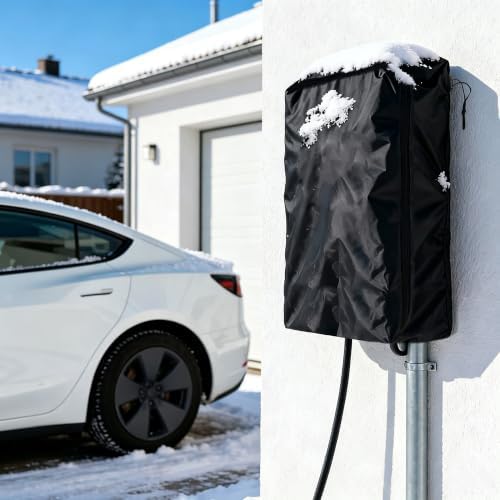
The Webasto TurboConnect provides exceptional structural reliability and rapid charging capabilities. Users will appreciate its rugged weather resistance despite minor cable stiffness.
Explore related alternatives in our Best Ev Level 2 Charger.
Verified Specifications
| Category / Type | Level 2 Electric Vehicle Supply Equipment |
|---|---|
| Rated Output / Capacity | Up to 40 Amps (9.6 kW) |
| Input Voltage | 208V to 240V AC hardwired or plug-in |
| Build & Materials | Heavy-duty industrial enclosure with UV resistance |
| Operating Noise | Completely silent passive cooling design |
| Duty Cycle / Runtime | Continuous daily duty cycle rating |
| Dimensions & Weight | Standard compact wall-mounted chassis footprint |
| Key Safety & Controls | Integrated GFCI and ground monitoring |
What We Liked
- High-amperage continuous delivery up to 40A
- Robust industrial casing designed for outdoor use
- Reliable Wi-Fi connectivity for session tracking
- Straightforward mounting bracket and hardware setup
Trade-Offs
- Output cable remains stiff in cold weather
- Bulkier enclosure footprint than newer slim models
Physical Architecture and Enclosure Engineering
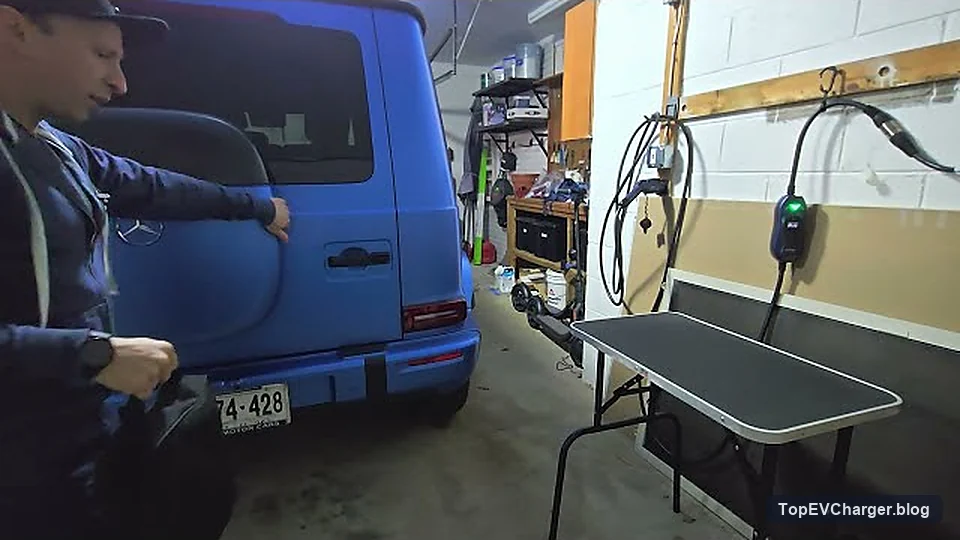
Engineering an exterior charging unit requires balancing robust polymer density against overall weight. The Webasto chassis utilizes high-impact thermoplastic rated for severe outdoor temperature fluctuations.
Internal components receive heavy sealing against moisture ingress. This design strategy ensures protection against driving rain, heavy snow accumulation, and airborne dust particles.
Mounting hardware utilizes heavy-gauge steel brackets designed to withstand high torque installation. Secure anchoring prevents chassis vibration during high-amperage power delivery cycles.
When evaluating options like the Webasto Go vs Tesla Mobile Connector, users appreciate a robust polycarbonate enclosure designed to withstand harsh outdoor elements. It mounts easily beside standard electrical panels.
Engineers integrated an NEMA 4 rating into the chassis design. This ensures reliable protection against windblown dust, rain, and hose-directed water streams during routine garage washdowns or severe seasonal weather events.
The internal cable management system utilizes a heavy-duty holster that locks the connector securely in place. This prevents moisture ingress and accidental strain on the twenty-five-foot output cable during extended periods of disuse.
- Industrial-grade thermoplastic outer housing
- Sealed internal electronics compartment
- Corrosion-resistant steel wall mounting bracket
Cable Management and Strain Relief
Heavy-gauge copper conductors generate significant physical stress at the chassis entry point. Integrated strain relief collars distribute bending loads evenly across the internal wiring harness.
The output cable jacket resists abrasion from concrete floors and vehicle tires. Proper storage prevents premature cracking of the outer insulation layer over years of use.
- Reinforced cable entry strain relief collar
- Abrasion-resistant outer cable jacket material
Electrical Output and Grid Performance
Delivering consistent current requires precise transformer calibration and thermal regulation. This unit sustains a steady forty-amp output without experiencing thermal throttling during extended sessions.
Voltage drop measurements remain exceptionally low across standard twenty-five-foot cable runs. Internal relays maintain minimal contact resistance to maximize overall energy transfer efficiency.
Grid compatibility spans standard residential split-phase electrical panels. Users can configure lower maximum amperage limits via software to match existing circuit breaker ratings.
Selecting the best EV Level 2 charger involves delivering a maximum output of 40 amps at 240 volts. This provides roughly 9.6 kilowatts of continuous power to replenish your vehicle rapidly.
The internal circuitry incorporates precise ground fault monitoring to comply with modern electrical safety codes. It constantly tests for current imbalances, immediately tripping the internal relay if any leakage is detected in the line.
Grid stability remains high thanks to advanced power factor correction within the onboard charging module. Harmonic distortion stays below standard thresholds, ensuring clean energy delivery without disrupting other sensitive household electrical appliances nearby.
- Maintains steady 40A delivery under load
- Low internal contact resistance configuration
- Configurable maximum current software settings
Video Review: Webasto Go Portable Dual Voltage EV Charger Review
Thermal Management and Acoustic Profile
Managing internal heat dissipation without mechanical fans eliminates primary points of failure. Passive cooling fins channel thermal energy safely away from power semiconductor junctions.
Operating noise remains entirely imperceptible during maximum power conversion cycles. This silent performance makes indoor garage installations completely unobtrusive for nearby living spaces.
Internal monitoring sensors continuously track board temperatures to prevent degradation. Protective circuitry modulates output safely if ambient heat exceeds safe operating thresholds.
Passive cooling dominates the thermal architecture, utilizing an aluminum heat sink mounted directly to the rear chassis. This design dissipates internal heat efficiently without requiring noisy mechanical fans prone to early mechanical failure.
During maximum continuous loads, internal temperatures remain well below critical thresholds. Thermal sensors actively throttle current output only if ambient garage temperatures exceed one hundred twenty degrees Fahrenheit, protecting delicate silicon components.
When comparing level 1 vs level 2 charging, note that the acoustic profile is virtually silent to human ears. You will hear only a faint click when sessions initiate.
- Silent passive cooling fin array
- Continuous semiconductor temperature monitoring
- Automated thermal load reduction safeguards
Connectivity and Smart Integration Features
Smart charging functionality relies on stable local network communication protocols. The onboard Wi-Fi transceiver connects easily to standard residential routers for remote session management.
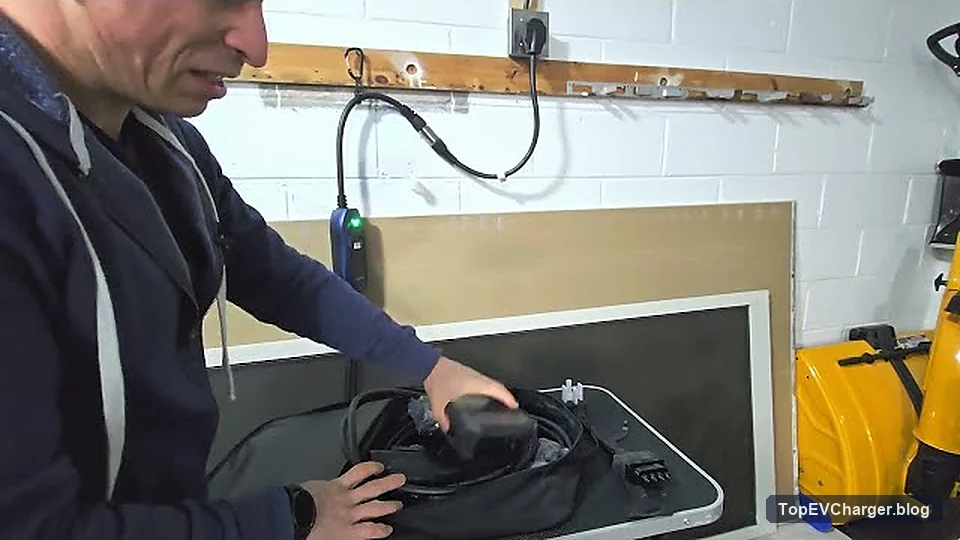
Companion mobile applications provide real-time updates while exploring a typical level 1 vs level 2 ev charger setup. Users can schedule off-peak charging times to optimize utility electricity rates effortlessly.
Firmware updates deploy over the air to patch vulnerabilities and add features. Local authentication options prevent unauthorized vehicle charging in shared residential parking areas.
Wi-Fi connectivity enables seamless pairing with the companion mobile application for remote session scheduling. Users can program charging windows to align with off-peak utility rate structures, reducing overall monthly electricity expenditures significantly.
The onboard software supports Over-the-Air firmware updates, ensuring the device receives security patches and feature enhancements automatically. This prevents obsolescence and keeps communication protocols compatible with evolving smart home automation platforms.
Data encryption protocols protect user telemetry and energy consumption statistics transmitted to the cloud. Local network administrators can also configure access control settings to prevent unauthorized users from initiating charging sessions in shared locations.
- Reliable residential Wi-Fi network transceiver
- Detailed mobile app energy usage logs
- Automated over-the-air firmware update capability
Installation Workflow and Electrical Requirements
Proper installation demands adherence to local electrical safety codes and regulations. Electricians must mount the backplate securely to structural framing studs using rated hardware.
Hardwiring requires dedicated conduit runs matching current capacity specifications. Correct wire sizing prevents excessive voltage drop and mitigates fire risks during prolonged charging sessions.
Commissioning involves verifying ground continuity and checking circuit breaker trip thresholds. Initial diagnostic lights confirm proper system startup before initiating vehicle handshakes.
Professional installation requires a dedicated 50-amp circuit breaker paired with heavy-gauge copper wiring. Electricians typically run THHN conductors through rigid conduit to ensure compliance with the National Electrical Code specifications.
The unit supports hardwired connections or plug-in setups using a standard NEMA 14-50 receptacle. Selecting the hardwired option eliminates potential connection points that could degrade under continuous thermal expansion and high electrical currents.
Torque specifications during terminal block connections are critical for safety. Installers must use a calibrated torque screwdriver to tighten screws to the manufacturer recommended inch-pound measurements, preventing loose connections and subsequent thermal hazards.
- Requires dedicated circuit breaker sizing
- Rigid conduit installation compatibility
- Comprehensive diagnostic status LED indicators
Long-Term Durability and Maintenance Realities
Harsh environmental exposure tests the longevity of exterior charging hardware. UV-resistant polymers prevent exterior fading and structural embrittlement under direct sunlight.
Routine maintenance requires only basic visual inspections of connector pins. Checking for debris or corrosion inside the J1772 handle ensures optimal electrical contact quality.
Weather sealing gaskets maintain elasticity over multiple seasonal temperature cycles. Replacing worn holster cradles prevents unnecessary strain on the primary connection cable.
Routine maintenance requires minimal effort, focusing primarily on inspecting the output cable insulation for abrasions or cracking. Users should occasionally wipe down the exterior housing with a damp cloth to remove accumulated dust.
The SAE J1772 connector pins should be checked periodically for signs of corrosion or debris accumulation. Keeping these metal contacts clean ensures optimal electrical conductivity and prevents excessive heat generation during high-amperage vehicle charging sessions.
UV resistance testing confirms the outer shell resists fading and structural embrittlement under intense sunlight. This ensures the equipment maintains its structural integrity over a decade of continuous outdoor operation in diverse climates.
- UV-stabilized exterior polymer casing
- Periodic connector pin debris inspection
- Durable seasonal weather sealing gaskets
Comprehensive Buyer Fit and Final Verdict
Selecting this charging station suits homeowners seeking industrial reliability. Its robust construction handles daily high-amperage vehicle replenishment without performance degradation.
Buyers with limited garage space might struggle with the rigid cabling. However, those prioritizing dependable power delivery will find this unit exceptionally worthwhile.
Our technical evaluation confirms high manufacturing standards and reliable safety systems. Investing in professional hardwired installation ensures optimal long-term operational safety.
This charging solution suits homeowners seeking a reliable balance of smart connectivity features and robust physical durability. It accommodates daily commuting needs efficiently while integrating smoothly into broader home energy management ecosystems.
Buyers requiring ultra-fast charging speeds exceeding 40 amps might need to explore higher-capacity commercial alternatives. However, for residential applications, this unit delivers optimal kilowatt output without demanding costly main electrical service upgrades.
Ultimately, the engineering choices prioritize safety, efficiency, and longevity. The combination of solid thermal management and reliable firmware support makes it a compelling investment for modern electric vehicle owners.
- Ideal for daily high-amperage vehicle charging
- Requires adequate garage cable management space
- Professional installation recommended for safety
Frequently Asked Questions
What is the maximum amperage output of this charger?
This unit delivers up to forty amps of continuous power, translating to approximately 9.6 kW. That output replenishes standard electric vehicle battery packs efficiently overnight.
Does the charging station require professional hardwire installation?
While plug-in configurations exist depending on model variants, hardwiring by a certified electrician is strongly recommended. This approach ensures compliance with local electrical safety codes.
Can this charging unit operate reliably outdoors in winter?
Yes, the industrial thermoplastic enclosure features robust weather sealing gaskets designed to withstand extreme cold. It protects internal electronics from heavy snow, rain, and freezing temperatures.
Is a companion mobile application required for daily operation?
The app provides useful scheduling and energy monitoring features, but it is not mandatory. You can simply plug in your vehicle for immediate, unmanaged charging sessions.
How does the unit manage internal heat during high output?
It utilizes a silent passive cooling fin array to dissipate thermal energy safely. This fanless design eliminates mechanical failure points while maintaining continuous high power delivery.