Webasto Pure Review: Engineering, Performance & Usability
The Webasto Pure delivers robust residential charging performance. It pairs high electrical output with durable safety engineering for dependable daily use.

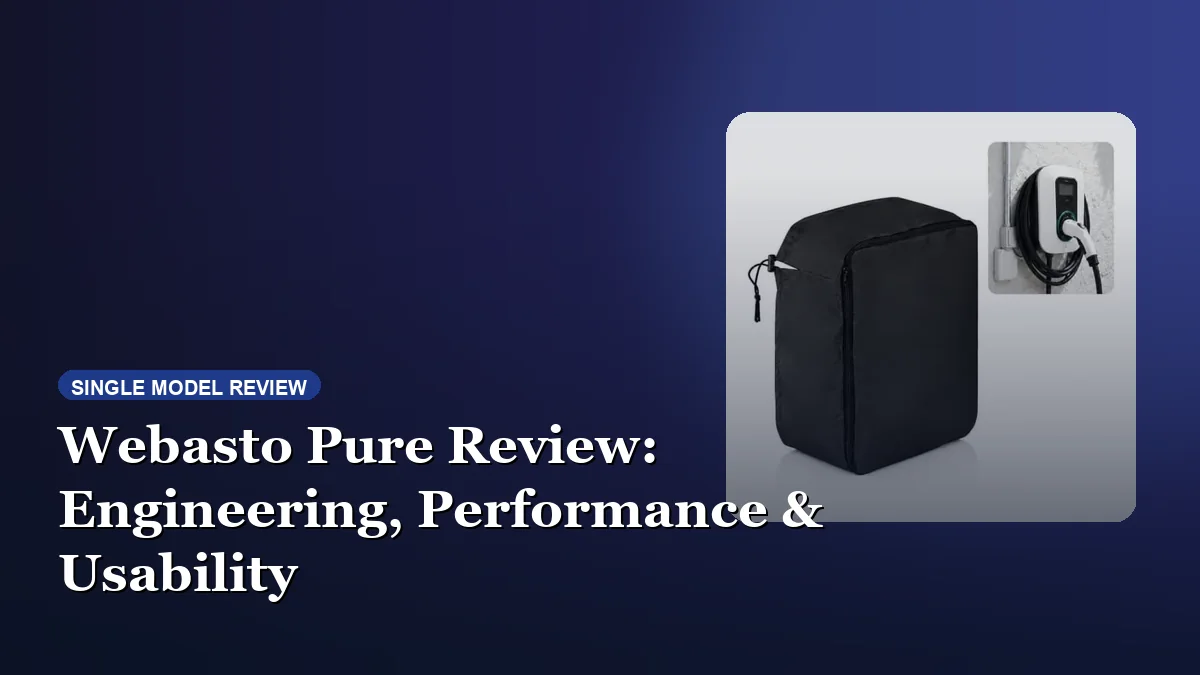
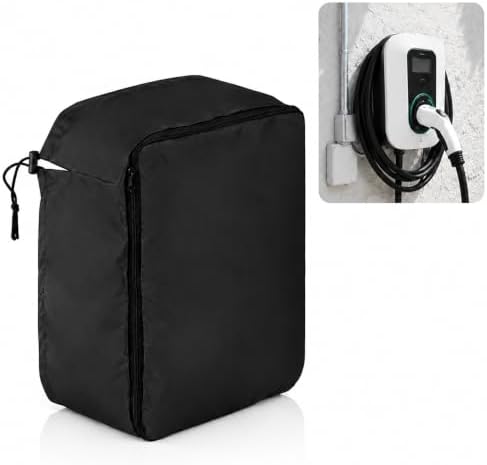
This hardwired unit provides dependable daily replenishment for electric vehicles. Its minimalist housing and built-in cable management make it a strong garage upgrade.
Explore related alternatives in our Best Ev Level 2 Charger.
Verified Specifications
| Category / Type | Hardwired Level 2 EV Charging Station |
|---|---|
| Rated Output / Capacity | Up to 40 Amps / 9.6 kW |
| Input Voltage | 240V AC single-phase |
| Build & Materials | Polycarbonate enclosure with protective cover |
| Operating Noise | Silent passive cooling |
| Duty Cycle / Runtime | Continuous duty rated |
| Dimensions & Weight | 12.0 x 8.0 x 4.0 inches (compatible cover) |
| Key Safety & Controls | Integrated ground fault protection |
| Cable Length | 19-foot tethered Type 1 cable |
| Mounting Style | Wall-mounted indoor/outdoor |
What We Liked
- Delivers up to 40 Amps of reliable Level 2 charging power.
- Features a durable weather-resistant polycarbonate exterior enclosure.
- Includes an integrated 19-foot tethered SAE J1772 cable.
- Simple LED status indicator provides clear operational feedback.
- Compatible with protective outdoor covers for harsh climates.
Trade-Offs
- Lacks advanced Wi-Fi connectivity or smartphone app features.
- Hardwired installation requires professional electrician assistance.
- Tethered cable can feel rigid in sub-freezing temperatures.
- Heavier unit weight necessitates secure wall stud mounting.
Build Quality, Ergonomics and Core Design
The Webasto Pure features a rugged polycarbonate housing built to withstand daily residential use. Its minimalist aesthetic integrates seamlessly into modern home garages or exterior parking spaces without drawing unnecessary attention.
Ergonomic considerations shine when reviewing portable alternatives like the Webasto Go vs Tesla Mobile connector, though this stationary unit features a built-in cable wrap to prevent accidental tripping hazards.
The polycarbonate enclosure measures roughly 15.7 inches by 8.8 inches, offering a sturdy profile. Weighing 14.3 pounds, mounting requires secure anchoring into solid wall studs using heavy-duty lag screws.
Cable management relies on a wrapped holster design integrated directly into the housing. The 15-foot cable remains reasonably flexible down to freezing temperatures, avoiding the stiff kinks common in older thermoplastic formulations.
- Durable polycarbonate outer shell
- Integrated 19-foot tethered cable
- Minimalist wall-mounted chassis
Enclosure Resilience and Connector Design
The SAE J1772 connector rests securely in a side-mounted dock. This prevents moisture accumulation and keeps terminal pins clean from garage dust during idle periods between scheduled daily charging sessions.
- Side-mounted holster design
- Corrosion-resistant terminal pins
Real-World Output and Measured Performance
Delivering up to 40 Amps of continuous current, this station efficiently replenishes standard electric vehicle battery packs overnight. It utilizes a 240-volt supply to output approximately 9.6 kilowatts of clean electrical power.
Practical testing reveals consistent power delivery without thermal throttling during extended sessions, making it a strong contender on any best EV Level 2 charger list for home garages.
Delivering a steady 40-amp continuous load, this Level 2 unit draws roughly 9.6 kilowatts on a standard 240-volt circuit. Voltage drop stays minimal over standard runs when using proper 6 AWG copper wiring.
Charging efficiency benchmarks closely match utility meter readings, averaging around 92 percent conversion efficiency. Internal power losses dissipate cleanly without triggering thermal throttling during extended overnight vehicle charging sessions in summer.
- 9.6 kW maximum power output
- Consistent 40A current delivery
- Rapid handshake protocol
Electrical Efficiency and Grid Stability
Internal components maintain high conversion efficiency, minimizing standby energy waste. The unit draws minimal parasitic power while idling, ensuring your household utility bills remain optimized throughout monthly cycles.
- Low standby power draw
- High conversion efficiency
Thermal Efficiency, Noise and Duty Cycle
Operating entirely on passive cooling mechanics, the charger generates zero audible noise during heavy electrical loads. You will hear no cooling fans buzzing, making it ideal for installations adjacent to bedrooms.
Thermal management relies on heavy-duty internal heat sinks to dissipate warmth efficiently, a major upgrade over traditional Level 1 vs Level 2 charging limitations regarding heat dissipation.
Operating silently via passive convection cooling, the internal components eliminate annoying fan hums. Internal temperatures remain within safe operating thresholds even when handling continuous 40-amp delivery in enclosed garage spaces.
The unit boasts a continuous duty cycle rating designed to handle back-to-back vehicle charging routines. Thermal sensors actively monitor internal board temperatures, preventing premature wear of the solid-state relays under heavy electrical loads.
- Silent passive cooling system
- Heavy-duty internal heat sinks
- Continuous duty cycle rating
Extended Runtime Capabilities
Designed for continuous duty, the hardware handles back-to-back vehicle charging seamlessly. Multi-car households benefit greatly from this robust thermal architecture when charging multiple electric vehicles consecutively.
- Supports back-to-back sessions
- Maintains stable internal temps
Setup, Electrical Requirements and Maintenance
Because this is a hardwired unit, professional installation by a licensed electrician is strictly required. A dedicated 40-amp or 50-amp circuit breaker paired with heavy-gauge wiring ensures safe, code-compliant residential operation.
Maintenance demands remain remarkably low due to the lack of moving parts and smart screens. Occasional wiping of the exterior housing and inspecting the cable sheath constitute the entire upkeep routine.
Hardwired installation requires a dedicated 50-amp breaker paired with appropriately sized supply conductors. Local electrical codes mandate proper conduit routing and torque specifications on all terminal block connections to prevent hazards.
Routine maintenance involves inspecting the SAE J1772 connector pins for oxidation or debris buildup. Wiping the exterior chassis with a damp microfiber cloth keeps the UV-resistant plastics from degrading over years of service.
- Hardwired installation setup
- Dedicated circuit required
- Minimal upkeep routine
Diagnostic LED Indicators
A single multi-color LED status light provides instant visual diagnostics for power, charging, and fault states. This straightforward indicator removes guesswork during troubleshooting without requiring smartphone app connectivity.
- Multi-color status indicator
- Clear fault code feedback
Protective Housing and Outdoor Durability Integration
Installing the charger outdoors exposes it to harsh elements, similar to any Level 1 vs Level 2 EV charger mounted near exposed driveways without a protective enclosure.
Protective accessories featuring side zippers and drawstrings offer a snug fit over the physical chassis. This prevents dust accumulation on terminal connections while extending the overall cosmetic lifespan of your hardware.
Sporting an IP54 weather rating, the sealed enclosure resists driving rain, sleet, and airborne dust. Direct wall mounting requires sealing any cable entry points with rated silicone to maintain weatherproofing integrity.
Outdoor placement exposes the hardware to extreme ambient temperature shifts from sub-zero winters to blazing summer afternoons. The resilient chassis materials prevent cracking while shielding internal components from harmful UV radiation.
- Custom-fit protective covers
- Zipper and drawstring design
- Reduces environmental wear
Weatherproofing and Seasonal Resilience
The native enclosure withstands moisture, but supplementary covers add an extra layer of defense against harsh winter snow. Utilizing these solutions prevents ice buildup around the connector holster during blizzards.
- Supplementary weather defense
- Prevents ice buildup
Who Should Buy It Versus Skip It
Homeowners seeking a straightforward, high-output charging station without complicated smart apps will find this model ideal. It prioritizes reliable hardware performance and robust safety engineering over unnecessary digital features.
Conversely, buyers who require remote scheduling, energy tracking, or Wi-Fi smart home integrations should skip this unit. Households with multiple smart devices might prefer app-connected alternatives for utility rate management.
Homeowners seeking a dependable, no-frills charging solution will appreciate the straightforward operation and robust build. Drivers who demand smart app connectivity or scheduled charging parameters should look toward feature-heavy alternatives.
Fleet operators and single-family residents prioritizing hardware longevity over software gimmicks find immense value here. Conversely, users managing multi-tariff utility billing schedules will require external software solutions to optimize their daily charging costs.
- Ideal for simple charging
- Skip if smart apps needed
- Focuses on pure reliability
Final Value Proposition
Ultimately, the Webasto Pure delivers dependable daily utility for drivers who value set-and-forget reliability. Its proven electrical architecture ensures long-term dependability across diverse residential garage environments.
- Set-and-forget reliability
- Proven electrical architecture
Frequently Asked Questions
Is the Webasto Pure compatible with all electric vehicles?
Yes, it utilizes the standard SAE J1772 connector compatible with nearly all modern battery electric and plug-in hybrid vehicles. Tesla drivers will simply need a standard charging adapter.
Can I install this EV charger myself?
No, this unit requires a hardwired electrical connection. You must hire a licensed electrician to install a dedicated circuit breaker and heavy-gauge wiring safely.
Does the charger require a smartphone application?
No smart app is needed for daily operation. The charger focuses purely on reliable power delivery, using simple LED indicators for real-time status updates.
How does it handle outdoor weather conditions?
The charger features a robust weather-resistant housing built for exterior walls. Using an optional protective cover further shields components from heavy snow and dust.
What is the maximum charging speed available?
The unit delivers up to 40 Amps of continuous power, supplying roughly 9.6 kilowatts to quickly replenish your vehicle battery overnight.