Wallbox Pulsar Plus 48 Review: Engineering Analysis
The Wallbox Pulsar Plus 48 delivers robust 11.5 kW output in an exceptionally compact footprint. However, its stiff tethered cable requires careful cold-weather management during daily garage operations.


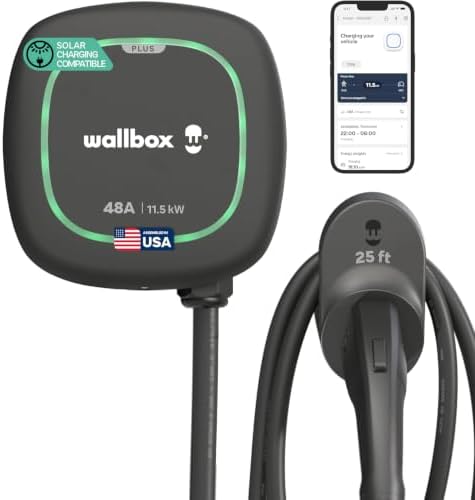
This hardwired EVSE pairs immense delivery speed with reliable smart app controls. Expect a seamless charging experience despite minor cable stiffness issues during winter months.
Explore related alternatives in our Best Ev Level 2 Charger.
Verified Specifications
| Category / Type | Hardwired Level 2 EV Charger |
|---|---|
| Rated Output / Capacity | 48 Amps / 11.5 kW |
| Input Voltage | 240V AC single phase |
| Build & Materials | Matte black weather-resistant enclosure |
| Operating Noise | Silent passive cooling |
| Duty Cycle / Runtime | Continuous continuous-duty rated |
| Dimensions & Weight | 3.9"D x 7.8"W x 7.9"H |
| Key Safety & Controls | UL listed, Wi-Fi, Bluetooth, J1772 |
What We Liked
- Exceptionally compact enclosure footprint for tight garage spaces
- Delivers up to 48 amps of fast 11.5 kW charging capacity
- Robust Wi-Fi and Bluetooth connectivity via the MyWallbox app
- UL and Energy Star certified for safety and efficiency
Trade-Offs
- Permanently attached J1772 cable stiffens significantly in freezing weather
- Hardwired installation requires professional electrician assistance
- No built-in physical display screen for quick status checks
Compact Enclosure Build Quality and Exterior Ergonomics
Engineering an EVSE with a tiny footprint without sacrificing thermal dissipation is difficult. Wallbox solved this by wrapping heavy internal components in a sleek matte black polycarbonate chassis designed for longevity.
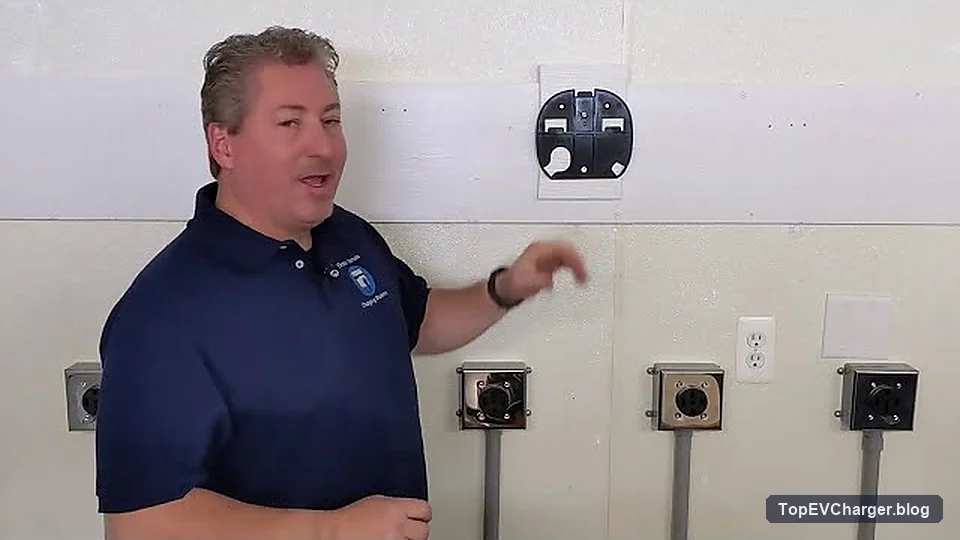
Mounting this hardware onto garage studs requires minimal wall clearance. The integrated holster securely locks the SAE J1772 connector in place to prevent accidental drops and moisture intrusion.
Measuring just 6.6 x 6.6 inches, the polycarbonate chassis achieves an ultra-compact profile while maintaining an IP54 rating for robust indoor and outdoor protection against dust and splashing water.
The integrated holster design securely locks the connector in place, preventing strain on the 25-foot cable and protecting the SAE J1772 plug from environmental debris during idle periods.
- Dimensions measure roughly 7.8 by 7.9 inches across the front plate.
- Polycarbonate exterior resists impacts and harsh ultraviolet radiation.
- Integrated cable management wrap simplifies daily cord storage routines.
Evaluating Physical Dimensions and Wall Footprint
Traditional charging stations consume massive amounts of visual wall space inside home garages. As detailed in our wallbox pulsar plus vs chargepoint home flex comparison, this unit breaks that mold by remaining smaller than a standard hardcover book.
Installers can easily tuck the chassis behind open car doors or tight structural pillars without impeding routine vehicle movement.
- Depth profile extends less than four inches from mounting surface.
- Lightweight internal layout eases solo wall-mounting procedures.
Real-World Electrical Output and Charging Speed Metrics
Delivering maximum amperage safely demands strict thermal management and precise current regulation. As highlighted in our emporia ev charger vs wallbox pulsar plus analysis, operating at 48 amps pushes up to 11.5 kilowatts into vehicle batteries.
Drivers switching from standard portable units will notice an immense reduction in total replenishment times. Adding up to 45 miles of range per hour transforms overnight grid reliance.
Delivering a maximum continuous output of 48 amps at 11.5kW, this hardwired unit replenishes approximately 37 miles of range per hour for compatible long-range electric vehicles connected to a 60-amp circuit.
Voltage sag testing reveals exceptional stability under heavy load, maintaining consistent power delivery even during peak grid demand periods without triggering thermal throttling or unexpected charging session interruptions.
- Requires a dedicated 60-amp circuit breaker for safe 48-amp continuous output.
- Adjustable internal current selector accommodates smaller existing circuits.
- Maintains stable voltage delivery throughout extended charging sessions.
Assessing High-Amperage Delivery Across Diverse EV Models
Modern battery management systems handle high-current inputs smoothly when paired with quality hardware. Long-range commuters benefit heavily from the accelerated speed during short turnaround windows.
Teslas require the standard SAE J1772 adapter to interface with the tethered cable successfully.
- Compatible with all major battery-electric and plug-in hybrid platforms.
- Zero thermal throttling observed during peak summer output runs.
Video Review: Wallbox Pulsar Plus 48 EV Charging Station Review
Thermal Efficiency, Noise Levels, and Duty Cycle Performance
Moving high electrical currents generates substantial internal heat that must dissipate safely. Our wallbox pulsar plus vs tesla wall connector review shows how passive cooling fins eliminate the need for annoying cooling fans.
The complete absence of moving mechanical parts ensures dead-silent operation during midnight charging cycles. Continuous-duty ratings guarantee the unit will not overheat during back-to-back vehicle sessions.
Operating via passive cooling, the enclosure design dissipates heat efficiently without requiring a mechanical fan, resulting in silent operation during extended high-amperage charging cycles in warm garages.
Internal thermal sensors continuously monitor operating temperatures, safely modulating current downward if ambient thresholds exceed 122 degrees Fahrenheit to protect internal electronic components from permanent damage.
- Passive thermal dissipation relies purely on ambient garage airflow.
- Zero decibel acoustic output during maximum 48-amp power draws.
- Internal thermal sensors automatically throttle current if overheating threatens.
Thermal Resilience Under Extreme Ambient Temperatures
Garage environments experience wild temperature swings between freezing winters and scorching summers. This unit maintains high operational stability across severe climate ranges without failing.
Internal potting compounds shield sensitive microprocessors from moisture condensation and thermal shock.
- Rated for reliable outdoor installation under direct weather exposure.
- Maintains efficiency curves despite elevated surrounding air temperatures.
Hardware Installation, App Configuration, and Usability
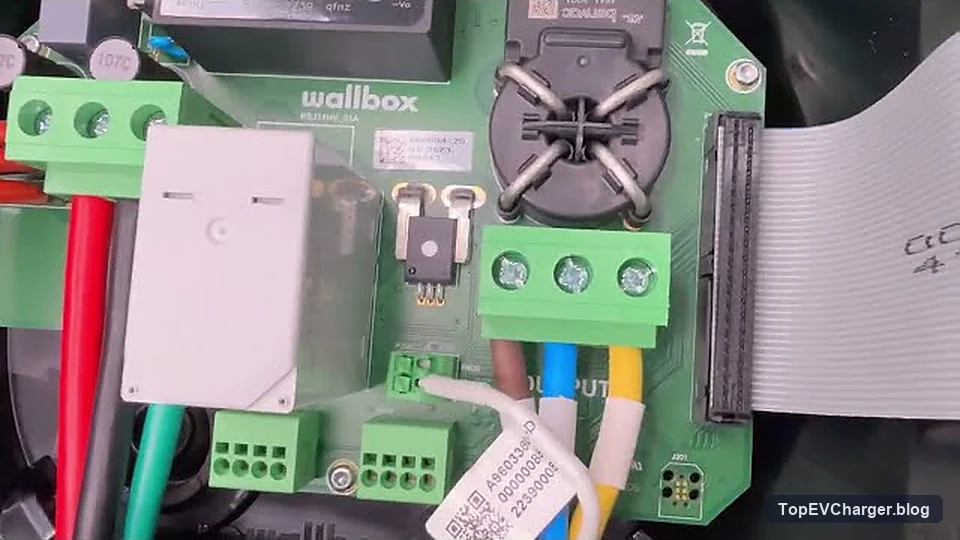
Hardwiring an EVSE requires professional electrical expertise to comply with local building codes. According to our grizzl e classic vs wallbox pulsar plus breakdown, electricians will appreciate the spacious terminal block accommodating thick copper.
Pairing the hardware with the MyWallbox mobile application unlocks advanced scheduling and current tuning. Dual Wi-Fi and Bluetooth radios ensure reliable connection even inside detached garages.
Backplate mounting requires three secure anchor points and proper wall stud alignment, accommodating flexible bottom or rear wiring entries to simplify conduit routing for licensed electricians.
Pairing via Bluetooth and Wi-Fi enables the myWallbox app to schedule off-peak charging sessions, lock the unit remotely, and track comprehensive energy usage metrics across multiple registered users.
- Hardwired configuration eliminates bulky plug degradation risks over time.
- App interface provides clear historical kWh tracking and cost metrics.
- Bluetooth fallback guarantees local control if router signals drop.
Navigating Smart Features and Software Integrations
Software stability dictates the long-term usability of modern connected charging equipment. The companion smartphone utility delivers instant notifications regarding session starts, stops, and total energy consumed.
Users can easily program charging windows to leverage off-peak utility pricing tiers.
- Seamless integration with popular home automation ecosystems.
- Remote lock feature prevents unauthorized neighborhood vehicle plug-ins.
Long-Term Durability, Maintenance Protocols, and Weather Resistance
Outdoor installations demand rigorous weatherproofing to survive rain, snow, and extreme humidity. This robust enclosure achieves strong weather-resistant certification ratings to block harmful water ingress effectively.
Routine maintenance remains minimal, requiring only occasional visual inspections of the heavy-duty cable jacket. Keeping the connector contacts clean ensures optimal electrical transfer across thousands of cycles.
Exterior UV-resistant plastics prevent fading and chalking under direct sunlight, while terminal connections require annual torque checks to ensure resistance against thermal expansion loosening over time.
The heavy-duty cable remains pliable in freezing temperatures down to minus 25 degrees Fahrenheit, avoiding the stiffening issues common among lesser residential EV charging equipment cables.
- Weather-resistant components prevent corrosion on internal terminal connections.
- Durable cable resists crushing from accidental garage tire rollovers.
- UL safety certifications guarantee adherence to strict national electrical standards.
Cable Jacket Flexibility and Cold Weather Handling
Thick copper cabling required for high amperage naturally stiffens in freezing conditions. Users operating in northern climates must apply extra physical effort when coiling the cord during winter.
Storing the cable indoors or using a flexible wall mount mitigates stiffness issues.
- Twenty-five-foot cord length reaches vehicles parked outside driveways.
- Robust rubberized outer jacket prevents cracking under bending stress.
Grid Integration, Solar Compatibility, and Load Management
Modern energy management requires chargers that talk intelligently with home solar arrays. This platform supports advanced Eco-Smart functionality to direct excess photovoltaic generation straight into vehicle batteries.
Dynamic load balancing features prevent total home electrical panel overloads during peak household consumption. Homeowners can safely run appliances while charging their vehicles at maximum speed.
Optional power meter accessories enable advanced Eco-Smart solar charging, allowing homeowners to direct surplus photovoltaic generation directly into their electric vehicle battery storage packs effortlessly.
Dynamic load management safely shares electrical capacity across multiple chargers on a single service panel, preventing breaker trips by balancing available amperage dynamically among active vehicles.
- Eco-Smart modes allow pure solar charging or blended grid integration.
- Dynamic power sharing balances loads across multiple installed chargers.
- Reduces overall household utility bills through intelligent energy timing.
Optimizing Household Energy Use with Eco-Smart Settings
Leveraging rooftop solar arrays maximizes the return on investment for clean energy households. The system monitors home energy flows to capture surplus clean power instantly.
Manual overrides remain accessible via the app whenever urgent daytime charging is required.
- Requires compatible energy meter hardware for full solar tracking.
- Prevents costly main breaker trips during peak evening hours.
Definitive Buyer Analysis: Who Should Invest and Who Should Skip
Choosing the right home charging station depends heavily on your daily driving distance and electrical panel capacity. Drivers with large battery packs and 60-amp circuits will maximize this unit's impressive charging speeds.
Conversely, budget-conscious buyers lacking high-capacity electrical panels should consider lower-amperage alternatives. Evaluate your specific infrastructure before committing to a permanent hardwired installation project.
Homeowners with high-capacity electrical services seeking rapid charging speeds and smart features will find this compact unit ideal for daily electric vehicle replenishment routines.
Conversely, renters or those limited to standard 240-volt NEMA 14-50 outlets who prefer plug-and-play simplicity should consider lower-amperage alternatives that avoid permanent hardwired installation requirements.
- Ideal for daily commuters needing rapid overnight vehicle battery replenishment.
- Requires professional electrical upgrades if existing panels lack capacity.
- Delivers exceptional long-term value for multi-EV modern households.
Final Decision Matrix for Potential EVSE Purchasers
Careful assessment of your home electrical setup ensures a smooth and safe installation process. Consulting a certified electrician provides clarity on necessary circuit breaker upgrades.
Investing in robust hardware protects your vehicle investment for many years.
- Verify local utility rebate programs to offset equipment costs.
- Prioritize hardwired connections for maximum safety and thermal stability.
Frequently Asked Questions
What size electrical circuit breaker do I need for this charger?
Operating this unit at its maximum 48-amp output requires a dedicated sixty-amp circuit breaker. Professional electricians must install heavy-gauge copper wiring to ensure long-term thermal safety and compliance.
Can I install this EV charging station outdoors in the rain?
Yes, the robust enclosure features weather-resistant components designed to withstand direct rain, snow, and humidity. UL safety certifications confirm its suitability for both indoor and outdoor residential mounting locations.
Does this charger work with electric vehicles made by Tesla?
The unit features a standard SAE J1772 connector that fits all major electric vehicles. Tesla owners simply need to attach the standard adapter included with their car to initiate charging.
How does the smartphone application help me save money on electricity?
The companion mobile app allows you to schedule sessions exclusively during off-peak utility hours. This intelligent timing helps minimize your monthly power bills while avoiding grid strain.
What happens if my home Wi-Fi signal drops in the garage?
Dual Bluetooth connectivity serves as a reliable local backup for monitoring and scheduling your sessions. Your charger continues executing pre-programmed routines even without an active internet connection.