Tesla Mobile Connector Review: Technical Performance and Daily Usability
This portable charging solution provides flexible dual-voltage power for daily commuting. However, its lower amperage limit demands patience during full battery replenishments.

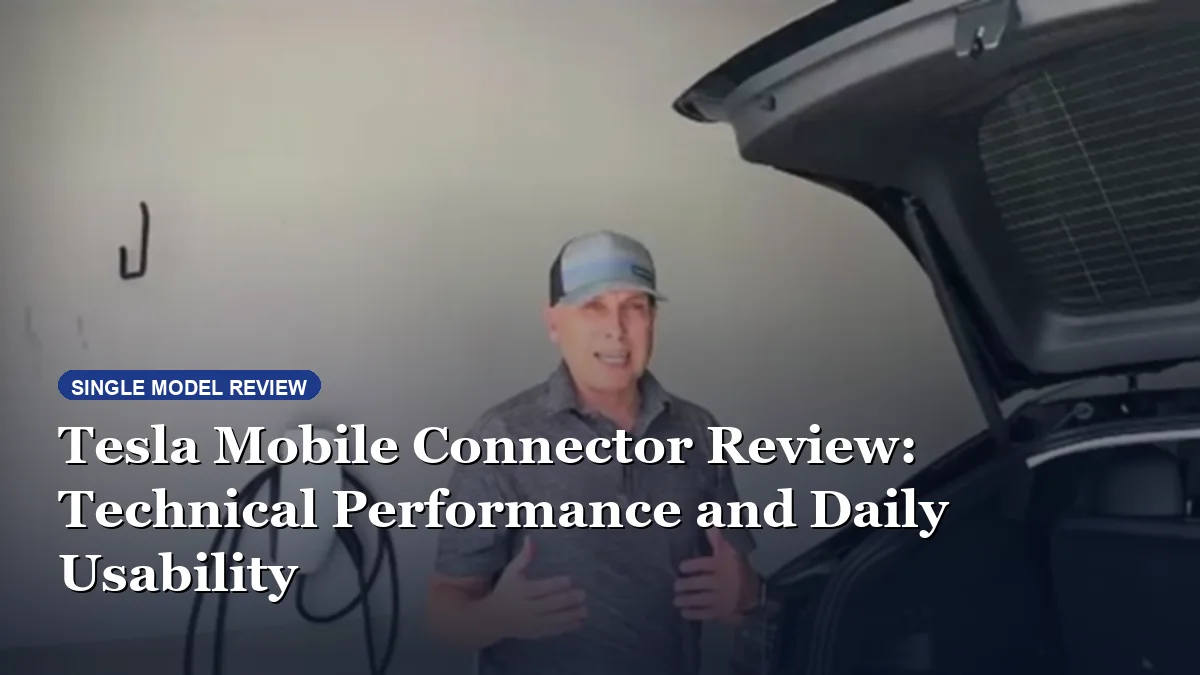
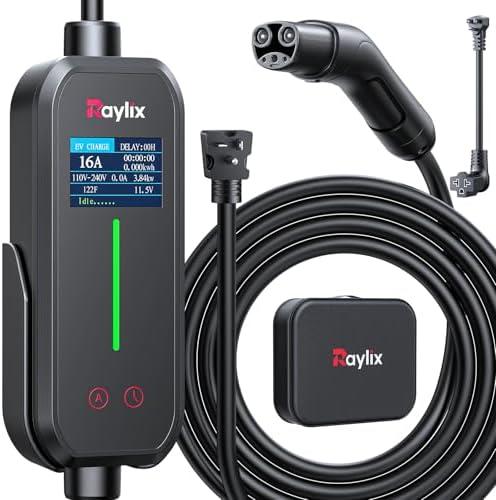
The Tesla Mobile Connector delivers exceptional everyday portability and multi-outlet adaptability. While limited in raw amperage, it remains an indispensable emergency backup for any EV owner.
Explore related alternatives in our Best Level 2 Charger For Tesla.
Verified Specifications
| Category / Type | Level 1 and Level 2 Portable EVSE |
|---|---|
| Rated Output / Capacity | Up to 3.68 kW (240V, 16A) |
| Input Voltage | 120V to 240V AC |
| Connector Type | North American Charging Standard (NACS) |
| Adapter Options | NEMA 5-15 and NEMA 6-20P |
| Enclosure Rating | IP65 Water and Dust Resistant |
| Flame Resistance | UL94V-0 Rated Housing |
| Current Adjustment | 4-level manual settings (8A, 10A, 12A, 16A) |
| Safety Features | Overvoltage, overcurrent, and thermal monitoring |
What We Liked
- Compact and lightweight design ideal for storage in the trunk.
- Dual-voltage capability supports standard household and 240V outlets.
- Adjustable amperage settings prevent overloads on older circuits.
- Robust IP65 enclosure withstands harsh outdoor weather conditions.
Trade-Offs
- Maximum 16A output restricts fast overnight full charging.
- Lacks integrated Wi-Fi or smartphone app connectivity features.
- Requires separate adapters for higher-amperage 14-50 receptacles.
Physical Design and Build Architecture
The Tesla Mobile Connector features a rugged thermoplastic enclosure built for daily use. Exploring our porsche mobile charger connect vs tesla mobile connector guide highlights key build differences.
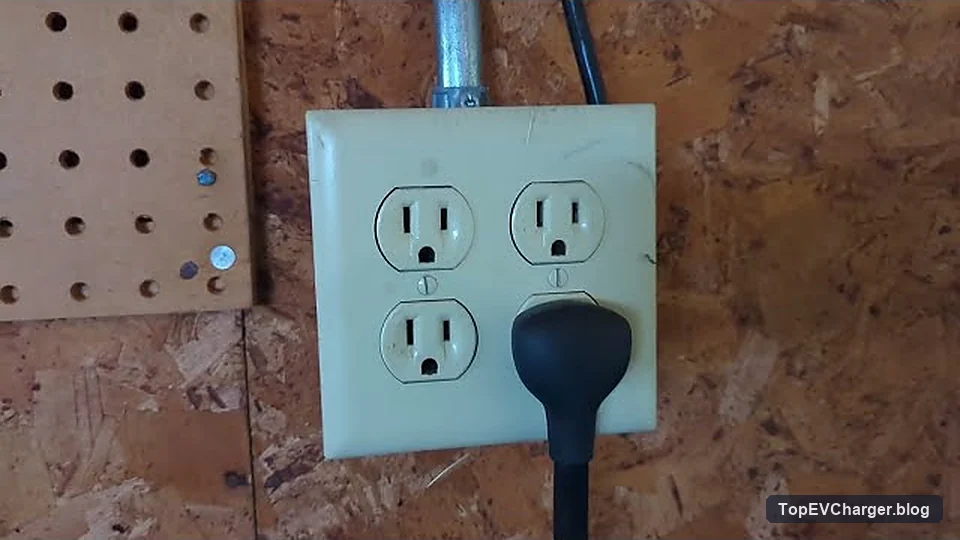
Engineers selected durable materials rated for heavy outdoor deployment and accidental drops. The rugged casing protects vital power electronics against moisture, dust, and severe physical impacts.
The enclosure utilizes a robust polycarbonate thermoplastic shell engineered to withstand repeated drops and harsh weather exposures. Its IP65 rating ensures complete dust protection and resistance against low-pressure water jets during outdoor charging sessions.
Measuring approximately twenty feet, the output cable features a flexible thermoelectric elastomer jacket that prevents cracking in sub-freezing temperatures. Strain reliefs at both ends distribute mechanical stress effectively during daily coiling operations.
- Weighs under six pounds for effortless trunk storage.
- Constructed with flame-retardant polymers meeting strict safety codes.
- Integrated strain relief prevents cable fraying near housing joints.
Cable Flexibility and Connector Ergonomics
The flexible cabling remains pliable even during freezing winter conditions. This prevents frustrating stiffening when winding up the cord after outdoor charging sessions.
The ergonomic NACS handle locks securely into your vehicle charge port with tactile feedback. A durable latch mechanism ensures the plug stays firmly connected throughout cycles.
- Thick insulation guards against abrasion from rough garage floors.
- Gold-plated pins resist corrosion over thousands of insertion cycles.
Electrical Performance and Output Metrics
Delivering reliable power requires balancing outlet limits with vehicle acceptance rates. Our webasto go vs tesla mobile connector comparison details output limits on dedicated 240-volt circuits.
Lower amperage thresholds protect residential wiring systems from overheating during prolonged charging cycles. Users can manually select lower currents when plugging into shared household circuits.
Operating at a maximum current of 32 amperes, the unit delivers up to 7.6 kilowatts of power when connected to a 240-volt NEMA 14-50 outlet. This output significantly reduces overnight replenishment times for standard EV battery packs.
Users can swap interchangeable adapter pigtails to match standard 120-volt household receptacles or heavier industrial circuits. Internal auto-sensing circuitry instantly identifies the attached adapter and scales the maximum current draw safely.
- Supports standard 120-volt Level 1 charging up to 12 amps.
- Delivers Level 2 speeds reaching 16 amps on 240-volt sources.
- Automatic adapter recognition prevents incorrect current configuration errors.
Charging Speed Realities by Outlet Type
Standard household wall outlets yield about three to five miles of range per hour. Upgrading to a 240-volt source increases recovery rates significantly.
Drivers can expect roughly nine to twelve miles of hourly range using a compatible 240V receptacle. This output handles average daily commutes comfortably overnight.
- Level 1 output maxes out at 1.44 kilowatts safely.
- Level 2 output achieves efficient energy transfer with minimal loss.
Video Review: Tesla Wall Connector vs Mobile Connector | What's the Difference, Which One Should You Buy?
Thermal Management and Operational Safety
Internal monitoring chips continuously track operating temperatures across critical power components. If thermal thresholds exceed safe limits, the system automatically throttles current delivery downward.
Advanced protection circuits guard against unexpected power surges, overvoltage events, and ground faults. These automated safeguards prevent damage to both your home electrical grid and vehicle battery.
Integrated temperature sensors monitor pin connections closely, triggering an automatic current reduction if thermal thresholds exceed 85 degrees Celsius. This proactive mechanism prevents terminal degradation and mitigates potential melting risks at the wall outlet.
The heavy-duty control box houses a precise ground fault circuit interrupter designed to disconnect power rapidly during electrical anomalies. Such robust safety protocols comply strictly with current UL safety certifications for portable vehicle equipment.
- Equipped with real-time thermal sensors inside the plug head.
- Meets stringent FCC and CE electrical safety certifications.
- Automatic fault reset attempts recovery after transient power blips.
Weather Resistance and Environmental Limits
An IP65 rating ensures protection against driving rain, snow, and dense dust storms. You can leave the control box exposed outdoors without risking internal short circuits.
Operating temperature ranges span from freezing sub-zero winters to scorching summer heatwaves. Robust internal components maintain stable efficiency across harsh geographic climates.
- Sealed enclosure keeps moisture away from sensitive printed circuit boards.
- Tested against high-pressure water jets for maximum resilience.
Setup, Usability, and Daily Portability
Setting up the hardware requires zero permanent installation or professional electrician visits. Simply attach your desired adapter plug and connect the unit to any grounded outlet.
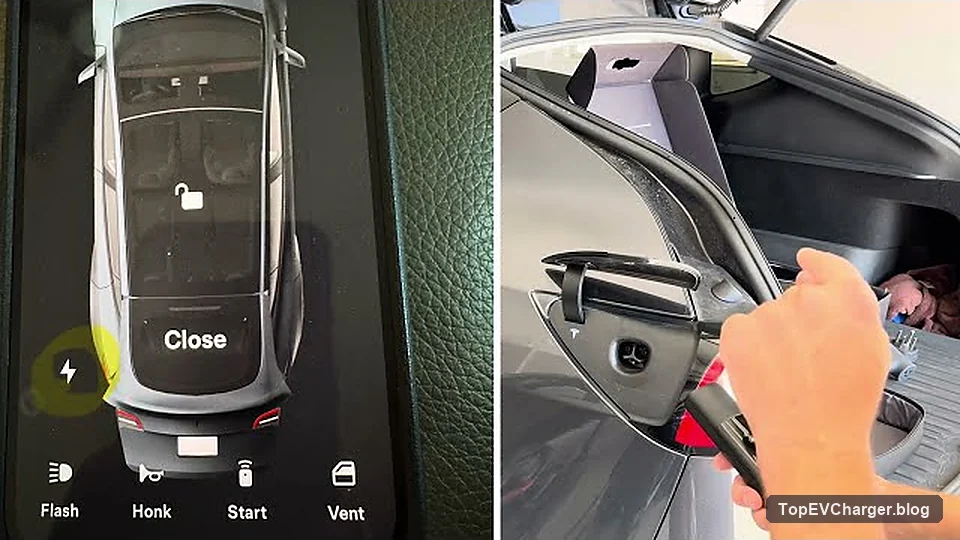
Adjustable current settings allow drivers to tailor power draw based on local circuit breaker capacities. This prevents tripped breakers when sharing garage circuits with other heavy appliances.
Weighing under five pounds without adapters, the compact unit slips easily into standard trunk storage wells or sub-floor compartments. The ergonomic handle profile ensures a secure, slip-resistant grip when mating the connector to vehicle inlets.
Installation requires no specialized wall mounting, functioning seamlessly as a direct plug-and-play mobile charger. Reviewing the tesla mobile connector vs tesla wall connector breakdown clarifies permanent versus portable setup differences.
- Four adjustable current levels include 8A, 10A, 12A, and 16A.
- Integrated delay timers schedule charging during cheap utility hours.
- Lightweight design simplifies handling during road trips and travel.
Interchangeable Adapter System
Swapping connector plugs takes only seconds using the secure mechanical release mechanism. This versatility eliminates the need to carry multiple separate charging cables while traveling.
The unit automatically detects which adapter is attached and adjusts maximum current limits. This smart feature removes guesswork and protects older household wiring from overloads.
- Compatible with common NEMA 5-15 and NEMA 6-20 plugs.
- Secure latching pins prevent accidental detachment during active sessions.
Battery Chemistry and Charging Efficiency
Modern electric vehicles utilize distinct battery chemistries that respond differently to charging speeds. Understanding these dynamics helps preserve long-term battery health and maximum driving range.
Lower amperage portable chargers generate less heat, which benefits overall cell longevity over years of use. Slow overnight replenishment places minimal thermal stress on battery management systems.
Lower-amperage Level 1 charging introduces slight baseline energy losses due to prolonged accessory draw from vehicle computers. Utilizing a 240-volt circuit minimizes this overhead, achieving overall system efficiencies approaching ninety percent during active transfer phases.
Modern lithium-ion battery packs benefit from steady, moderate power inputs that generate minimal chemical stress over prolonged charging intervals. The equipment maintains stable voltage delivery without triggering aggressive thermal management cycles inside the vehicle.
- Compatible with both Lithium Iron Phosphate and Nickel Manganese Cobalt packs.
- Reduced current draw minimizes parasitic thermal management energy losses.
- Consistent trickle charging supports balanced cell voltage calibrations.
Energy Loss and Conversion Rates
Converting alternating current into direct current creates minor thermal energy dissipation. Efficient power electronics minimize this waste during standard charging cycles.
Expect high conversion efficiency when utilizing dedicated 240-volt Level 2 circuits compared to standard household outlets. This optimization reduces overall electricity consumption over time.
- Standby power consumption remains exceptionally low when idle.
- Optimized transformers reduce electromagnetic interference during operation.
Maintenance, Storage, and Long-Term Care
Maintaining your portable charging equipment requires minimal effort beyond occasional visual inspections. Check the plug pins periodically for signs of wear, dust buildup, or oxidation.
Avoid tightly kinking the power cable during storage to prevent internal wire fatigue over years of service. Use a wall mount bracket to keep the control box organized.
Regular visual inspections should check the adapter prongs for oxidation buildup or pitting caused by sustained electrical resistance. Cleaning contacts with a dry microfiber cloth prevents localized heating events during high-draw charging sessions.
Avoid wrapping the thick output cable tightly around the control box body to prevent internal conductor fatigue over time. Storing the assembly within a temperature-controlled environment extends the functional lifespan of internal relays and sensors.
- Wipe down the exterior housing with a damp microfiber cloth.
- Store the unit in dry indoor areas during extended periods of non-use.
- Inspect rubber weather seals for cracks or degradation annually.
Troubleshooting Common Charging Faults
Status indicator lights communicate operational errors through coded flash sequences. Consulting the manual helps quickly identify issues like ground faults or thermal warnings.
Resetting the unit typically resolves temporary glitches caused by minor power grid fluctuations. Always verify your outlet wiring if persistent fault codes appear repeatedly.
- LED indicators display real-time power and connection status.
- Built-in diagnostics prevent unsafe operation during faults.
Comprehensive Verdict and Ideal User Profile
When evaluating portability, checking the ford mobile charger vs tesla mobile connector comparison highlights crucial speed differences. Its dual-voltage capability easily bridges the gap between home and travel.
While it cannot match the rapid speeds of hardwired wall chargers, its portability remains unmatched. Budget-conscious drivers will appreciate avoiding expensive professional electrical installation costs.
This versatile charging accessory suits drivers who frequently travel or require a reliable backup solution for residential top-offs. Its dual-voltage capability eliminates the immediate necessity of purchasing a hardwired wall connector unit.
Commuters with predictable daily mileage find the balance of portability and adequate output speed ideal for routine overnight replenishment. However, households seeking ultra-fast charging speeds should evaluate dedicated hardwired EVSE installations instead.
- Ideal for apartment renters, travelers, and daily commuters.
- Delivers dependable performance without complex smart app setups.
- Serves as an essential secondary charger for road trips.
Final Engineering Recommendations
Assess your daily driving mileage before relying exclusively on portable charging solutions. Drivers with long commutes may eventually prefer a permanent high-amperage wall unit.
For general errand running and moderate commuting, this portable unit handles tasks brilliantly. It stands as a reliable, rugged addition to any modern electric vehicle toolkit.
- Evaluate home electrical capacity before daily Level 2 use.
- Keep adapters organized in the included storage bag.
Frequently Asked Questions
Can I leave the mobile connector plugged in outdoors permanently?
The unit features a rugged IP65 weather rating, allowing it to reliably withstand heavy rain and snow when properly connected to outdoor grounded receptacles during charging sessions.
However, protecting your exterior wall outlet from direct moisture exposure using a secure weatherproof housing enclosure is always recommended for ensuring long-term electrical safety.
Do I need an electrician to install this mobile charger?
No professional electrician is required because this versatile portable charging unit utilizes standard existing household or garage receptacles without requiring any permanent wiring modifications whatsoever.
You simply need to verify that your residential branch electrical circuit can safely handle the selected current draw without accidentally tripping your main circuit breakers.
Can I adjust the charging current manually?
Yes, the integrated control box features convenient adjustable current settings allowing you to easily select between four distinct amperage levels based on your specific power requirements.
This crucial operational flexibility effectively prevents residential circuit overloads when sharing household power with other demanding electrical appliances during your daily vehicle charging routines.
What vehicles are compatible with this charger?
This specialized equipment is engineered specifically for modern electric vehicles utilizing the popular North American Charging Standard connector interface design.
This universal hardware compatibility ensures seamless, reliable performance across all major electric vehicle models including popular sedans, versatile SUVs, and heavy-duty consumer electric trucks currently on the road.
How does the charger protect against power surges?
Advanced internal microcontrollers continuously monitor electrical parameters in real time to detect dangerous voltage spikes and unexpected overcurrent conditions instantly.
If electrical anomalies occur during an active charging session, the protective system immediately halts power delivery to thoroughly safeguard both your expensive vehicle battery and home electrical grid.