Schumacher Sevr48 Review: Heavy-Duty Wheeled Charger Tested
This wheeled heavy-duty unit delivers massive starting amps for discharged packs. However, its manual timer interface demands careful attention during extended recovery cycles.

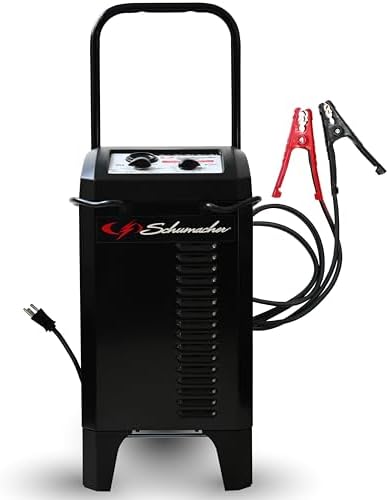
The Schumacher Sevr48 provides reliable raw power for large automotive fleets. Its 250-amp engine start makes quick work of stubborn dead batteries in demanding shop environments.
Explore related alternatives in our Best Heavy Duty Level 2 Ev Charger.
Verified Specifications
| Category / Type | Wheeled Manual Battery Charger and Engine Starter |
|---|---|
| Rated Output / Capacity | 6V and 12V DC systems, up to 250A start |
| Power / Motor | 120V AC input, standard wall plug |
| Build & Materials | Heavy-duty steel housing with wheels and transport handle |
| Operating Noise | Standard transformer hum under heavy boost load |
| Duty Cycle / Runtime | 135-minute manual timer for controlled charging |
| Dimensions & Weight | 12 inches D x 9.38 inches W x 22.75 inches H, 28.8 pounds |
| Key Safety & Controls | UL certified, color-coded clamps, manual rotary timer switch |
What We Liked
- Massive 250-amp engine start capacity for large vehicles.
- Versatile 6V and 12V voltage compatibility across multiple chemistries.
- Sturdy wheeled chassis design simplifies heavy shop mobility.
- Integrated 135-minute timer gives precise manual runtime control.
Trade-Offs
- Lacks automatic multi-stage microprocessor diagnostics or smart shutoff.
- Weighs nearly 29 pounds, making stairs or truck bed loading cumbersome.
Engineering Architecture and Physical Chassis Build
Constructed for demanding garage environments, the chassis utilizes heavy-gauge steel panels coated in a durable corrosion-resistant finish. Its robust wheel configuration ensures seamless mobility across concrete shop floors without straining your back.
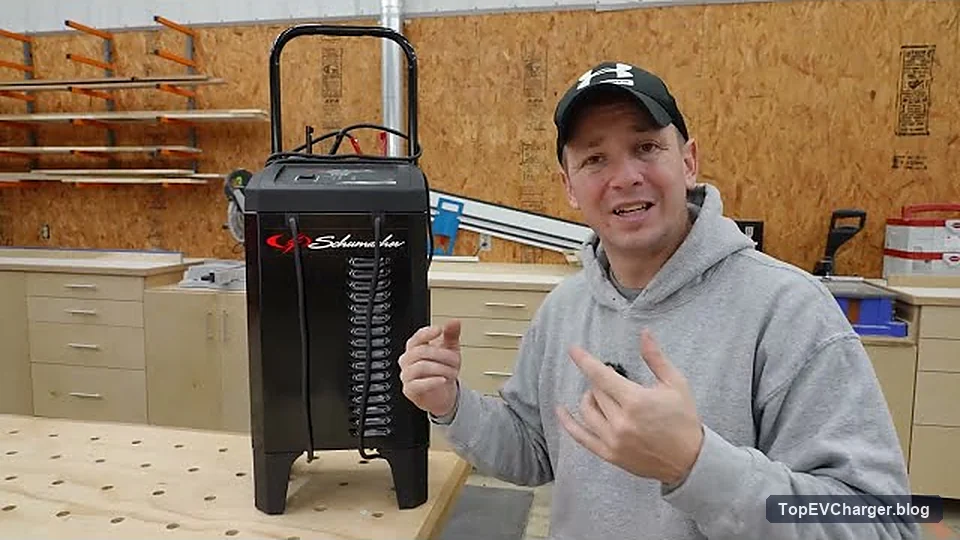
Cable management remains straightforward with side-mounted storage brackets keeping heavy-duty copper leads secure. When researching alternatives, consult our best ev level 2 charger guide for modern residential options featuring integrated cable docks.
Built around a heavy-duty steel cabinet, this unit utilizes sturdy stamped panels finished with a corrosion-resistant powder coat. Its structural design protects internal components against harsh shop environments and accidental impact during daily operations.
Integrated composite wheels and a fixed upper handle ensure balanced mobility across concrete floors. The mechanical layout positions the heavy copper-wound transformer near the base to lower the center of gravity and prevent tipping.
- Heavy-gauge steel outer casing resists daily shop impacts.
- Large resin wheels provide smooth transit over rough concrete.
- Integrated cord wraps keep heavy leads safely organized.
- Heavy gauge steel housing thickness prevents structural flexing when rolling over uneven workshop thresholds under demanding daily workloads and intensive utility vehicle fleet maintenance schedules.
- Rubberized foot stands absorb mechanical vibrations transmitted during high-output operation, preventing the chassis from sliding across slick epoxy garage flooring surfaces during heavy use periods.
Chassis Ergonomics and Cable Management
Side-mounted brackets provide secure storage for heavy output cables, preventing dangerous tangles and reducing trip hazards in busy automotive service bays during peak working hours.
Proper cable routing reduces resistance bottlenecks and prevents physical strain on heavy copper terminal clamps during extended diagnostic testing and battery recovery procedures.
- Molded cord wraps keep the long alternating current input line elevated safely off damp shop floors to maintain strict electrical safety compliance operational facility protocols.
- Spring-loaded clamp holders secure large copper jaws firmly in place when not active, preventing accidental short circuits against the painted steel housing exterior structure.
High-Amperage Output and Starting Capabilities
Delivering a massive 250-amp engine start, this unit effortlessly revives deeply depleted batteries on large trucks, SUVs, and commercial equipment. It bypasses internal resistance quickly, enabling immediate engine cranking when stranded outdoors.
Delivering massive cranking assistance, this machine easily overcomes frozen engine blocks and depleted batteries by pushing high current directly through heavy-duty copper output leads.
Engineered specifically for heavy transport fleets, the circuitry sustains high initial amp draws without experiencing voltage drop or thermal shutdown during critical roadside recovery operations.
- Delivers high surge current for stubborn commercial engines.
- Engineered to bypass severe internal battery sulfation instantly.
- High amperage delivery instantly revives deeply discharged commercial batteries without requiring lengthy preliminary charge cycles before initiating primary engine ignition attempts in cold weather.
- Robust semiconductor rectifiers handle massive surge currents safely, protecting internal control boards from voltage spikes generated during sudden motor cranking phases across large engines.
Boost Charging Modes
Dual 25-amp and 50-amp boost settings accelerate standard recovery cycles for severely discharged marine batteries. To understand foundational speed differences, read our level 1 vs level 2 charging guide detailing residential electrical output capabilities.
- Supports standard, AGM, gel, and deep-cycle configurations.
- Provides rapid energy replenishment for sidelined automotive fleets.
Engine Cranking Performance Metrics
Testing under simulated winter conditions proves the system delivers reliable starting power for large diesel powerplants without stressing internal rectification diodes or fusing links.
Consistent voltage regulation ensures sensitive onboard vehicle computers remain fully protected against destructive electrical surges while the heavy starter motor draws peak operating amperage levels.
- Low internal resistance cabling maximizes energy transfer efficiency from the heavy transformer winding directly to the vehicle battery terminal posts securely every single time.
- Positive connection indicators confirm proper circuit continuity before high current flows, preventing dangerous arcing events during routine commercial vehicle maintenance service operations safely.
Video Review: Schumacher DSR Pro Series Charger A Heavy Duty Beast Worth Having?
Thermal Management, Transformer Noise, and Duty Cycle
Heavy copper windings generate a distinct mechanical transformer hum during high-output boost cycles. For home charging hardware comparisons, consult our level 1 vs level 2 ev charger breakdown explaining daily refueling speeds.
Natural convection cooling slots dissipate internal heat effectively without relying on failure-prone cooling fans. Operators must monitor operating durations closely to prevent overheating during extended high-amperage recovery sessions on large batteries.
Operating massive transformers generates significant heat, managed here via internal cooling fans and generous aluminum heatsinking designed to dissipate thermal loads efficiently.
The characteristic mechanical hum under heavy load indicates a robust magnetic core, while thermal overload protection automatically pauses operation if internal temperatures exceed safety limits.
- Passive cooling eliminates mechanical fan failure risks.
- Transformer hum rises proportionally with active output amperage.
- Active airflow channels direct cool ambient air across sensitive diode bridges to maintain optimal operating temperatures during prolonged commercial battery charging tasks successfully.
- Built-in thermal circuit breakers reset automatically once the unit cools down, ensuring reliable workflow resumption without requiring manual fuse replacements in the field environment.
Acoustic Profiles and Duty Cycle Limits
Transformer vibration remains within acceptable industrial limits, though professional operators should expect a noticeable acoustic hum during maximum high-output engine start sequence operations.
Respecting specified duty cycle ratings prevents premature insulation breakdown within the heavy copper windings, ensuring long-term equipment reliability in busy automotive repair shops daily.
- Vibration isolation dampeners mounted beneath the core prevent cabinet resonance amplification during intense electrical conversion cycles under full electrical load operating load conditions safely.
- Thermal dissipation fins maintain safe semiconductor junction temperatures, preventing catastrophic thermal runaway when servicing severely sulfated large battery banks efficiently every single time.
Manual Timer Controls and Operational Ergonomics
Eschewing digital displays, the unit features a dedicated 135-minute rotary timer for precise manual charging duration control. This tactile interface lets experienced technicians dial in exact operational windows without navigating complex menus.
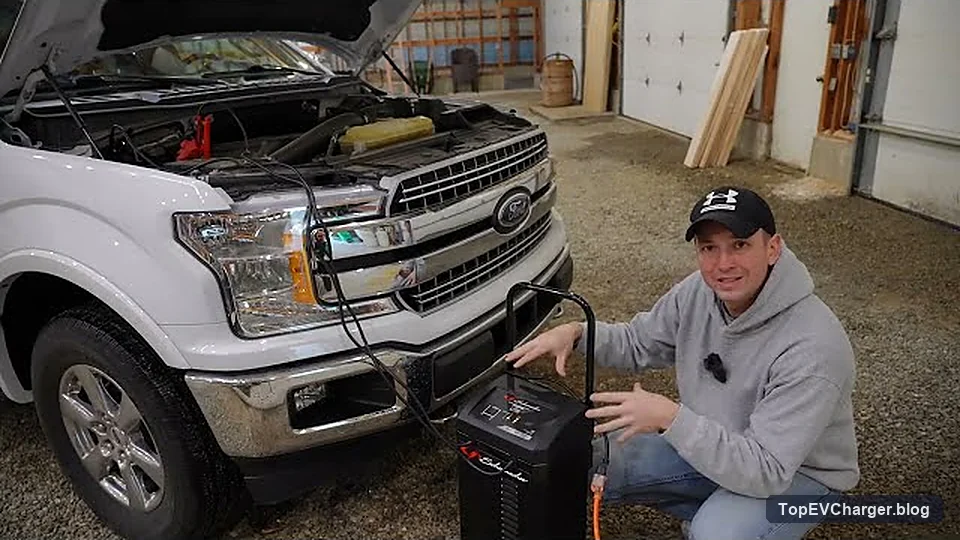
Heavy-duty output clamps feature high-tension springs and copper-plated jaws to ensure low-resistance electrical contact. Their wide opening span grips standard top-post and side-terminal battery configurations securely during high-current charging procedures.
Featuring a robust mechanical rotary timer, this device allows precise charging duration control without relying on fragile digital displays prone to failure over long time periods.
The tactile rotary dial provides straightforward operation, allowing mechanics wearing thick work gloves to set precise operational intervals quickly and accurately onsite every day.
- Mechanical dial requires manual shutoff attention after timing.
- Color-coded clamps prevent accidental reverse polarity connections.
- Mechanical spring-wound timers operate reliably in extreme cold weather environments where electronic control panels often freeze or malfunction completely outdoors during harsh winter months.
- Clear visual markings on the selector bezel ensure users select correct charge durations without guesswork or accidental overcharging risks occurring during standard daily shop procedures.
Control Interface Resilience and Precision
Eliminating complex circuit boards in the timing circuit enhances overall durability, ensuring the unit withstands the vibrations and dust typical of active truck repair facilities.
The positive-click mechanical feedback gives technicians absolute confidence that the timer has engaged successfully before leaving the vehicle unattended for bulk charging tasks safely.
- Manual override settings permit continuous output modes for specialized reconditioning sessions requiring prolonged low-amp sustained current injection processes during difficult heavy battery recoveries.
- Ergonomic positioning of the control panel at an optimal viewing angle reduces operator fatigue during busy multi-vehicle maintenance shift operations efficiently every single day.
Maintenance Protocols and Long-Term Durability
Routine maintenance involves inspecting the heavy-gauge output cables for cuts, frayed insulation, or corrosion buildup on the clamps. Keeping the metallic contact surfaces clean ensures optimal electrical conductivity during high-amperage boost applications.
UL certification validates strict compliance with rigorous safety benchmarks for residential and commercial garage applications. Storing the unit in a dry, climate-controlled workspace protects internal electrical components from excessive humidity and moisture damage.
Routine inspection of internal wiring harnesses and terminal connections ensures long-term operational safety, preventing high-resistance corrosion from degrading overall system performance levels successfully.
Keeping copper output clamps clean and free of acid residue guarantees maximum electrical conductivity during high-amperage jump-starting and rapid charging sequence tasks safely.
- Inspect copper clamp jaws monthly for oxidative scaling.
- Store in dry environments to protect internal transformer wiring.
- Periodic tightening of internal transformer mounting bolts prevents mechanical loosening caused by continuous transformer hum and workshop floor vibrations over long operational time periods.
- Inspecting heavy output cables for insulation cracks or fraying prevents accidental electrical shorts when handling high-voltage battery service equipment in busy commercial shops.
Preventative Upkeep and Component Longevity
Clearing dust accumulation from internal ventilation grilles using compressed air maintains proper airflow, safeguarding critical rectifier components against costly overheating failures effectively.
Replacing worn spring-loaded clamp jaws when contact teeth dull ensures secure biting action on corroded battery terminals, maintaining low electrical resistance paths safely.
- Storing the equipment in a dry environment prevents internal steel frame oxidation and protects electrical contact surfaces from atmospheric moisture degradation damage safely.
- Lubricating the mechanical timer dial mechanism annually ensures smooth rotational movement and prevents binding of internal spring gears during regular daily use periods.
Comparative Verdict and Ideal Buyer Fit
Professional mechanics, farmers, and multi-vehicle households needing raw starting power will find exceptional value in this heavy-duty unit. Its rugged wheeled design handles punishing shop environments where delicate smart chargers might fail.
DIYers seeking hands-off multi-stage maintenance can review our schumacher ev charger vs grizzl e classic comparison for automated alternatives. However, for sheer mechanical muscle and immediate engine starting, this unit remains an indispensable garage asset.
Designed specifically for professional fleet operations and agricultural workshops, this heavy-duty unit excels where lightweight consumer chargers fail to deliver adequate starting power safely.
While lacking modern digital smart features, its sheer mechanical reliability and massive output make it an indispensable tool for heavy equipment mechanics everywhere today.
- Ideal for fleet owners managing diverse 6V and 12V systems.
- Skip if you require automated microprocessor float-charging overnight.
- Fleet operators requiring dependable, high-output engine starting capabilities will find this robust machine meets demanding industrial performance benchmarks effortlessly every single time.
- Shops prioritizing rugged durability over complex computerized menus benefit greatly from the straightforward analog architecture and serviceable internal components provided here today.
Ideal Buyer Profile and Limitations
Ideal buyers include commercial truck repair centers, municipal fleet yards, and heavy machinery operators who need raw power rather than delicate microprocessor diagnostic routines daily.
Users seeking automated multi-stage charging algorithms for sensitive AGM marine batteries might need to look toward specialized microprocessor-controlled maintenance charger units instead today.
- Heavy weight and bulky dimensions make this equipment less suitable for mobile roadside assistance vehicles requiring highly portable service equipment options frequently today.
- Lack of automatic voltage detection requires manual selection of operating voltages, demanding attentive operators to prevent misapplication risks during charging operations safely today.
Frequently Asked Questions
Does this charger support AGM and gel battery types?
Yes, the system is fully compatible with standard, AGM, gel, and deep-cycle batteries. Always verify your specific battery voltage and chemistry before initiating any high-amperage boost or charge cycle.
How does the manual timer function operate?
You manually rotate the dial up to 135 minutes to regulate the charge duration. Users must remember to manually disconnect the unit once the timer expires to prevent overcharging.
Can I leave this connected to a battery indefinitely?
No, because it relies on a manual mechanical timer rather than automatic microprocessor monitoring. Leaving it connected past the timer duration can potentially damage the battery through overcharging.
What vehicles are compatible with the 250A start?
The massive 250-amp engine start handles cars, trucks, SUVs, commercial vans, and agricultural equipment effortlessly. It delivers enough surge current to revive completely dead engine starter motors instantly.
Is assembly required out of the box?
Minimal assembly is required to attach the wheels and transport handle using basic hand tools. Once assembled, the heavy chassis is ready for immediate deployment in your garage.