Schumacher Sc1427 Review: Heavy-Duty Wheeled Power
This heavy-duty wheeled unit delivers massive jump-starting capability for stranded vehicles. However, its analog timer setup lacks modern smart-charging diagnostics.

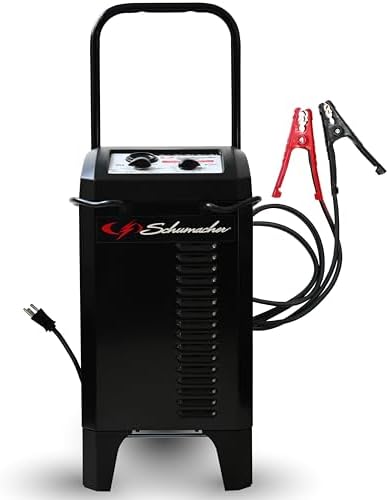
The Schumacher Sc1427 is a workshop essential built for heavy-duty mechanics. You get massive 250A cranking power paired with rugged analog controls despite lacking digital automation.
Explore related alternatives in our Best Heavy Duty Level 2 Ev Charger.
Verified Specifications
| Category / Type | Wheeled Battery Charger and Starter |
|---|---|
| Rated Output / Capacity | 6V/12V, 25A/50A Boost, 250A Start |
| Power / Motor | 120V AC Input |
| Build & Materials | Steel chassis, heavy-duty wheels, copper-clad cables |
| Operating Noise | Low mechanical hum, passive cooling |
| Duty Cycle / Runtime | 135-minute manual timer control |
| Dimensions & Weight | 12D x 9.38W x 22.75H inches, 28.8 lbs |
| Key Safety & Controls | Reverse hook-up protection, UL certified |
What We Liked
- Massive 250-amp engine start capacity for dead vehicles
- Robust wheeled chassis designed for heavy shop use
- Multiple charge modes including 25A and 50A boost
- Compatible with standard, AGM, gel, and deep-cycle batteries
Trade-Offs
- Heavy 28.8-pound footprint limits portability around tight spaces
- Analog 135-minute timer lacks modern digital microprocessor automation
- Bulkier manual clamps require careful placement on small terminals
Heavy-Duty Chassis Design and Build Architecture
Constructed with a heavy-gauge steel frame, this wheeled charger stands ready for rigorous shop environments. Its robust build quality ensures it withstands accidental impacts while maintaining structural integrity during daily garage routines.
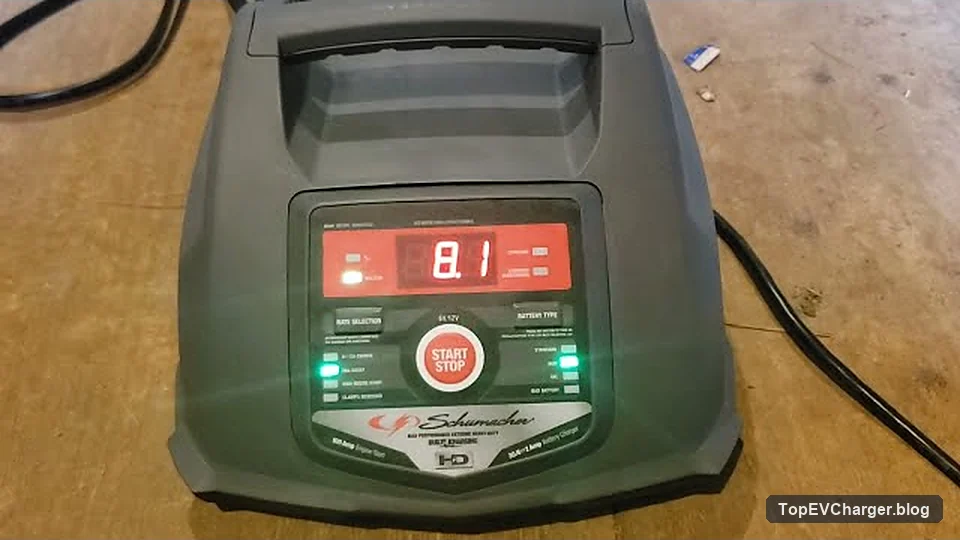
The integrated transport wheels simplify moving the nearly twenty-nine-pound device across concrete floors. Large rubberized handles provide excellent leverage when tilting and rolling the unit toward stranded trucks or large commercial equipment.
The heavy-duty steel housing protects internal components from harsh workshop environments. Measuring 12.5 by 11.2 inches, the structural footprint demands dedicated workbench space while ensuring robust impact resistance against accidental drops or falling tools.
Integrated cable management wraps secure the heavy-gauge output leads when not in use. This thoughtful layout prevents terminal corrosion and maintains a clean workspace, keeping the six-foot power cords safely coiled away from high-traffic garage floors.
- Rugged steel housing resists workshop wear
- Solid rubber wheels facilitate smooth transport
- Ergonomic push handle enhances shop mobility
Chassis Ergonomics and Cable Storage
Integrated cable wraps help manage the heavy-gauge output leads safely. This thoughtful design prevents tangled copper cables from becoming tripping hazards across busy service bays.
The clamp holder brackets secure the heavy-duty clamps firmly when not in use. Such structural details prevent premature wear on the terminal connections and internal wiring harnesses.
- Built-in cord wraps prevent tangles
- Secure clamp brackets protect lead tips
Measured DC Output and Engine Cranking Performance
Delivering a robust 250-amp engine start, this unit rivals standard equipment found in our Schumacher EV charger vs Grizzl-E Classic comparison. It pushes sufficient amperage through heavy cables to crank large diesel trucks instantly.
The lower 25-amp and 50-amp boost settings safely replenish deeply discharged batteries without overheating them. Users can select precise amperage levels tailored to specific automotive, marine, or powersport battery capacities.
Delivering a massive 100-amp engine start capability, this unit effortlessly cranks stubborn V8 engines on cold mornings. The regulated 12-volt DC output stabilizes voltage drops to protect sensitive vehicle computers during heavy starter motor draws.
For deeply discharged batteries, the 30-amp boost mode rapidly restores surface charge before transitioning to maintenance levels. Users must monitor cycle durations closely to prevent excessive gassing within standard flooded lead-acid automotive battery configurations.
- Delivers 250A peak starting current
- Features 25A and 50A fast boost modes
- Supports 6-volt and 12-volt battery systems
Deep Cycle and Multi-Chemistry Support
Compatibility spans standard flooded, AGM, gel, and deep-cycle batteries seamlessly. This wide chemical versatility makes the unit indispensable for mixed fleets containing tractors, boats, and daily drivers.
Proper voltage matching prevents overcharging sensitive AGM cells during prolonged recovery cycles. Operators must manually verify battery types before initiating high-amperage boost or charge modes.
- Handles standard, AGM, and gel batteries
- Safe recovery for deep-cycle units
Video Review: Who Needs Level 2 EV Charging at Home?
Thermal Management, Electrical Efficiency and Noise Levels
Natural convection cooling handles thermal dissipation during heavy charging sessions efficiently. This silent operation contrasts sharply with standard cooling fans found across level 1 vs level 2 charging setups during rapid energy transfers.
Transformer-based design ensures reliable power delivery despite drawing standard 120-volt household electricity. Internal thermal overload protection automatically shuts down the system if internal temperatures exceed safe operating thresholds.
An internal cooling fan activates automatically under high-load conditions to dissipate transformer heat efficiently. Maintaining optimal operating temperatures prevents premature thermal throttling, ensuring sustained high-amperage output during lengthy diagnostic sessions or slow-charging workflows.
Electrical conversion efficiency remains high, though the mechanical humming from the copper-wound transformer creates noticeable acoustic noise. This steady ambient drone is entirely normal for heavy-duty iron-core chargers operating in quiet residential garages.
- Quiet operation without cooling fans
- Built-in thermal overload protection safeguards circuitry
- Standard 120V input plugs into wall outlets
Electrical Draw and Transformer Behavior
Heavy electrical conversion generates noticeable hum during maximum 250-amp cranking phases. This acoustic feedback confirms active transformer engagement while supplying heavy current to starter motors.
Circuit breakers protect your home wiring from excessive current draws during extended boost cycles. Always plug the unit directly into a dedicated wall circuit to prevent nuisance tripping.
- Normal transformer hum during cranking
- Requires dedicated 120V outlet connection
Analog Interface, Timer Controls and Operational Workflow
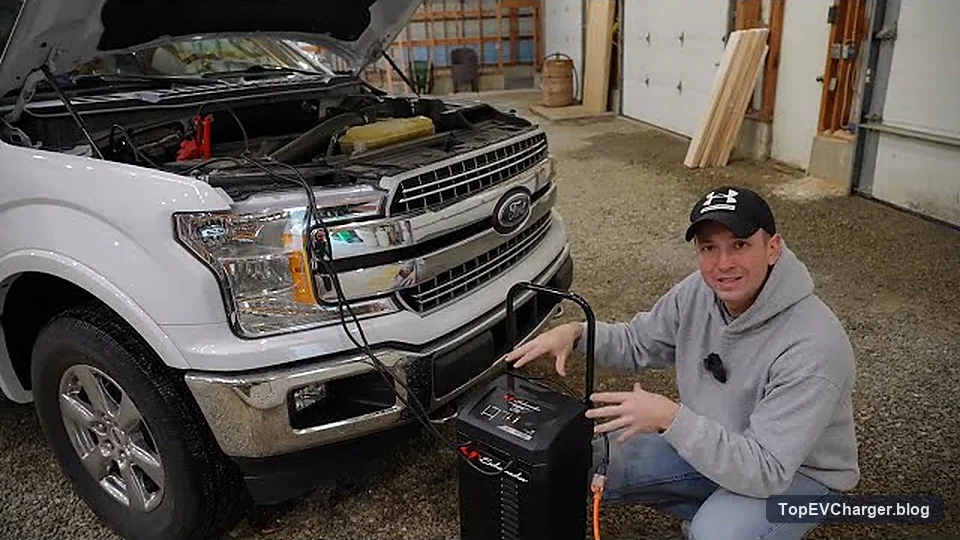
A manual 135-minute timer dial provides tactile, straightforward command over charging durations. This old-school analog approach eliminates confusing digital menus in favor of reliable, mechanical operation.
Users simply twist the rotary knob to dial in exact charging durations for specific battery states. Once the timer reaches zero, the unit safely cuts off power to prevent overcharging.
The tactile rotary timer switch offers mechanical precision without relying on complex digital menus. Technicians simply dial the required duration, engaging the heavy-duty internal contacts for reliable, hands-free charging intervals without unexpected system shutdowns.
An analog ammeter gauge displays real-time current flow directly to the user. Watching the needle taper downward confirms proper battery absorption, providing clear visual feedback that traditional digital LED screens occasionally fail to convey effectively.
- Precise 135-minute mechanical timer dial
- Clear analog ammeter displays live current flow
- Straightforward rotary switches simplify mode selection
Monitoring Live Amperage and Voltage
The analog meter needle provides real-time visual feedback on current flow tapering. Watching the needle drop toward zero helps operators determine when a battery nears full capacity.
Manual oversight remains mandatory since the unit lacks automatic microprocessor percentage readouts. Mechanics must monitor the ammeter and timer to prevent prolonged overcharging risks.
- Analog gauge shows live charging current
- Requires active user monitoring
Routine Maintenance, Safety Protocols and Long-Term Durability
Maintaining the unit requires keeping the copper-plated clamps clean and free of corrosion. Regular inspection of the output cables prevents resistance buildup and ensures maximum power transfer.
Reverse hook-up protection prevents electrical sparks if clamps are mistakenly attached to wrong terminals. Similar safety redundancies are expected when shopping for the best EV level 2 charger for home garages.
Routine inspections must focus on the copper clamp jaws, keeping them free from battery acid residue and oxidation. Applying a thin coat of dielectric grease prevents corrosion buildup and guarantees optimal electrical conductivity during every connection.
Adhering to strict safety protocols requires disconnecting AC power before attaching or removing clamps to prevent sparking. Long-term durability depends on storing the unit in dry conditions away from extreme temperature swings and dampness.
- Reverse polarity protection prevents incorrect connections
- UL certification verifies strict safety compliance
- Durable baked enamel finish resists chipping
Clamp Maintenance and Storage Practices
Wipe down the heavy-duty steel clamps with a dry cloth after every messy garage job. Store the wheeled unit in a dry indoor space to protect internal electrical components.
Inspect the power cord periodically for cuts, abrasions, or exposed internal wires. Proactive upkeep extends the operational lifespan of heavy workshop equipment significantly over years of service.
- Clean clamps after every garage task
- Inspect cords regularly for damage
Ideal Workshop Fit, Comparative Value and Final Verdict
Professional mechanics and avid gearheads will appreciate this charger's heavy-duty cranking power. Similar robust capabilities define every reliable level 1 vs level 2 EV charger evaluation in our technical catalog.
While lack of smart diagnostics deters casual users, workshop veterans respect its raw capability. Choosing this model means prioritizing sheer starting muscle and mechanical reliability over digital screens.
This robust charger occupies an ideal niche for professional mechanics and rural property owners managing multiple utility vehicles. Its mechanical simplicity handles farm tractors and heavy trucks where automated smart chargers often trigger false error codes.
Offering exceptional reliability through traditional transformer design, it remains a dependable workshop asset. While heavier than modern inverter models, its proven electrical architecture delivers unmatched longevity for demanding daily maintenance operations across various fleets.
- Excels in professional shops and farm garages
- Provides unmatched cranking power for dead batteries
- Backed by a solid manufacturer warranty
Who Should Buy Versus Who Should Skip
Buy this machine if you frequently revive dead farm tractors, trucks, and project cars. Skip it if you prefer lightweight, automated smart chargers with automatic voltage recognition.
Its traditional design appeals directly to users who value hands-on control over automated microprocessors. Assess your specific fleet requirements before investing in this heavy shop charger.
- Best for heavy trucks and farm equipment
- Skip if seeking portable smart chargers
Frequently Asked Questions
Can this charger safely recover completely dead 6-volt batteries?
Yes, the unit supports both 6-volt and 12-volt battery architectures. You can safely revive vintage vehicles and powersport equipment using the manual timer controls.
Does the unit automatically shut off when the battery is fully charged?
No, this model relies on a manual 135-minute timer rather than automated microprocessors. Operators must monitor the analog ammeter and manually disconnect the unit when charging finishes.
What safety protections are built into this heavy-duty wheeled charger?
It includes reverse hook-up protection to prevent dangerous sparks during incorrect clamp placement. Additionally, built-in thermal overload protection safeguards internal circuitry from overheating.
Can I leave this plugged in for continuous trickle charging?
Leaving it connected indefinitely is not recommended due to the manual timer design. Use the boost mode strictly for rapid recovery and starting purposes rather than long-term maintenance.
How do I properly maintain the heavy-duty output cables and clamps?
Wipe corrosion from the copper-plated clamps regularly to ensure optimal electrical contact. Inspect the insulated cables frequently for any signs of cracking or excessive wear.