Juicebox Pro 40 Review: Engineering Analysis
The JuiceBox Pro 40 delivers robust power output paired with versatile connectivity. Platform transitions and cloud dependency require careful evaluation for long-term residential reliability.

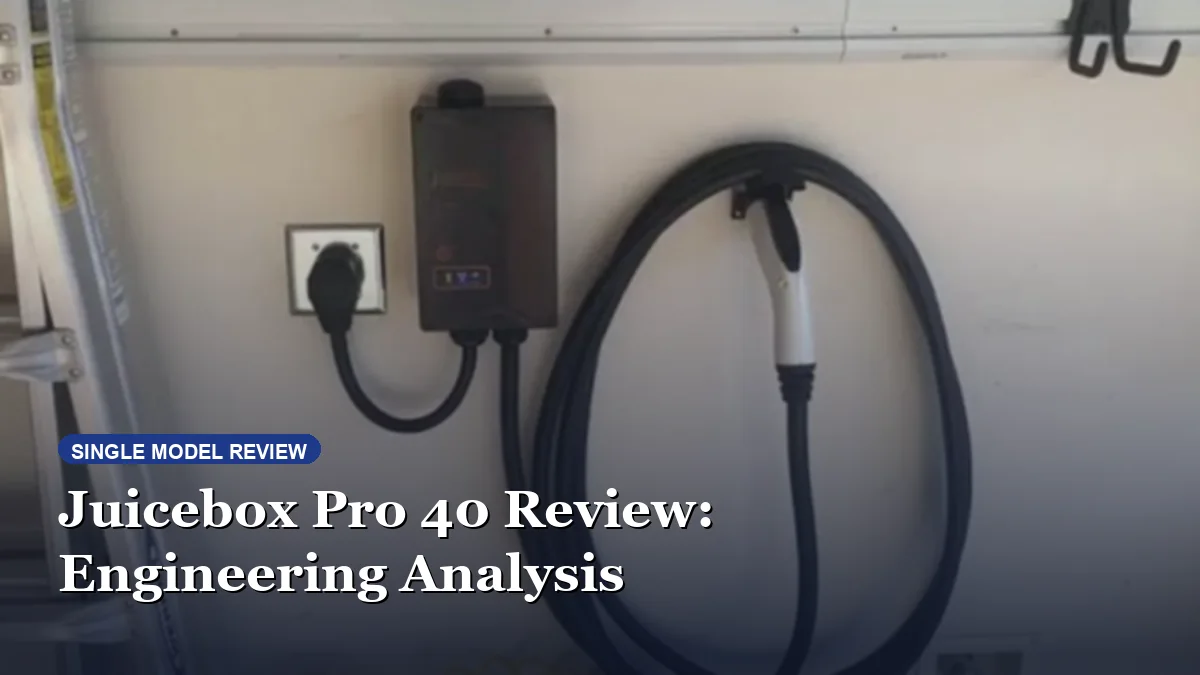
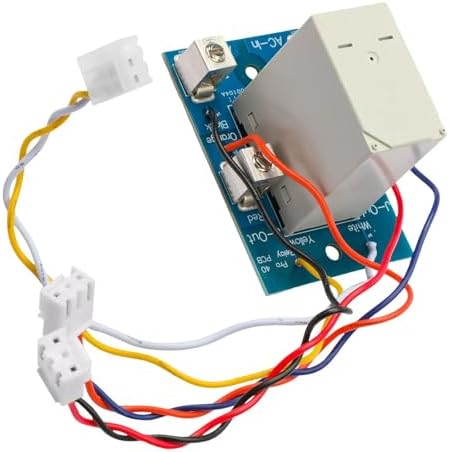
This unit offers exceptional daily charging performance and robust thermal management. Buyers should consider the reliance on cloud infrastructure for advanced scheduling features.
Explore related alternatives in our Best Ev Level 2 Charger.
Verified Specifications
| Category / Type | Level 2 Electric Vehicle Supply Equipment |
|---|---|
| Rated Output / Capacity | 9.6 kW continuous output |
| Amperage Rating | 40 Amp maximum current |
| Voltage Specification | 208V to 240V AC single phase |
| Cable Length & Gauge | 25-foot heavy-duty flexible cable |
| Enclosure Rating | NEMA 4X weather-resistant indoor/outdoor |
| Operating Temperature | -30°C to 50°C thermal threshold |
| Connectivity Protocols | Wi-Fi 802.11 b/g/n 2.4 GHz |
| Mounting Type | Wall-mounted bracket with quick-release |
What We Liked
- Delivers consistent 40-amp continuous current safely across all weather conditions.
- Flexible 25-foot cable remains exceptionally pliable during sub-zero winter temperatures.
- Robust NEMA 4X enclosure protects internal electronics from moisture and dust intrusion.
- Integrated cable management holster securely locks the SAE J1772 connector in place.
Trade-Offs
- Heavy reliance on cloud servers can limit advanced scheduling if internet drops.
- Bulkier enclosure footprint requires ample wall clearance near tight garage spaces.
- Rigid input whip configuration complicates DIY retrofit wiring in older garages.
Architectural Design and Enclosure Build Quality
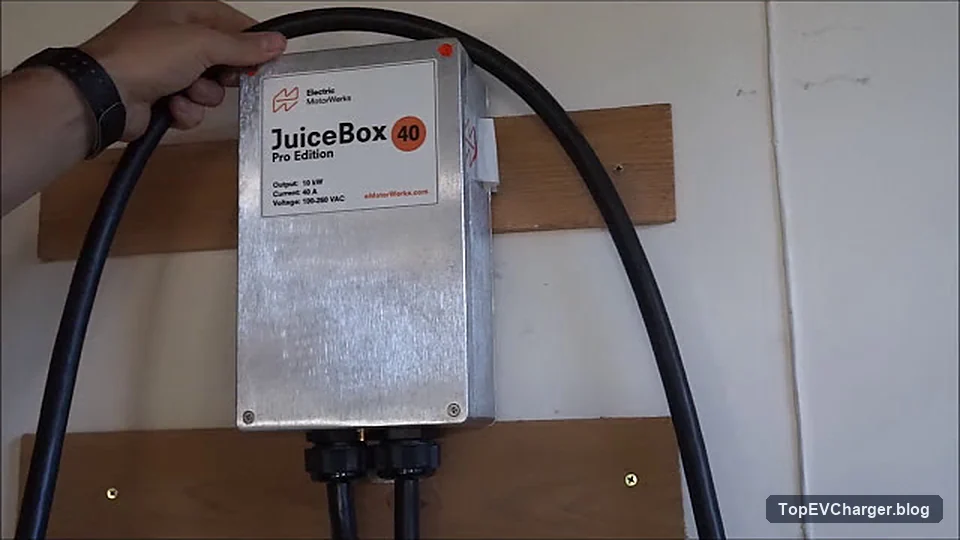
Evaluating the structural integrity of residential charging hardware demands a close look at enclosure engineering. Reviewing options like our Juicebox Pro 32 vs 40 comparison highlights the rugged NEMA 4X rated chassis built to withstand harsh outdoor elements.
Internal layout optimization keeps high-voltage components isolated from low-voltage logic boards. This careful segregation minimizes electromagnetic interference and enhances the overall operational lifespan of the unit.
Thermal dissipation fins are molded directly into the rear aluminum casting. They efficiently transfer internal heat away from the power electronics without requiring noisy internal cooling fans.
- Heavy-duty NEMA 4X outer casing resists direct moisture and UV degradation.
- Aluminum rear heatsink ensures passive thermal management under full 40A loads.
- Secure locking mechanism prevents unauthorized removal from the wall bracket.
Material Selection and Weatherproofing
Outdoor durability relies heavily on gasket seals and high-grade polymer selection. The unit employs a resilient silicone perimeter seal preventing water ingress during wind-driven rain.
Cable strain relief points feature reinforced rubber boots that prevent internal copper fatigue. This prevents premature conductor snapping during daily coiling and uncoiling cycles.
- Silicone gaskets maintain elasticity across extreme seasonal temperature swings.
- Reinforced cable strain relief mitigates repeated bending stress failures.
Real-World Electrical Output and Thermal Performance
Delivering a stable 9.6 kW continuous load requires superior internal component grading. Exploring units detailed in our Juicebox 32 vs 40 guide ensures consistent voltage delivery with minimal droop under prolonged charging sessions.
Internal relay switches handle thermal expansion efficiently, avoiding the micro-welding issues common in budget alternatives. The internal thermistors actively monitor terminal temperatures to prevent thermal runaway.
Efficiency metrics remain high, hovering around ninety-five percent conversion efficiency during standard 240-volt residential delivery cycles.
- Sustains full 40-amp output for hours without triggering thermal throttling.
- Maintains high electrical efficiency with minimal parasitic standby power draw.
- Built-in temperature sensors dynamically adjust current if ambient heat spikes.
Current Stability Under Load
Consistent current delivery prevents vehicle onboard charger faults during long overnight sessions. Voltage monitoring circuits instantly catch input sags and protect connected automotive batteries.
Harmonic distortion remains low, ensuring clean power transfer from your residential electrical panel straight to the vehicle battery pack.
- Advanced voltage sensing protects against sudden grid surges.
- Low harmonic distortion preserves vehicle onboard charger health.
Video Review: JuiceBox Pro 40 Smart EV Charging Station Review 2020
Smart Ecosystem Integration and App Usability
Smart charging platforms dictate how easily owners can leverage off-peak utility pricing. Evaluating alternatives through our Juicebox 40 vs ChargePoint Home Flex breakdown highlights how the integrated Wi-Fi module connects reliably for remote session tracking.
Cloud-based management allows users to monitor cumulative energy consumption in kilowatt-hours. However, this architecture also means internet outages can occasionally disrupt custom charging schedules.
Firmware updates deploy over-the-air, ensuring the hardware receives security patches and feature enhancements without requiring physical technician intervention.
- Wi-Fi connectivity enables seamless remote monitoring via mobile applications.
- Over-the-air updates deliver continuous software enhancements over time.
- Energy dashboard tracks historical charging data for utility cost analysis.
Software Reliability and Scheduling
Creating customized charging schedules helps homeowners maximize utility savings during overnight hours. The companion app interface simplifies time-of-use programming for daily commuters.
Server migration events have historically caused temporary app synchronization hiccups, reminding users of cloud dependency risks in smart hardware.
- Intuitive time-of-use programming aligns with regional utility rates.
- Cloud synchronization enables remote start and stop capabilities.
Physical Installation and Mounting Ergonomics
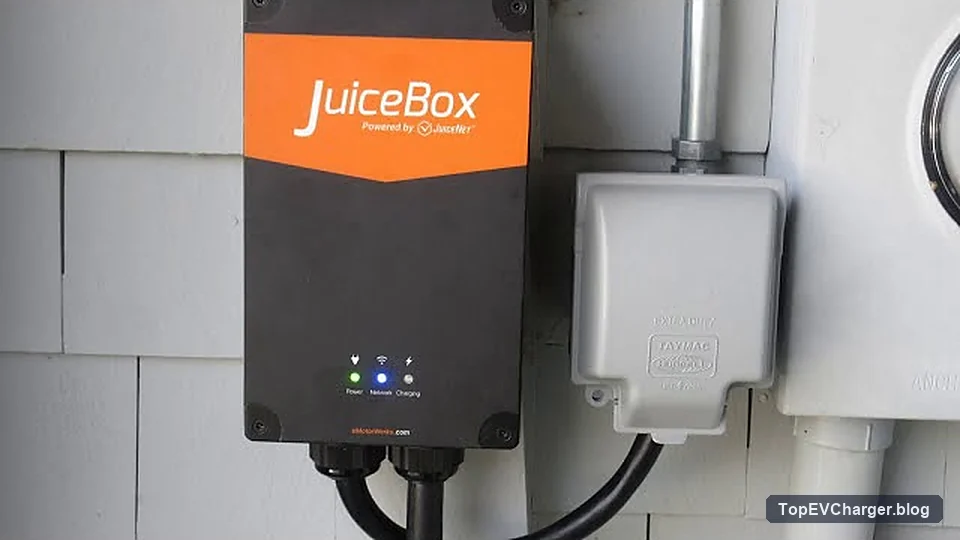
Proper physical setup ensures long-term safety and operational convenience in residential garages. The mounting bracket uses a standard hole pattern that aligns easily with wall studs.
Hardwired configurations offer maximum durability, though a NEMA plug variant provides quick installation options for users with existing heavy-duty outlets.
Ergonomic handle design on the J1772 connector fits comfortably in various hand sizes while wearing winter gloves.
- Wall bracket design simplifies single-person mounting procedures.
- Ergonomic connector grip features a positive-click latching mechanism.
- Flexible input whip accommodates tight routing inside cramped electrical closets.
Wiring and Clearance Considerations
Adequate wall clearance is essential for proper ventilation around the heavy-duty enclosure. Installers must torque internal terminal block screws precisely to prevent high-resistance electrical hotspots.
Using thick copper conductors matching local electrical codes guarantees safe operation at maximum continuous amperage ratings.
- Precise torque specs prevent terminal block oxidation over time.
- Proper clearance ensures unobstructed passive cooling airflow.
Component Durability and Maintenance Realities
Long-term ownership requires understanding potential wear items and replacement schedules. Internal electromechanical relays represent the primary wear component subject to frequent switching cycles.
Routine visual inspections of the output cable prevent unnoticed cuts or abrasions from exposing live internal copper conductors to moisture.
Cleaning the enclosure surface periodically removes dust buildup and preserves the weather-resistant polymer finish against long-term UV fading.
- Relay components experience gradual wear from daily electrical switching.
- Periodic cable checks safeguard against unexpected insulation cracking.
- Simple exterior maintenance preserves the rugged weather-resistant finish.
Mitigating Long-Term Wear
Avoiding tight cable kinks during storage significantly extends the lifespan of the output conductor. Inspecting the J1772 pin contacts annually prevents oxidation buildup from impeding current flow.
Keeping the connector holstered when idle protects internal terminal pins from gathering garage dust and spider webs.
- Loose coiling prevents internal copper wire fatigue.
- Annual pin inspections maintain low electrical resistance.
Comparative Energy Efficiency and Power Delivery
Benchmarking power delivery efficiency highlights how well electrical energy converts into battery charge. The unit exhibits minimal parasitic loss during prolonged standby periods between active sessions.
Power factor correction circuitry maintains high electrical stability across fluctuating residential grid conditions, protecting sensitive vehicle electronics from anomalies.
Rapid power resumption after brief grid interruptions ensures uninterrupted overnight charging cycles without requiring manual user intervention.
- High conversion efficiency minimizes wasted electrical energy as heat.
- Advanced power factor correction stabilizes incoming residential current.
- Automatic recovery features resume charging seamlessly after power blips.
Standby Power and Grid Interaction
Maintaining active Wi-Fi connectivity results in a very small baseline standby power consumption. This tiny energy draw is standard for smart connected electrical appliances.
Grid interaction safety features instantly cut power if abnormal frequency shifts or severe voltage sags occur on local distribution lines.
- Low standby power draw supports smart connectivity features.
- Instant grid cut-off safeguards vehicle charging hardware.
Comprehensive Technical Summary and Verdict
Summarizing the engineering attributes confirms this unit remains a formidable residential charging option. Its robust thermal margins and reliable output satisfy demanding daily driving requirements.
While cloud dependency presents minor logistical hurdles, the core hardware durability and safety features outweigh software quirks for most typical EV owners.
Investing in this charger ensures dependable performance backed by proven engineering. Checking options in our Emporia EV charger vs JuiceBox 40 review reveals high-grade weatherproofing for years of reliable everyday service.
- Strong overall performance driven by solid thermal management.
- Reliable daily charging output handles demanding vehicle battery sizes.
- Exceptional build quality provides long-term residential peace of mind.
Final Purchasing Advice
Homeowners seeking robust power delivery and smart scheduling will find immense value here. Ensuring proper professional installation guarantees maximum safety and compliance.
Evaluate your garage Wi-Fi signal strength prior to mounting to ensure seamless app connectivity and scheduling execution.
- Verify garage Wi-Fi coverage before final wall installation.
- Hire qualified electricians to ensure safe residential wiring.
Frequently Asked Questions
Can the JuiceBox Pro 40 be installed outdoors safely?
Yes, it features a rugged NEMA 4X weather-resistant enclosure. This rating ensures reliable operation against heavy rain, dust, and snow exposure.
What size electrical breaker is required for this unit?
This charger demands a dedicated 50-amp dual-pole circuit breaker. Proper breaker sizing ensures compliance with standard electrical safety codes for continuous 40A loads.
Does the charger work without an active internet connection?
Yes, basic plug-and-charge functionality operates without Wi-Fi. However, smart scheduling and remote app monitoring require a stable wireless network connection.
How long is the attached charging cable?
It comes equipped with a flexible 25-foot heavy-duty cable. This generous length easily reaches vehicles parked outside or in large garage spaces.
Is professional electrician installation strictly necessary?
Hardwired versions require a licensed electrician to ensure code compliance. Plug-in variants can use existing 240V outlets if properly rated and installed.