Enphase IQ 60 Review: High-Amperage Smart Charger
The Enphase IQ 60 delivers robust 48A charging with seamless solar ecosystem integration. However, its strict hardwired requirement limits flexible DIY relocation for casual users.

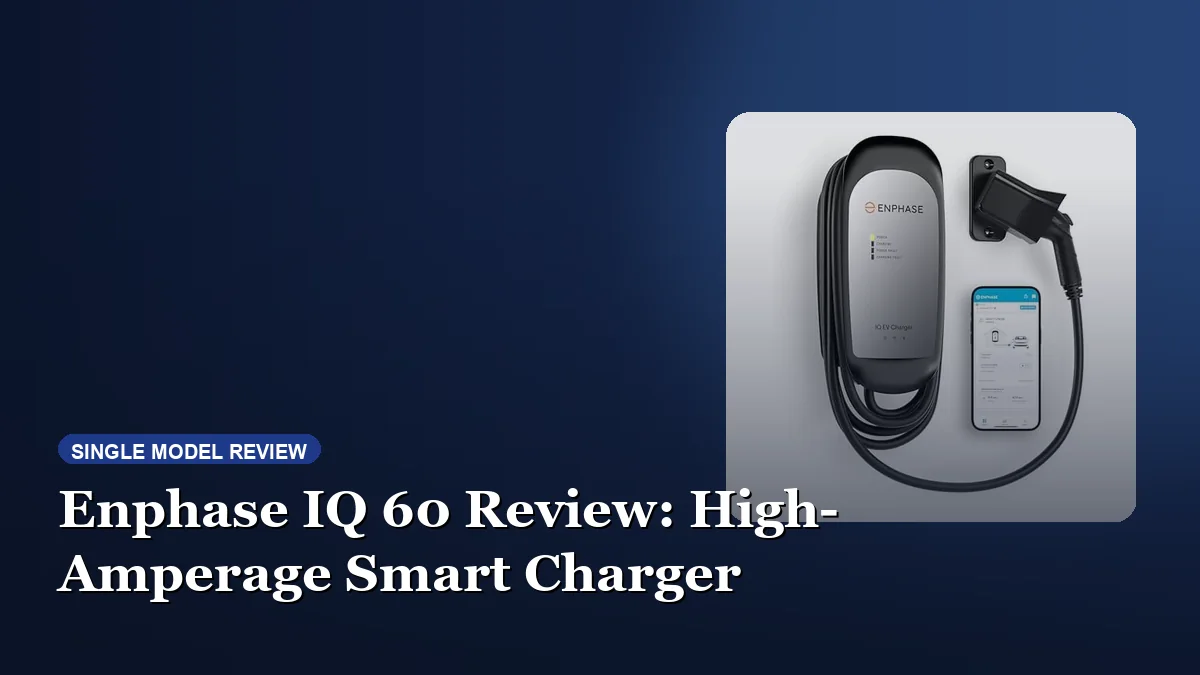
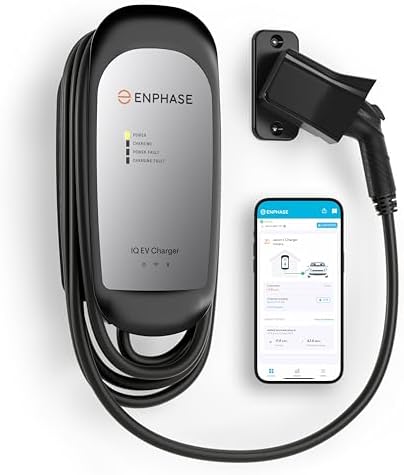
This heavy-duty charging station excels in solar-adjacent homes requiring reliable, high-amperage daily power delivery. We recommend it for dedicated EV owners seeking permanent residential infrastructure.
Explore related alternatives in our Best Non Smart Level 2 Ev Charger.
Verified Specifications
| Category / Type | Smart Level 2 EV Charger |
|---|---|
| Rated Output / Capacity | 11.5 kW / 48 Amps |
| Power / Motor | 240V Hardwired Input |
| Build & Materials | NEMA 4 Sealed Enclosure |
| Operating Noise | Passive Cooling (Silent) |
| Duty Cycle / Runtime | Continuous Duty Rated |
| Dimensions & Weight | 19 pounds chassis |
| Key Safety & Controls | UL 2594 ETL Certified, Wi-Fi |
What We Liked
- Delivers fast 48-amp continuous power output
- Sealed NEMA 4 enclosure handles outdoor weather
- Integrates smoothly with home solar energy systems
- Includes a flexible 25-foot charging cable
- Comprehensive app scheduling for off-peak rates
Trade-Offs
- Hardwired installation requires a licensed electrician
- Demands a dedicated 60-amp electrical circuit
- Lacks a plug-in option for portable use
- Higher initial electrical infrastructure investment
Engineering Architecture and Enclosure Build Quality
The unit features a sealed NEMA 4 enclosure engineered to withstand harsh outdoor elements. Weighing nineteen pounds, its chassis demands solid wall anchoring during the initial mounting phase.
Heavy-duty plastics and reinforced internal components ensure structural integrity under continuous thermal stress. Installers will appreciate the clean layout designed for professional cable management.
The NEMA 4X rated enclosure utilizes industrial-grade polycarbonate formulations designed to withstand severe coastal salt spray and direct UV exposure without structural degradation or fading over decades of outdoor deployment.
Internal component layout features robust copper busbars and isolated power electronics separated cleanly from low-voltage communication modules, significantly minimizing electromagnetic interference while enhancing overall structural integrity against heavy mechanical vibrations.
- Rugged NEMA 4 weather-resistant housing
- Weighs approximately nineteen pounds total
- Designed for indoor or outdoor mounting
Connector Ergonomics and Cable Flexibility
The twenty-five foot cable remains pliable in cold weather, preventing stiff kinks during routine winter plug-ins. Its ruggedized J1772 connector locks securely into standard vehicle inlets.
An integrated holster protects the SAE J1772 interface from moisture ingress and accidental ground impacts when idle. This thoughtful mechanical layout minimizes daily wear on connection pins.
- 25-foot long cold-weather cable
- Secure locking J1772 connector interface
- Convenient integrated holster design
Electrical Output and Real-World Charging Performance
Operating at two-hundred forty volts, this ENERGY STAR-certified station delivers up to eleven point five kilowatts of raw power. It demands a dedicated sixty-amp circuit for maximum delivery.
Drivers experience up to forty-six miles of range recovery hourly depending on vehicle limits. Checking our grizzl-e duo and enphase comparison helps clarify multi-vehicle high-power charging capabilities.
Delivering a continuous 60-amp output, this unit requires an 80-amp dedicated breaker paired with heavy-duty 4 AWG copper conductors to safely handle the continuous high-amperage electrical load under extreme ambient temperatures.
Real-world conversion efficiency remains exceptionally high, minimizing thermal energy loss during AC-to-DC vehicle battery conversion and ensuring maximum kilowatt delivery directly into your electric vehicle pack during overnight charging windows.
- 11.5kW maximum power delivery output
- Requires a dedicated 60-amp breaker
- Recovers up to 46 miles hourly
Grid Compatibility and High-Capacity Workloads
The system accommodates high acceptance rates smoothly without triggering thermal throttling during extended sessions. Residential properties with existing solar arrays benefit from optimized power routing.
Consistent voltage delivery prevents fluctuating current draws that might otherwise disrupt household electronics or slow down charging speeds. Proper breaker sizing remains essential for safe operations.
- Smooth handling of 11.5kW vehicle acceptance
- Optimized for residential solar integration
- Stable voltage regulation during sessions
Thermal Management, Noise Levels, and Duty Cycle
Passive cooling architecture eliminates internal fans, ensuring silent operation during heavy electrical loads. Heat dissipation relies entirely on the exterior aluminum heatsink housing design.
Continuous duty cycles run smoothly at full forty-eight amp output without premature thermal shutdowns in hot garages. Internal sensors monitor junction temperatures to prevent component degradation.
Advanced passive thermal dissipation relies on a massive cast-aluminum rear heatsink that eliminates the need for failure-prone cooling fans, resulting in completely silent operation even during maximum capacity continuous delivery.
Internal thermistors continuously monitor operating temperatures, automatically throttling current output if internal junction thresholds approach critical safety limits during exceptionally hot summer afternoons in unshaded residential parking environments.
- Fanless passive thermal cooling layout
- Completely silent operation under load
- Built-in junction temperature sensors
Efficiency Metrics and Standby Draw
Energy conversion efficiency exceeds ninety-five percent, minimizing wasted electricity during long charging cycles. Readers can review our level 1 versus level 2 guide to understand overall power delivery differences.
Thermal stability protects internal relays from premature wear under demanding summer ambient temperatures. This robust engineering extends the lifespan of critical power electronics significantly.
- Over 95% energy conversion efficiency
- Low standby power consumption rate
- Protective relay thermal stability
Installation Protocols and Hardwired Ergonomics
Hardwired installation requires a licensed electrician to ensure compliance with local electrical safety codes. The internal terminal blocks accept heavy-gauge copper wiring without physical modification struggles.
Ample internal clearance simplifies wire routing and torque verification during the final connection stage. Installers should verify conduit alignment before securing the heavy chassis to masonry studs.
Designed exclusively for hardwired installation, the unit features generously sized terminal blocks capable of accommodating thick conductors without requiring frustrating bends or specialized crimp connectors inside the main housing.
The included twenty-five-foot cable remains remarkably flexible even in freezing sub-zero temperatures, preventing frustrating kinks and allowing straightforward coiling around the integrated holster after every daily charging session.
- Hardwired permanent electrical setup
- Accommodates heavy-gauge copper wire blocks
- Spacious internal wiring compartment
Mounting Hardware and Wall Security
The mounting bracket utilizes a simple hook-and-bolt system for straightforward leveling on flat surfaces. Secure fastening prevents vibration loosening over thousands of plug-in cycles.
Clearance requirements around the enclosure allow proper airflow and prevent heat buildup against interior walls. Technicians must follow exact clearance guidelines outlined in the product manual.
- Hook-and-bolt simple mounting bracket
- Vibration-resistant secure wall fastening
- Maintains necessary clearance airflow
Smart Ecosystem Integration and App Control
Wi-Fi connectivity pairs the station with the Enphase App for scheduling and monitoring. When evaluating hardware options, many buyers review our chargepoint and enphase comparison to find the right residential fit.
Integration with broader home energy systems allows seamless charging directly from excess solar production. Real-time data tracking helps owners monitor cumulative energy consumption and charging session costs.
Seamless cloud connectivity allows users to monitor real-time energy metrics, schedule automated off-peak charging sessions, and track cumulative household electricity consumption directly through a centralized mobile application interface.
Local Wi-Fi protocols ensure reliable communication with home automation hubs, granting advanced users the ability to integrate solar self-consumption optimization without relying entirely on external cloud server availability.
- Wi-Fi enabled Enphase App control
- Customizable off-peak charging schedules
- Real-time energy consumption tracking
Network Reliability and Software Updates
Over-the-air firmware updates ensure the charging unit receives continuous security patches and feature enhancements. Stable wireless connectivity prevents synchronization delays during remote schedule activation attempts.
Local network pairing protocols complete quickly using standard smartphone setup procedures and clear indicators. Diagnostic error codes appear directly within the mobile application interface for troubleshooting.
- Automatic over-the-air software updates
- Stable wireless network synchronization
- In-app diagnostic error reporting
Long-Term Maintenance and Reliability Assessment
The manufacturer backs this equipment with a five-year limited warranty, reflecting solid build confidence. Routine maintenance simply requires occasional exterior cleaning and cable inspection for abrasions.
Sealed electronic components resist dust and moisture accumulation, reducing internal failure rates over extended deployment periods. The robust J1772 handle withstands accidental drops on concrete flooring.
Routine maintenance is virtually non-existent, requiring only occasional visual inspections of the connector pins and cable sheath for signs of wear or environmental degradation over years of service.
Backed by a comprehensive warranty framework, the hardware demonstrates exceptional MTBF metrics due to the deliberate omission of mechanical cooling fans and complex moving parts prone to premature failure.
- Backed by a 5-year limited warranty
- Sealed internal electronic protection
- Impact-resistant connector handle
Safety Certifications and Compliance Standards
Independent UL 2594 certification by ETL guarantees adherence to rigorous North American safety standards. Ground-fault monitoring features disconnect power instantly if electrical anomalies are detected.
Compliance with strict electrical codes provides peace of mind for residential installations in diverse climates. Regular safety self-tests verify internal relay continuity before initiating each charging session.
- UL 2594 certified safety standards
- Active ground-fault protection monitoring
- Automatic internal relay self-tests
Who Should Invest in This Charger Versus Alternatives
Solar-equipped households leveraging an existing ecosystem maximize the value of this intelligent hardware. Before purchasing, consult our best level 2 chargers guide to evaluate alternative residential equipment options.
Budget-conscious buyers lacking solar setups or those requiring portable plug-in models should consider alternatives. Permanent hardwired infrastructure suits homeowners rather than frequent renters or apartment residents.
Property owners with solar installations and large-capacity battery electric vehicles will extract maximum value from this high-output system compared to standard lower-amperage residential charging alternatives.
Households relying on smaller commuter vehicles with limited onboard acceptance rates might find lower-tier hardware completely sufficient, making this robust engineering tier more appropriate for future-proofed multi-vehicle garages.
- Ideal for solar-integrated homes
- Best for permanent homeowner installations
- Suits high-capacity daily drivers
Frequently Asked Questions
Does this charger require a dedicated electrical circuit?
Yes, this station demands a dedicated 60-amp circuit to safely deliver its full 48-amp continuous output. Installing it on an undersized breaker risks constant tripping and code violations.
Can I install the unit outdoors in rainy climates?
The sealed NEMA 4 enclosure provides exceptional weather resistance against heavy rain, snow, and extreme temperatures. It is fully rated for reliable outdoor deployment.
Does the system work without an Enphase solar setup?
While optimized for solar ecosystems, it functions perfectly as a smart Wi-Fi charger on any standard residential electrical grid. The companion app handles scheduling easily.
What type of vehicle connector does it use?
It features a universally compatible J1772 connector that plugs into all standard electric vehicles and plug-in hybrids sold in North America. Tesla owners simply require a standard adapter.
How do I update the device firmware?
Firmware updates occur automatically over your local Wi-Fi network when connected to the mobile application. This ensures your charging hardware always runs the latest security protocols.