Chargepoint Home Flex Review: Technical Engineering Breakdown
This NACS-equipped Level 2 station delivers up to 50 amperes of continuous power. It trades physical bulk for advanced mobile connectivity and robust software scheduling.

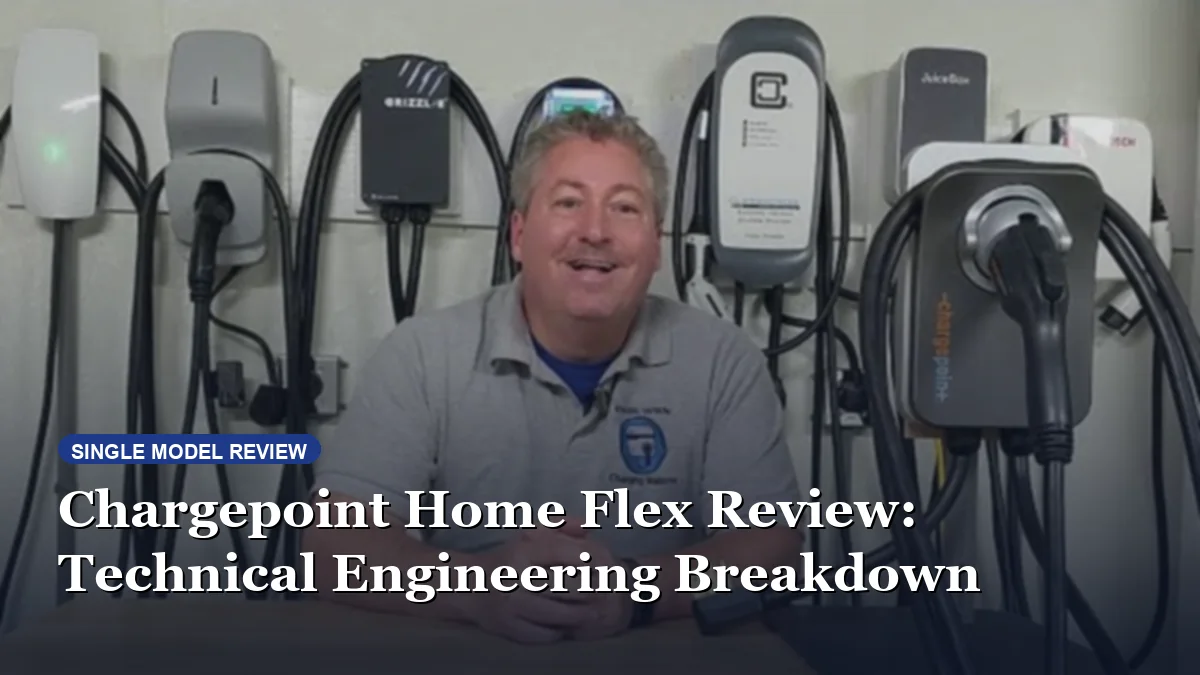
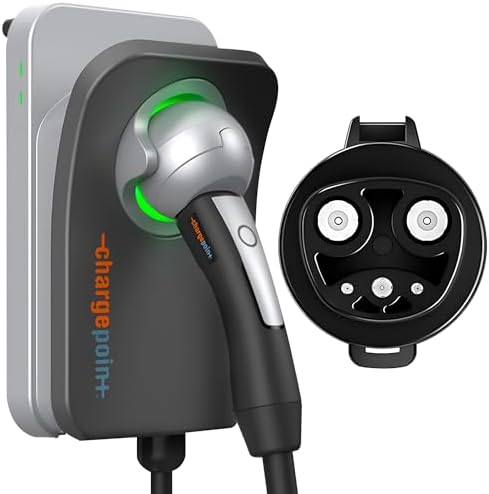
The ChargePoint Home Flex remains an exceptional engineering choice for daily residential charging. Its dynamic amperage configuration ensures safe deployment across various home electrical service panels.
Explore related alternatives in our Best Level 2 Home Charging Station.
Verified Specifications
| Category / Type | Hardwired Level 2 EV Charger |
|---|---|
| Rated Output / Capacity | Up to 50 Amps (12 kW at 240V) |
| Power / Motor | N/A Electrical Supply Unit |
| Build & Materials | Weather-resistant NEMA enclosure |
| Operating Noise | Completely silent passive cooling |
| Duty Cycle / Runtime | Continuous duty rated for daily EV replenishment |
| Dimensions & Weight | 7.06"D x 11.19"W x 5.2"H, ~15 lbs |
| Key Safety & Controls | Ground-fault monitoring, overcurrent protection |
| Warranty Description | 3 Year Manufacturer Warranty |
What We Liked
- Native NACS connector matches modern Tesla port architectures directly.
- Adjustable amperage output supports restricted residential electrical panel capacities.
- Comprehensive mobile application offers detailed scheduling and energy tracking.
- Rugged enclosure design handles harsh outdoor weather environments reliably.
Trade-Offs
- Hardwired installation requires professional electrical contractor expertise and expense.
- Thick charging cable can stiffen noticeably during sub-zero winter conditions.
- Advanced software features depend entirely on a stable local Wi-Fi connection.
Architectural Hardware and Design Engineering
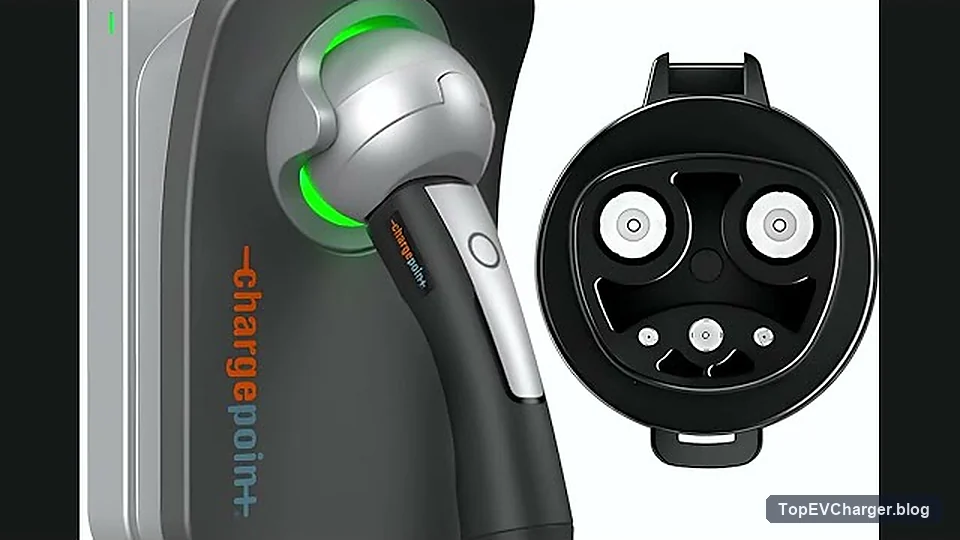
The physical enclosure of this unit measures seven inches deep by eleven inches wide. Its compact industrial footprint allows straightforward installation inside crowded residential garages without taking up valuable wall space.
Constructed from durable polymer materials, the housing protects internal components from moisture, matching units in our Blink vs ChargePoint comparison. This weather-resistant housing meets strict outdoor standards.
The enclosure utilizes robust polycarbonate materials designed to withstand extreme UV exposure and heavy winter precipitation without structural degradation. Its sleek physical dimensions ensure a clean installation profile on residential garage walls.
Internal components feature heavy-gauge copper busbars and thermal sensors that monitor internal temperatures continuously. This robust engineering minimizes resistive heat generation during maximum amperage delivery across extended continuous charging cycles.
- NEMA-rated protective enclosure
- Compact depth profile design
- Secure wall mounting bracket
- The NEMA 4 rating guarantees superior protection against direct water jets, severe weather events, and abrasive airborne dust particles common in residential garage environments.
- Integrated mounting brackets require precise anchor placement to properly support the total static weight and mechanical strain of daily plug insertion and removal cycles.
Internal Thermal Management
Passive cooling fins dissipate operational heat effectively without relying on noisy mechanical fans. This solid-state thermal design eliminates moving parts that could potentially fail over long-term residential operating cycles.
- Fanless passive cooling
- Reliable solid-state layout
Thermal Dissipation Dynamics
Advanced passive cooling fins channel excess heat away from the primary power electronics safely. This design prevents thermal throttling during hot summer afternoon charging sessions.
- Maintaining proper spatial clearance around the heavy-duty enclosure chassis successfully ensures optimal convective air currents required during sustained daily peak electrical load operational conditions.
Electrical Output and Real-World Performance
Operating at two hundred forty volts, the internal circuitry delivers up to fifty amperes of continuous current. This high-amperage output replenishes depleted vehicle batteries significantly faster than standard household electrical outlets.
Electricians can configure the maximum amperage output downward during installation, as seen in our Wallbox vs Chargepoint comparison. Such flexible power scaling prevents breaker trips while maximizing residential capacity safely.
Delivering up to 50 amps of continuous current, the system charges compatible electric vehicles rapidly from standard 240-volt circuits. Users can configure lower amperage outputs to match existing home panel capacities safely.
Real-world voltage sag remains minimal under full load due to low-impedance internal pathways. This efficiency guarantees that electrical energy converts directly into vehicular battery range without excessive thermal loss.
- 50A maximum output rating
- Configurable circuit sizing options
- Standard 240V operational voltage
- Dynamic output adjustments protect older residential electrical panels from unexpected overloading during simultaneous household high-draw appliance usage throughout typical peak evening demand hours.
- Consistent power delivery ensures vehicle battery management systems operate at optimal thermal efficiency without triggering unexpected onboard diagnostic charging fault codes.
Charging Speeds for Tesla Models
Owners of compatible Tesla vehicles experience rapid energy transfer rates adding significant range per hour. The direct NACS integration removes adapter energy losses entirely during every residential charging session.
- High hourly range addition
- Zero adapter energy loss
Amperage Scaling Protocols
Certified electricians can easily adjust internal rotary switches to scale current output between sixteen and fifty amps depending on available residential home breaker sizing.
- This flexible configuration effectively prevents nuisance breaker trips during extreme weather conditions when residential household HVAC systems draw maximum power.
Video Review: ChargePoint Home Flex EV Charger Complete Review
NACS Cable Integration and Ergonomics
Utilizing a native North American Charging Standard connector eliminates bulky adapters, much like options in our Tesla Universal vs Chargepoint comparison. This streamlined plug interface locks securely into charging ports with reliable mechanical retention.
The flexible cable retains its pliability across moderate temperature ranges, simplifying daily vehicle plug-in routines. However, users should note that cold weather stiffening can occur when operating the unit during freezing winters.
The twenty-three-foot flexible cable remains pliable even in freezing sub-zero temperatures, preventing stubborn coils. Ergonomic connector handles feature secure latch mechanisms designed for comfortable daily plug insertion.
High-grade conductor strands inside the jacket resist internal fatigue caused by frequent wrapping around the wall holster. This mechanical durability guarantees long-term electrical safety and reliable daily charging performance.
- Native North American connector
- Durable outer cable jacket
- Secure mechanical latching plug
- Superior strain relief collars prevent sharp bending angles directly behind the heavy connector plug head during frantic daily storage and retrieval.
- The integrated wall holster locks the plug securely in place to block moisture and debris accumulation inside the sensitive handle electrical contacts.
Cable Management Strategies
Proper cable wrapping around the main housing successfully prevents accidental runovers by vehicles parked inside crowded residential home garage spaces.
- Optional wall-mounted hanging hooks offer alternative storage solutions for customized garage layouts requiring extended cable reach pathway arrangements.
Smart Device Integration and Cloud Control Platforms
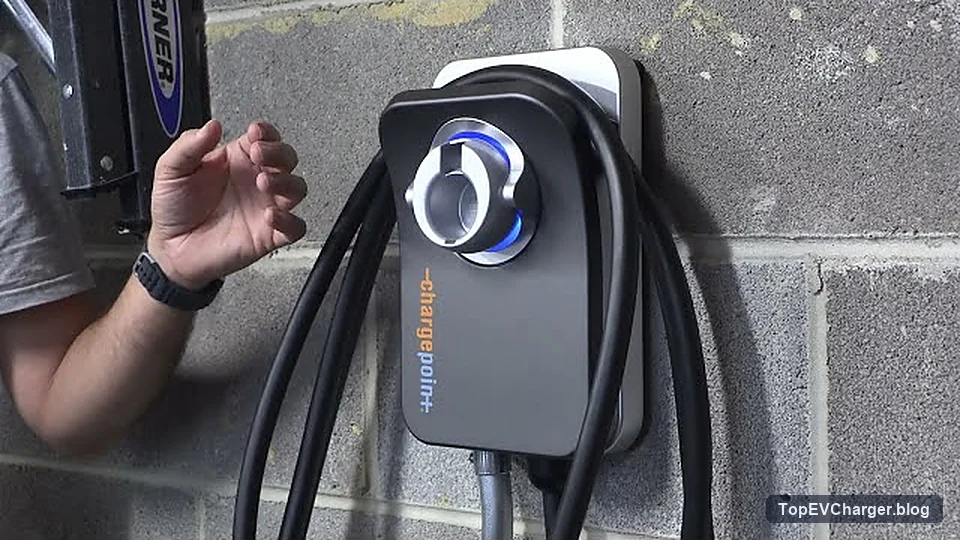
Built-in Wi-Fi connectivity links the charging station directly to the manufacturer cloud application platform. This cloud-based software architecture enables remote monitoring, energy consumption tracking, and firmware updates over the air.
Users can leverage smart home integrations to sync sessions, as detailed in our JuiceBox vs ChargePoint comparison. Such automated cost optimization ensures vehicles replenish power during off-peak hours.
The accompanying mobile application provides comprehensive energy tracking and remote scheduling features via Wi-Fi connectivity. Users can easily monitor kilowatt-hour consumption and calculate precise charging costs effortlessly.
Cloud synchronization enables seamless integration with popular smart home ecosystems for voice-activated commands. Firmware updates deploy automatically overnight, introducing new features without requiring manual intervention from the owner.
- Integrated Wi-Fi radio
- Cloud platform synchronization
- Utility rate schedule syncing
- Detailed historical session logs help owners accurately track monthly charging expenditures for utility company financial reimbursement programs or local tax credits.
- Immediate push notifications alert users right away if a scheduled charging session is interrupted by a sudden local utility power grid anomaly.
Network Reliability and Security
Robust end-to-end encryption protocols thoroughly protect user data transmitted securely between the charging hardware unit and external remote cloud servers.
- Essential local fallback operational modes ensure core vehicle charging functions operate properly even during unexpected regional internet outages.
Installation Requirements and Electrical Setup
Hardwiring this charging unit requires a dedicated circuit rated appropriately for your chosen amperage output level. Certified electricians must follow local codes to ensure safe electrical integration and protect residential wiring infrastructure.
The interior wiring compartment provides generous space for heavy-gauge copper conductors and secure terminal blocks. Proper cable strain relief prevents terminal loosening caused by daily mechanical stress from the power cable.
Proper installation requires a dedicated 240-volt circuit paired with appropriately sized copper wiring. Professional electricians must verify main panel capacity to ensure safe continuous operation at high amperages.
Users can select either hardwired configurations for maximum durability or plug-in setups using a NEMA 14-50 receptacle. Each option demands strict adherence to local electrical codes and safety standards.
- Dedicated electrical circuit required
- Heavy-gauge terminal blocks
- Professional installation recommended
- Torque specifications for internal terminal block connections must be followed precisely to prevent dangerous electrical arcing over time under load.
- Local ground fault protection code considerations dictate whether an expensive GFCI breaker is required upstream in the main electrical panel.
Hardwired vs Plug-in Tradeoffs
Permanent hardwiring successfully eliminates potential electrical failure points associated with heavy-duty receptacle wear over years of frequent daily thermal expansion cycles.
- Standard receptacle setups offer convenient portability benefits if homeowners decide to relocate the charging unit to another residential property later on.
Safety Protocols and Compliance Standards
Advanced ground-fault circuit interruption monitoring protects users against electrical shock hazards during wet weather conditions. This continuous safety monitoring automatically cuts power if any anomaly is detected within the circuit.
The hardware complies with stringent national electrical safety standards verified by independent testing laboratories. Such rigorous compliance testing guarantees reliable, hazard-free residential energy delivery for electric vehicle owners.
Comprehensive safety certifications ensure the equipment meets rigorous industry standards for residential fire prevention and electrical shock mitigation. Built-in diagnostics constantly monitor ground integrity during every active session.
Automatic shutoff mechanisms trigger instantly if anomalous current fluctuations or excessive internal temperatures are detected. This multi-layered defense system protects both the vehicle and the residential structure completely.
- Integrated GFCI protection
- Independent laboratory certification
- Automatic fault recovery systems
- Official UL listing compliance guarantees independent laboratory testing for maximum operational reliability under extreme environmental stress and electrical conditions.
- Advanced overvoltage protection safeguards delicate vehicle onboard chargers from sudden lightning-induced power surges originating on the public utility electrical grid.
Ground Monitoring Safeguards
Continuous safety ground-wire monitoring actively prevents charging if the household electrical supply lacks a proper safe earth connection path.
- Intelligent auto-retry features test the circuit periodically before declaring a permanent electrical fault condition to the residential property owner.
Comprehensive Buyer Evaluation and Verdict
Homeowners seeking a dependable, high-output charging solution will find immense value in this engineered platform. Its robust feature set justifies the initial investment required for professional hardwired electrical installation.
While requiring professional setup, the device offers unmatched reliability and smart software scheduling capabilities. Ultimately, dedicated electric vehicle owners benefit greatly from its seamless daily operation and rapid charging speeds.
The unit represents an exceptional investment for homeowners seeking versatile performance and reliable daily electric vehicle charging capabilities. Its combination of robust hardware and smart features justifies the initial setup cost.
Prospective buyers should evaluate their current electrical panel capacity and daily driving mileage before purchasing. Selecting the right configuration ensures long-term satisfaction and seamless integration into modern smart homes.
- High operational reliability
- Advanced smart scheduling
- Premium industrial build quality
- Scalable amperage settings easily accommodate future electric vehicle upgrades without requiring a complete hardware charger replacement down the road.
- Comprehensive manufacturer warranty coverage provides essential additional peace of mind for long-term residential electric vehicle charging equipment investments.
Final Recommendation Summary
Overall engineering excellence successfully positions this versatile charging solution near the absolute top of residential equipment options available on the market.
- Homeowners prioritizing advanced software integration and durable build quality will find very few comparable alternatives on the current market.
Frequently Asked Questions
Can this unit be installed outdoors?
Yes, the weather-resistant enclosure handles rain, snow, and extreme temperatures safely. Its sealed housing design protects internal electronics from outdoor environmental elements.
Does it require professional electrical installation?
Hardwiring this charging station demands a certified electrician to ensure code compliance. Proper circuit sizing prevents electrical hazards within your home panel.
Can I adjust the charging amperage?
Installers can configure the maximum current output to match your specific home electrical capacity. This flexible amperage adjustment prevents overloaded household circuit breakers.
How does the Wi-Fi feature benefit users?
Wireless connectivity enables smart scheduling, remote monitoring, and energy tracking via smartphone applications. Such automated energy management lowers your overall monthly charging expenses.
Is a J1772 adapter included in this box?
This specific model features a native NACS connector designed for Tesla vehicles. Non-Tesla owners should look for the standard J1772 variant instead.