How Does Level 2 Electric Vehicle Charging Work
Understand the electrical principles, voltage transformations, and onboard hardware behind residential and commercial Level 2 EVSE systems.

Level 2 charging delivers 240 volts of alternating current through dedicated equipment to power your vehicle's onboard charger efficiently.
Looking for matching picks? See our Best Level 2 Home Charging Station.
Practical Quick-Reference Table
| Scenario / Metric | Recommended Target | Why It Matters |
|---|---|---|
| Supply Voltage | 240V AC Single-Phase | Doubles power delivery compared to standard household outlets. |
| Amperage Range | 16A to 80A Continuous | Determines overall energy transfer speed and circuit sizing. |
| Power Output | 3.8 kW to 19.2 kW | Affects total replenishment time for large battery packs. |
| Wiring Gauge | 6 AWG to 8 AWG Copper | Prevents dangerous thermal overload during high draws. |
| Breaker Rating | 125% of Max Draw | Ensures code-compliant circuit protection for continuous loads. |
| Connector Type | J1772 / NACS Standard | Guarantees physical compatibility with modern electric vehicles. |
Fundamental Principles of Level 2 Electrical Power

Residential electricity typically enters homes at 120 volts AC, which powers standard appliances but limits electric vehicle replenishment speeds significantly. Upgrading to a Level 2 setup introduces 240 volts AC via a dedicated circuit.
This higher voltage capacity relies on dual-phase power configurations derived from your main electrical panel. By bridging two hot wires, the system doubles potential energy transfer without requiring complex industrial infrastructure.
Electrical current flows from the breaker panel through heavy-gauge copper wiring to the wall unit. Exploring our level 1 vs level 2 charging guide highlights why proper grounding and safety protocols remain vital.
- Utilizes standard residential dual-phase 240V configurations safely.
- Requires a dedicated circuit breaker matched to continuous amp loads.
- Employs robust ground wire monitoring to prevent electrical shock hazards.
- Delivers significantly faster energy transfer than standard wall outlets.
Circuit Breaker Sizing and Continuous Load Rules
Electrical codes mandate that continuous electric vehicle supply equipment operate at 80 percent of maximum breaker capacity to prevent overheating. A forty-amp charger therefore demands a fifty-amp dedicated circuit breaker.
Using appropriately rated copper conductors prevents voltage drop over long cable runs inside your garage. Always consult a licensed electrician to verify total residential electrical panel capacity before installation.
- Always apply the 80 percent continuous load rule to breakers.
- Install copper wire sized specifically for expected amperage draws.
Comparing EV Charging Speeds and Power Tiers
Electric vehicle energy replenishment is categorized into distinct tiers based on voltage output and equipment complexity. Level 1 relies on standard household outlets, offering slow speeds around one to two kilowatts.
Level 2 systems bridge the gap between residential outlets and commercial terminals. Reviewing our level 2 vs dc fast charging comparison shows how three to nineteen kilowatts refills packs overnight.
Understanding these tiers helps owners select appropriate hardware matching daily driving mileage requirements. Selecting higher amperage units reduces replenishment times but demands more robust home electrical service.
- Level 1 provides slow 120V charging via standard wall receptacles.
- Level 2 delivers robust 240V power ideal for daily home routines.
- Level 3 DC fast chargers bypass onboard hardware for rapid highway stops.
- Amperage variations directly alter total battery replenishment duration.
Evaluating Daily Driving Range Recovery Rates
A standard thirty-amp Level 2 charger recovers roughly twenty-five miles of driving range per hour of connection time. Higher output units push this metric past forty miles per hour easily.
Battery thermal management systems regulate temperature during higher power transfers to preserve long-term chemical health. This intelligent modulation ensures fast replenishment without degrading expensive lithium-ion battery cells.
- Standard units recover approximately twenty-five range miles hourly.
- Thermal management protects battery longevity during high-power sessions.
Video Walkthrough: Level 2 EV Charging: How It Works and What It Costs
Internal Mechanics of Onboard Vehicle Converters
A common misconception suggests that wall units convert current downstream. When evaluating units in our best level 2 home charging station guide, remember that Level 2 hardware supplies alternating current directly.
The actual power conversion happens inside the electric vehicle via an integrated component called an onboard charger. This internal module transforms incoming AC electricity into direct current for storage.
The physical limitations of this onboard converter often dictate maximum charging speeds. Even if a wall unit supports eighty amps, the car accepts only its engineered capacity.
- Wall units act as intelligent safety switches supplying AC power.
- Onboard vehicle hardware performs the critical AC-to-DC conversion step.
- Vehicle acceptance rates limit maximum practical energy transfer speeds.
- Integrated inverters manage internal voltage regulation and safety checks.
Onboard Charger Capacity Variations Across Brands
Different electric vehicle models feature varying onboard converter ratings, typically ranging from 7.2 kW to 19.2 kW single or dual-phase. Entry-level commuter cars often feature smaller single-phase acceptance limits.
Heavy-duty trucks and luxury sedans frequently incorporate dual-phase internal chargers to accept higher amperage feeds. Checking your vehicle specifications prevents purchasing oversized home equipment unnecessarily.
- Verify vehicle acceptance limits before selecting charging hardware.
- Luxury models often support faster dual-phase internal conversion.
Connector Standards and Cable Engineering Specs
Physical connectivity relies on standardized plugs designed to withstand thousands of insertion cycles outdoors. The SAE J1772 connector remains the traditional standard across North American electric vehicles.
Modern installations increasingly adopt the North American Charging Standard, integrating seamless physical designs for improved ergonomics. Both standards incorporate mechanical locking pins and digital proximity pilot signals.
Flexible cable jackets utilize specialized elastomeric compounds resistant to extreme temperatures, oils, and physical crushing. This heavy-duty shielding protects internal copper conductors from environmental degradation over years.
- SAE J1772 connectors provide universal compatibility across older fleets.
- NACS connectors offer compact designs with integrated high-speed pins.
- Proximity pilot circuits verify secure mechanical latch engagement.
- Durable cable jackets resist weather extremes and physical impacts.
Understanding Communication Pilot Signals in Cables
Control pilot pins inside the connector transmit vital pulse-width modulation signals between vehicle and supply equipment. This digital handshake negotiates maximum allowable current before power flows.
If moisture or damage compromises terminal pins, the control pilot instantly halts electricity transmission. This continuous safety monitoring prevents arc flashes and protects users from electrical hazards.
- Control pilot pins negotiate safe current limits continuously.
- Instantaneous shutoff protocols prevent dangerous electrical arcing.
Residential Installation and Safety Requirements
Installing residential equipment requires adherence to strict national electrical codes to ensure absolute household safety. A professional setup typically features a NEMA 14-50 receptacle or hardwired junction box.
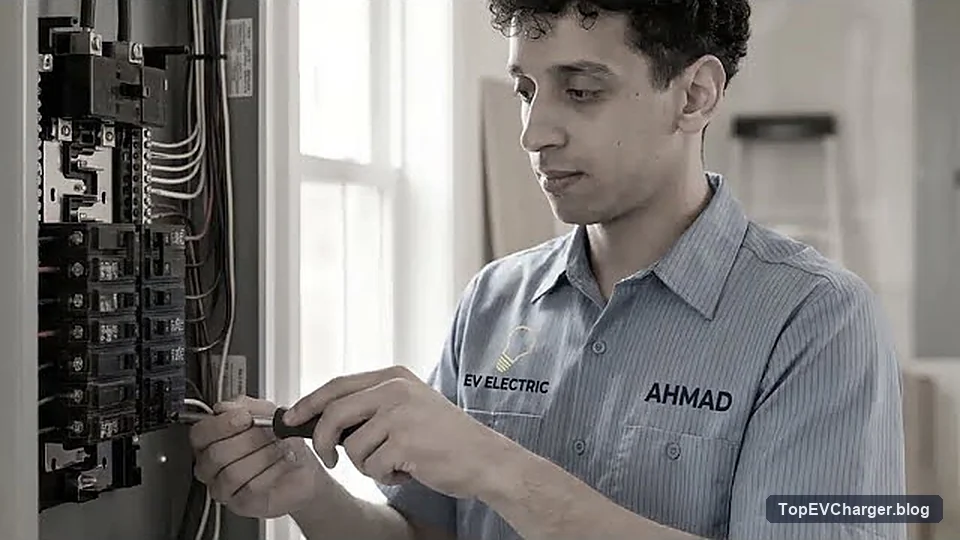
Hardwired configurations eliminate potential plug-connection failure points, offering superior weather resistance for outdoor mounting locations. Ground-fault circuit interrupter protection is mandatory for safeguarding against stray currents.
Thermal sensors embedded within modern plugs monitor temperature spikes during extended high-amperage sessions. If overheating occurs, the unit automatically throttles power or shuts down completely to prevent fires.
- Adhere strictly to local electrical codes and permitting rules.
- Choose hardwired setups for enhanced outdoor weather durability.
- Integrate GFCI protection to mitigate dangerous ground faults.
- Rely on thermal sensors to prevent excessive plug heating.
Permitting Inspections and Professional Contractor Standards
Securing municipal electrical permits ensures your installation meets safety standards and maintains home insurance validity. Certified technicians test circuit resistance and load balances thoroughly before sign-off.
DIY installations risk code violations, equipment damage, and severe safety hazards during heavy usage. Professional oversight guarantees long-term reliability for your residential charging infrastructure.
- Always secure local municipal permits before installation work.
- Hire licensed contractors to verify circuit load and grounding.
Video Walkthrough: Install & Test: Level 2 EV Charger for Home | Fast Charging, Setup Guide & Real World
Smart Grid Integration and Load Management
Advanced charging systems feature Wi-Fi connectivity and smart software for remote energy monitoring and scheduling. Owners can program sessions to coincide with off-peak utility rate hours.
Dynamic load management systems monitor total household electrical consumption in real time. Using our ev charger sizing calculator helps ensure your electrical panel handles these smart adjustments without unexpected breaker trips.
Utility companies often incentivize smart charging participation to balance regional energy grids during peak demand windows. This integration transforms electric vehicles into flexible assets supporting overall grid stability.
- Schedule sessions during off-peak hours to minimize electricity costs.
- Dynamic load monitoring prevents accidental main breaker overloads.
- Wi-Fi connectivity enables remote monitoring and firmware updates.
- Smart grid participation supports regional electrical stability goals.
Optimizing Energy Costs Through Automated Scheduling
Programming your charger to initiate sessions late at night leverages discounted utility pricing tiers. Automated software handles the timing seamlessly without requiring manual intervention every evening.
Energy tracking dashboards provide detailed insights into monthly kilowatt-hour consumption and financial savings. These metrics help homeowners track efficiency and manage household utility budgets effectively.
- Automate night sessions to capture discounted utility rates.
- Monitor kilowatt-hour metrics via integrated mobile applications.
Frequently Asked Questions
What exact voltage does a Level 2 EV charger require?
Level 2 charging systems operate on 240 volts of alternating current sourced from a dedicated dual-phase residential circuit. This elevated voltage doubles energy delivery speed compared to standard outlets.
Do all electric vehicles use the same charging plug?
Most vehicles feature either the SAE J1772 or NACS connector standard for seamless physical compatibility. Adapters are widely available for cross-platform charging when necessary.
Where does the AC-to-DC power conversion take place?
Power conversion occurs inside your vehicle via an integrated onboard charger rather than the wall unit. The wall equipment simply supplies controlled alternating current safely.
Can I install a Level 2 charger myself at home?
Professional installation by a licensed electrician is strongly recommended to ensure code-compliant wiring and proper circuit sizing. Municipal permits also protect your home insurance validity.
How many miles of range does Level 2 add per hour?
Typical setups recover between twenty to forty miles of range hourly depending on amperage and vehicle acceptance limits. High-output units maximize replenishment efficiency overnight.