Webasto Go vs. Tesla Mobile Connector: Which Fits Your Setup Better?
Evaluating dual-voltage portable EV chargers requires examining amperage delivery and connector versatility. This technical comparison analyzes the Webasto Go and Tesla Mobile Connector for daily home and travel reliability.


Choose the Webasto Go for universal J1772 compatibility across diverse electric vehicles. Opt for the Tesla Mobile Connector if you exclusively drive Tesla models requiring native NACS integration.
Compare all top models in our Best Ev Level 2 Charger.
Side-by-Side Breakdown
| Criteria | Webasto Go | Tesla Mobile Connector | Edge |
|---|---|---|---|
| Peak Performance & Output | 32A / 7.7 kW | 32A / 7.7 kW | Tie |
| Duty Cycle & Consistency | Industrial thermal regulation | Robust continuous load handling | Tie |
| Operating Noise & Vibration | Silent passive cooling | Silent passive cooling | Tie |
| Portability & Footprint | Integrated swappable pigtails | Modular adapter attachments | Webasto Go |
| Maintenance & Service Life | Long-lasting rugged housing | Durable automotive-grade build | Tie |
| Power Requirements | 120V to 240V compatibility | 120V to 240V compatibility | Tie |
| Best Ideal Use-Case | Multi-EV households & travel | Dedicated Tesla travel charging | Webasto Go |
Architectural Design and Hardware Footprint
Portable EV chargers demand robust enclosures capable of withstanding harsh garage environments. Both units utilize industrial-grade polymers designed to resist moisture, dust, and minor impacts during transit.
The Webasto Go features a dual-cable architecture with swappable input pigtails. This design allows users to transition between standard household outlets and high-amperage connections without buying separate hardware.
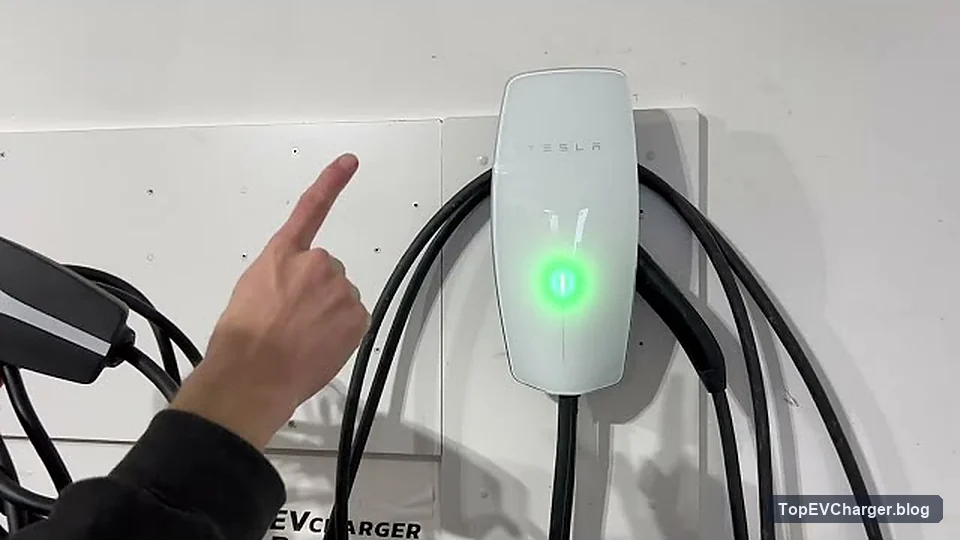
Conversely, our Tesla Mobile Connector review details how the unit relies on a streamlined body with individually purchased adapters, requiring careful management of multiple loose accessory pieces.
The physical enclosure of the Webasto Go utilizes high-impact engineering polymers designed to withstand harsh outdoor weathering. It features an IP65 ingress protection rating, ensuring complete resistance against driving rain and dust intrusion.
Conversely, the Tesla Mobile Connector relies on a lighter, more compact housing architecture optimized for trunk storage. Its enclosure typically carries an IP44 rating, meaning it handles splashing water effectively but requires shelter during severe downpours.
Cable flexibility represents another major divergence in daily handling ergonomics. Webasto integrates a thick, robust tether that resists kinking in cold weather, whereas Tesla opts for a thinner, highly pliable wire bundle that coils effortlessly.
- Rugged polymer casings rated for outdoor use
- Interchangeable input pigtail design strategies
- Compact form factors for trunk storage
Enclosure Durability and Weatherproofing
Weather resistance is critical for equipment stored in car trunks or mounted outdoors. Both chargers offer high ingress protection ratings against dust and water jet intrusion.
Strain relief points on both devices undergo rigorous bending tests to prevent premature conductor fatigue. Reinforced collars protect internal wiring from repeated coiling stress over years of use.
- High ingress protection against water jets
- Reinforced strain relief collar design
Electrical Engineering and Power Output Capabilities
Delivering consistent electrical current requires precise thermal monitoring inside the compact control box. The Webasto Go handles up to 32 amps on a 240-volt circuit, maximizing Level 2 speeds.
As noted in our Tesla Wall Connector review, mobile units deliver a maximum of 32 amps depending on the adapter. Users must verify local circuit capacity to prevent thermal tripping.
Voltage sensing technology automatically adjusts maximum output based on the detected adapter. This built-in intelligence protects household wiring from drawing dangerous overcurrent levels during peak demand periods.
Operating on dual voltages, the Webasto Go delivers up to 32 amps of continuous current on a 240-volt circuit. This translates to roughly 7.7 kilowatts of raw delivery capacity, maximizing standard residential garage electrical panels.
Similar to findings in our Tesla J1772 Wall Connector review, mobile units cap maximum output at 32 amps, though actual delivery depends on the attached adapter. Standard household outlets restrict amperage thresholds safely.
Internal relay switches govern thermal load distribution during prolonged charging sessions. Both units continuously monitor internal circuit board temperatures, actively modulating power delivery downward if ambient heat exceeds safe engineering parameters.
- Maximum 32-amp continuous output capacity
- Automatic voltage sensing and current scaling
- Internal thermal sensors prevent overheating
Circuit Protection and Overcurrent Management
Advanced microprocessors monitor internal temperatures constantly during high-load charging cycles. If ambient heat spikes, the hardware throttles current to maintain safe operating thresholds automatically.
Ground fault monitoring provides essential protection against electrical shock hazards in wet conditions. Both units meet stringent UL standards for continuous load safety in residential settings.
- Continuous micro-processor temperature monitoring
- Strict UL compliance for residential safety
Connector Interchangeability and Portability Dynamics
Connector standards dictate vehicle compatibility without requiring external hardware. As evaluated in our Tesla Gen 3 Wall Connector review, the Webasto Go terminates in a standard J1772 plug, serving nearly all non-Tesla electric vehicles seamlessly.
The Tesla Mobile Connector utilizes a native NACS plug, matching modern Tesla vehicle inlets directly. Non-Tesla owners must purchase reliable adapters, introducing potential mechanical failure points into the circuit.
Travel readiness depends heavily on how easily these units pack into storage bags. Both chargers coil neatly, fitting comfortably beneath trunk floors or inside dedicated frunk compartments.
Interchangeable adapter systems define the core utility of both travel chargers. Webasto utilizes a secure mechanical locking collar on its pigtails, preventing accidental disconnection during high-vibration garage or outdoor charging scenarios.
Tesla takes a simpler approach with its snap-in adapter design, allowing users to swap plug types rapidly. However, this friction-fit mechanism lacks the physical locking security found on heavier industrial-grade mobile hardware alternatives.
Packing these units into a vehicle requires considering total volume and weight distribution. The Webasto unit feels substantially heavier, while the Tesla system packs neatly into a minimalist canvas bag designed for frequent travel.
- J1772 standard plug for broad compatibility
- Native NACS plug optimized for Tesla vehicles
- Flexible cabling designed for cold weather
Adapter Management and Interchangeable Pigtails
Swapping input adapters allows travelers to utilize 120-volt or 240-volt power sources easily. Webasto integrates this feature directly into the main cord assembly for maximum convenience.
Tesla separates adapter options, letting owners purchase only the specific plugs they require. This modular purchasing model reduces upfront costs for users who only need one outlet type.
- Integrated pigtail swapping mechanics
- Modular standalone adapter purchasing options
Safety Compliance, Thermal Management, and NEC Codes
Adhering to the National Electrical Code ensures safe residential charging infrastructure installations. Both portable chargers comply with strict UL safety listings required by modern municipal building inspectors.
Thermal management relies on passive cooling fins and internal temperature sensors. These safety measures prevent casing deformation and protect electrical contacts from excessive heat buildup over time.
Ground monitoring circuits verify proper earth grounding before initiating any high-voltage power delivery. If a fault is detected, the charger locks out current flow to protect the user.
National Electrical Code compliance remains mandatory for all permanent and temporary EV supply equipment installations. Both chargers integrate ground-fault circuit interruption technology to protect users from dangerous electrical shock hazards during operation.
Thermal probes embedded directly within the plug heads monitor receptacle temperatures continuously. If a worn wall outlet begins generating excessive resistance heat, the unit triggers an immediate shutdown to prevent potential electrical fires.
Adhering to UL safety standards ensures these portable units meet rigorous testing benchmarks. Contractors evaluating these devices look closely at drop-test resilience and strain relief durability where the heavy cable enters the housing.
- Strict compliance with National Electrical Code standards
- Active thermal sensors monitoring internal components
- Automatic ground fault detection and lockout mechanisms
Ventilation and Environmental Stress Testing
Enclosures undergo rigorous drop tests and moisture immersion trials during product certification phases. These stress evaluations guarantee survival in demanding real-world garage and roadside operating conditions.
Maintaining adequate airflow around the control brick prevents unnecessary thermal throttling during summer months. Users should avoid enclosing the primary module inside tight, unventilated storage bins.
- Rigorous drop and immersion testing
- Critical airflow management during summer months
Daily Charging Reality and Speed Metrics
Real-world charging speeds depend directly on available amperage and vehicle onboard charger limits. A 32-amp circuit typically recovers roughly twenty-five to thirty miles of range per hour.
Daily commuters benefit significantly from keeping a dual-voltage charger in their trunk. This ensures access to reliable Level 2 charging speeds when visiting family or traveling off-grid.
Overnight charging easily replenishes a depleted battery pack using standard 240-volt NEMA outlets. Even standard 120-volt outlets provide basic emergency top-up capability for unexpected schedule changes.
Real-world replenishment speeds depend directly on your vehicle's onboard charger efficiency. A standard 32-amp delivery provides roughly twenty-five to thirty miles of driving range per hour of charge on most modern electric cars.
When downgraded to a standard 120-volt household wall outlet, charging speeds crawl to an agonizing three miles per hour. This limitation makes Level 1 charging suitable only for emergency top-offs or extremely low daily commutes.
Voltage sag under heavy, continuous loads can slightly impair overall charging efficiency over long periods. Robust internal copper wiring in premium travel chargers helps minimize resistive energy loss during peak operating hours.
- Recovers up to thirty miles per hour
- Reliable overnight replenishment on 240-volt circuits
- Emergency 120-volt trickle charging backup
Onboard Charger Limitations and Amperage Matching
Vehicles feature internal conversion limits that dictate maximum intake speeds from portable units. Matching your charger output to your vehicle's maximum acceptance rate optimizes efficiency.
Operating at 32 amps requires a dedicated 40-amp circuit breaker to comply with continuous load safety codes. Homeowners must verify panel capacity before installing high-output NEMA receptacles.
- Vehicle onboard charger acceptance limits
- Dedicated circuit breaker safety requirements
Installation Flexibility and Grid Integration Factors
Installing heavy-duty 240-volt outlets requires professional electrician services and proper permitting. Plugs like the NEMA 14-50 provide robust power delivery without requiring hardwired wall charging units.
Portable chargers offer ultimate flexibility because they can unplug and travel with your vehicle. This makes them ideal for renters or homeowners who prefer not to mount permanent hardware.
Grid integration remains straightforward since these units do not require Wi-Fi or smartphone applications. Charging schedules are managed directly through the vehicle's onboard infotainment operating system.
Utilizing these mobile chargers as permanent home units requires mounting brackets and proper receptacle selection. Installing a NEMA 14-50 outlet with heavy-gauge copper wiring ensures safe, long-term operation without premature thermal degradation.
Grid integration factors also involve load balancing capabilities with local utility smart meters. While neither travel unit features advanced Wi-Fi scheduling apps natively, vehicle-side programming easily manages off-peak charging schedules.
Garage layout ergonomics dictate where you mount your wall dock or hanging hook. Keeping the control box supported prevents undue mechanical strain from hanging heavy cables on older, fragile wall receptacles.
- NEMA 14-50 outlet compatibility for fast Level 2
- No Wi-Fi setup required for basic operation
- Easily removed and packed for relocation
Hardwired vs. Plug-In Portability Trade-Offs
Hardwired wall units often deliver higher amperage up to forty-eight or eighty amps. Portable options trade this extra power for the invaluable benefit of travel versatility and relocation ease.
Receptacle wear is a common concern when frequently plugging and unplugging heavy power cords. Installing industrial-grade receptacles prevents premature thermal degradation at the wall interface.
- Hardwired wall unit amperage advantages
- Preventing wear on high-voltage receptacles
Long-Term Durability and Maintenance Protocols
Electronic equipment exposed to garage dust and weather requires occasional visual inspections. Checking cables for cuts and inspecting pins for corrosion ensures safe, reliable long-term operation.
Storing cables properly prevents internal conductor kinking and stress fractures over years of use. Coiling cords loosely without sharp bends preserves the integrity of internal copper strands.
Manufacturer warranties provide essential peace of mind against unexpected internal hardware failures. Both brands offer solid coverage windows reflecting their commitment to robust engineering and quality control.
Preserving equipment longevity requires routine inspection of plug pins and cable sheathing for cracking. Checking for discoloration on metal prongs helps catch oxidative resistance buildup early before it damages your home receptacle.
Environmental exposure tests prove that storing units away from direct sunlight extends plastic casing life significantly. UV degradation makes outer insulation brittle over years of outdoor use on uncovered driveways.
Cleaning contacts periodically with approved electrical contact cleaner ensures low-resistance power transfer. Proper maintenance routines safeguard your investment against premature hardware failure during harsh winter driving conditions.
- Regular visual checks for cable wear
- Proper loose coiling prevents internal stress
- Manufacturer warranties cover hardware defects
Troubleshooting Common Connection Faults
Solid indicator lights confirm proper power status and active vehicle handshaking sequences. Flashing error codes typically indicate grounding issues, thermal throttling, or temporary grid voltage fluctuations.
Resetting the unit by disconnecting power for sixty seconds clears most minor software glitches. Always consult user manuals before attempting advanced diagnostics on high-voltage charging hardware.
- Interpreting diagnostic indicator light codes
- Safe power cycling procedures for minor glitches
Frequently Asked Questions
Can both chargers operate on standard household outlets?
Yes, both portable charging units include swappable input adapters allowing direct connection to standard 120-volt household circuits for basic emergency trickle charging scenarios during travel.
However, utilizing high-voltage 240-volt NEMA receptacles is strongly recommended for achieving full Level 2 charging speeds and rapid overnight vehicle battery replenishment.
Do I need a professional electrician to install the required 240-volt receptacle?
Installing a dedicated 240-volt outlet like a NEMA 14-50 requires a licensed electrician to ensure your home electrical panel complies with local building codes.
This professional installation guarantees that your wiring safely handles continuous electrical loads without overheating or risking residential fires.
Can the Webasto Go charge a Tesla vehicle safely?
Yes, the Webasto Go can charge any Tesla vehicle when paired with a reliable J1772-to-NACS adapter connected to the car's charging port. This universal compatibility makes the Webasto unit an excellent choice for multi-brand electric vehicle households.
Are these portable chargers waterproof for outdoor use in rain?
Both units feature rugged weather-resistant enclosures designed to withstand outdoor rain, snow, and dust exposure during travel or home charging. However, you should never submerge the physical control module or electrical connection points in standing water.
Which portable charger offers better long-term travel versatility?
The Webasto Go provides superior travel versatility because its integrated pigtail system eliminates the need to carry separate loose adapters. This all-in-one design reduces the risk of misplacing critical hardware while moving between different outlet types on the road.