Wallbox Pulsar Plus vs. Tesla Wall Connector: Which Fits Your Setup Better?
Choosing between these two Level 2 giants requires evaluating your daily mileage, existing electrical panel capacity, and preferred connector style. Both units deliver maximum 48-amp continuous output for fast overnight residential EV charging.


Choose the Tesla Wall Connector if you drive a Tesla and want native NACS convenience without adapters. Select the Wallbox Pulsar Plus for universal J1772 compatibility and robust local power management features.
Compare all top models in our Best Ev Level 2 Charger.
Side-by-Side Breakdown
| Criteria | Wallbox Pulsar Plus | Tesla Wall Connector | Edge |
|---|---|---|---|
| Peak Performance & Output | Up to 48 Amps (11.5 kW hardwired) | Up to 48 Amps (11.5 kW hardwired) | Tie |
| Duty Cycle & Consistency | Continuous thermal regulation loop | Robust ambient heat dissipation | Tesla Wall Connector |
| Operating Noise & Vibration | Silent passive cooling design | Silent passive cooling design | Tie |
| Portability & Footprint | Extremely compact micro-chassis | Sleek glass-face wall mount | Wallbox Pulsar Plus |
| Maintenance & Service Life | Replaceable internal components | Sealed unit with glass front | Wallbox Pulsar Plus |
| Power Requirements | Dedicated 60-amp breaker for 48A | Dedicated 60-amp breaker for 48A | Tie |
| Best Ideal Use-Case | Multi-EV households needing J1772 | Dedicated Tesla owners seeking speed | Split Decision |
Architectural Design and Physical Footprint
Hardware aesthetics matter when mounting permanent electrical equipment on exterior garage walls. The Wallbox Pulsar Plus features a remarkably compact footprint that easily fits between tight shelving units.
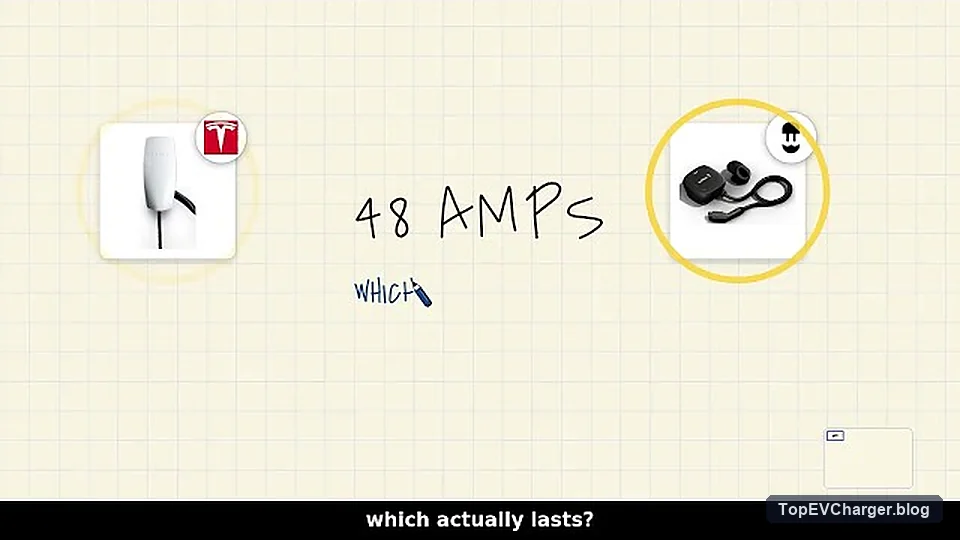
Conversely, our tesla wall connector review highlights its clean, minimalist glass-face plate matching modern architectural design. Both units hide mounting hardware effectively under secure protective snap-on covers.
The Wallbox Pulsar Plus measures a remarkably compact 7.8 x 7.8 inches, making it one of the smallest Level 2 chargers available for residential garages with strict spatial constraints and crowded electrical panels.
Conversely, the Tesla Wall Connector utilizes a sleek glass-faceplate design spanning roughly 13.5 x 8.5 inches, requiring slightly more wall clearance while concealing internal mounting screws behind a weather-sealed chassis.
- Wallbox measures a mere 7.8 by 7.8 inches square.
- Tesla features a slightly taller, vertical glass profile.
- Both housings boast robust weather-resistant exterior construction.
Chassis Materials and Weather Sealing
External enclosures must endure severe seasonal temperature swings and direct moisture exposure. The Wallbox chassis uses durable engineering plastics rated for harsh outdoor environments without fading.
Tesla deploys a hardened tempered glass front panel paired with a heavy-duty rear mounting casting. Both charging stations carry high NEMA outdoor ingress protection ratings for total peace of mind.
- Wallbox holds a strict NEMA 4 rating for water jets.
- Tesla achieves robust weatherproofing through sealed gasket seams.
Maximum Output and Electrical Specifications
Delivering rapid replenishment speeds requires matching your home electrical service capacity accurately. Both chargers support up to 48 amperes of continuous current when paired with heavy-gauge copper wiring.
Operating at full 48-amp output demands a dedicated 60-amp branch circuit breaker per National Electrical Code guidelines. Users with smaller 40-amp or 50-amp breakers can easily configure lower maximum amperages.
Delivering up to 48 amps on a dedicated 60-amp breaker, the Pulsar Plus provides continuous power output matching standard North American residential electrical service limits for rapid overnight vehicle charging.
The Tesla unit matches this 48-amp maximum output capability but scales up to 72 amps when hardwired on legacy 90-amp circuits, accommodating older dual-charger configurations found in select historical EVs.
- Both units deliver up to 11.5 kilowatts of power.
- Internal amperage dials allow manual output restriction.
- Proper wire gauge selection prevents dangerous thermal overload.
Thermal Management and Continuous Duty
Continuous high-amp draws generate substantial internal heat within residential electric vehicle supply equipment. The Wallbox thermal loop actively monitors internal operating temperatures to prevent unexpected charging shutdowns.
Tesla incorporates superior passive aluminum heat-sink fins behind the main circuit board assembly. Advanced thermal throttling ensures reliable energy transfer during intense summer heatwaves without hardware degradation.
- Active monitoring prevents catastrophic component failure.
- Passive sinks eliminate noisy internal cooling fans entirely.
Connector Ergonomics and Cable Flexibility
As noted in our tesla j1772 wall connector review, daily usability depends heavily on how comfortably output cables coil in cold weather, keeping the Wallbox J1772 cable reasonably flexible below freezing.
Tesla utilizes a proprietary North American Charging Standard plug with an integrated remote-opening button. This Tesla button lets you pop your vehicle charge port door open instantly.
Wallbox supplies a flexible 25-foot cable that remains pliable in sub-zero temperatures, though its thermoplastic elastomer outer jacket tends to collect garage dust and requires periodic wiping with a mild surfactant.
Tesla provides either an 18-foot or 24-foot cable option featuring a lighter handle geometry and a proprietary latchless plug that communicates directly with North American Charging Standard charge ports seamlessly.
- Wallbox uses a universal J1772 vehicle coupler interface.
- Tesla features the native NACS plug geometry standard.
- Both cables measure roughly twenty-four feet in length.
Holster Design and Cable Management
Securing the heavy connector head safely prevents accidental tripping hazards inside busy residential garages. The Wallbox holster integrates directly into the main charging chassis for streamlined storage.
Tesla provides a completely separate wall-mounted holster bracket for hanging your cable neatly. Proper cable wrapping prevents sharp kinks that could damage internal copper strands over time.
- Integrated holsters reduce required wall installation space.
- Separate brackets allow optimal placement near your vehicle.
Smart Features, Apps, and Connectivity Protocols
Modern charging equipment relies on robust Wi-Fi and Bluetooth connectivity for remote monitoring. The Pulsar Plus application offers comprehensive local scheduling tools to capture cheap utility electricity rates.
Tesla favors a streamlined Wi-Fi commissioning process managed through smartphone web browsers and apps. Power-sharing networks allow multiple Tesla units to balance household loads automatically together.
Leveraging Wi-Fi and Bluetooth connectivity, the Wallbox app enables scheduling, energy monitoring, and dynamic load balancing across multiple units without requiring a hardwired local network connection.
Tesla relies on internal Wi-Fi modules and smartphone provisioning for over-the-air firmware updates, access control restrictions, and detailed usage statistics displayed inside the native Tesla smartphone application.
- Wallbox supports integrated voice control via smart assistants.
- Tesla offers dynamic load management for multi-vehicle homes.
- Cloud connectivity enables remote firmware update installations.
Local Power Sharing and Load Management
Managing total home electrical consumption prevents main utility service panel overloads during peak hours. Wallbox power sharing coordinates multiple chargers over a local hardwired daisy-chain communication bus.
Tesla accomplishes multi-unit load balancing wirelessly over local Wi-Fi router frequencies. Smart load balancing protects your home main breaker without requiring costly electrical service upgrades.
- Hardwired communication buses eliminate wireless interference risks.
- Wireless load sharing simplifies multi-unit garage installations.
Installation Requirements and Hardwire Best Practices
Professional electrical installation ensures safety, compliance, and long-term equipment reliability. Both units support bottom, rear, and side electrical conduit entry points for clean wiring configurations.
Using thick copper THHN conductors inside rigid metal conduit satisfies stringent local municipal building codes. Licensed electricians should always verify torque specifications on terminal blocks to prevent resistance.
Both chargers support bottom, top, and rear conduit entries, but the Pulsar Plus includes generous internal terminal blocks accommodating heavy THHN copper wire gauges up to 6 AWG safely.
Electricians must torque internal lugs to manufacturer specifications using a calibrated tool to prevent high-resistance connections and potential thermal degradation within the primary power distribution block.
- Always disconnect main panel power before starting installation.
- Torque terminal screws precisely to manufacturer recommendations.
- Inspect wall substrate strength before mounting heavy units.
Plug-In Versus Hardwired Configurations
As detailed in our wallbox pulsar plus review, this unit offers both hardwired connections for maximum speed and a convenient plug-in option connecting directly to heavy-duty NEMA 14-50 garage outlets.
Hardwiring remains the safest and most reliable choice for continuous 48-amp electrical loads. Eliminating plug connections removes a common point of high-resistance thermal failure over years.
- NEMA 14-50 receptacles require expensive GFCI breakers.
- Hardwired setups provide permanent, weather-resistant protection.
Long-Term Reliability and Environmental Durability
Investing in residential charging hardware demands exceptional durability against harsh environmental conditions. The Wallbox electronic boards feature heavy conformal coating layers to resist internal humidity and corrosion.
Tesla utilizes robust industrial-grade components designed to withstand commercial parking lot deployments effortlessly. Rigorous stress testing proves both platforms deliver years of dependable daily vehicle charging.
Sporting an IP54 ingress rating, the Wallbox Pulsar Plus withstands wind-blown dust and water splashes, making it suitable for both indoor garages and exposed outdoor exterior installations.
As outlined in our tesla gen 3 wall connector review, the hardware boasts a robust Type 4 enclosure, offering superior protection against heavy rain jets for long-term outdoor deployment reliability.
- Conformal coatings prevent moisture condensation short circuits.
- Industrial components handle extreme ambient temperature shifts.
- Manufacturer warranties protect against sudden hardware defects.
Warranty Coverage and Customer Support
Manufacturer backing provides essential security when purchasing expensive electrical infrastructure for your home. Wallbox includes a standard three-year replacement warranty covering internal and external hardware components.
Tesla provides matching three-year warranty coverage for wall connectors installed by certified professionals. Prompt customer support ensures rapid troubleshooting if charging errors occur during daily use.
- Three-year coverage protects your initial equipment investment.
- Certified installation guarantees full manufacturer warranty validity.
Frequently Asked Questions
Can the Tesla Wall Connector charge non-Tesla electric vehicles?
Yes, but you will need a reliable third-party NACS-to-J1772 adapter. Always verify adapter ratings to ensure safe handling of high continuous currents.
Do I need a professional electrician to install these chargers?
Professional installation is strongly recommended for safety and code compliance. Licensed electricians ensure proper breaker sizing and secure wiring torque specifications.
Can I install the Wallbox Pulsar Plus outdoors?
Yes, it carries a durable NEMA 4 weather-resistant rating. Proper enclosure sealing protects internal electronics against rain and snow exposure.
What size electrical breaker is required for 48-amp charging?
You must install a dedicated 60-amp circuit breaker. National Electrical Code rules mandate this 125 percent sizing buffer for continuous loads.
Can multiple chargers share a single electrical circuit?
Yes, both units support internal power sharing. Load balancing configurations prevent your main electrical service panel from overloading safely.