Wallbox Pulsar Plus vs. Chargepoint Home Flex: Which Setup Suits You?
Comparing two elite Level 2 chargers reveals distinct engineering trade-offs in physical footprint, maximum amperage delivery, and smart ecosystem integration.

Choose the Wallbox Pulsar Plus for compact space efficiency and dynamic load balancing, or opt for the Chargepoint Home Flex for maximum amperage flexibility and robust app metrics.
Compare all top models in our Best Ev Level 2 Charger.
Side-by-Side Breakdown
| Criteria | Wallbox Pulsar Plus | Chargepoint Home Flex | Edge |
|---|---|---|---|
| Peak Performance & Output | Up to 48 Amps / 11.5 kW | Up to 50 Amps / 12 kW | Chargepoint Home Flex |
| Duty Cycle & Consistency | Maintains output via passive cooling | Sustains high loads with thermal regulation | Tie |
| Operating Noise & Vibration | Completely silent passive operation | Silent solid-state switching profile | Wallbox Pulsar Plus |
| Portability & Footprint | Ultra-compact square enclosure | Slightly taller contoured chassis | Wallbox Pulsar Plus |
| Maintenance & Service Life | IP54 rated with secure terminal access | NEMA 4X rated rugged polymer shell | Chargepoint Home Flex |
| Power Requirements | NEMA 14-50 or hardwired up to 48A | NEMA 14-50 or hardwired up to 50A | Chargepoint Home Flex |
| Best Ideal Use-Case | Tight garage spaces and multi-EV homes | Maximum charging speed on 60A circuits | Split |
Architectural Footprint and Enclosure Engineering
Physical dimensions dictate how seamlessly a residential EV supply equipment unit integrates into your garage wall space without obstructing everyday vehicle parking or pedestrian walkways around the home.
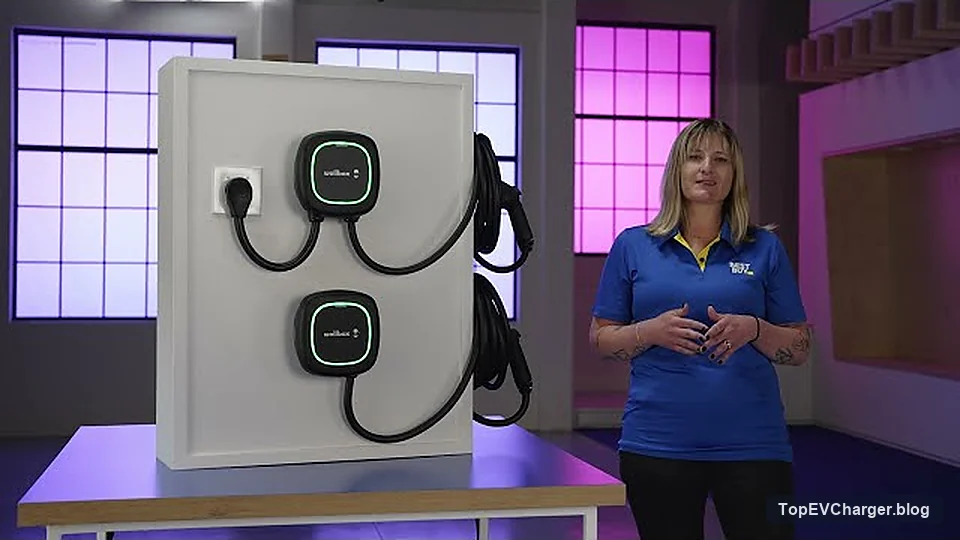
The Wallbox Pulsar Plus utilizes a remarkably compact square housing that measures approximately seven inches across, making it one of the smallest high-output units available on the current market.
Conversely, as noted in our chargepoint home flex review, the hardware employs a sleek contoured polymer chassis designed to accommodate robust internal wiring while maintaining a slim profile against drywall.
Both manufacturers prioritize weather resistance, but they utilize different ingress protection certifications that impact where and how you can mount each unit safely outdoors or inside damp garages.
- Wallbox emphasizes ultra-compact square geometry for tight spaces.
- Chargepoint opts for a taller, contoured silhouette with heavy-duty mounting plates.
- Both designs accommodate bottom and rear cable entry conduits cleanly.
Weather Resistance and Shell Durability
External enclosures must withstand driving rain, freezing temperatures, and direct UV radiation without degrading the internal power electronics or compromising operator safety during routine plug-in sessions.
The Wallbox Pulsar Plus carries an IP54 rating, offering robust protection against dust ingress and splashing water from any direction under normal residential environmental conditions.
The Chargepoint Home Flex steps up protection with a NEMA 4X enclosure, guaranteeing superior defense against corrosive elements, windblown dust, and severe high-pressure water jets outdoors.
- IP54 rating on Wallbox suits protected outdoor and indoor installs.
- NEMA 4X rating on Chargepoint delivers heavy-duty weather resilience.
Output Delivery, Current Regulation, and Circuit Integration
Delivering consistent electrical current safely requires precise internal component engineering, thermal management, and reliable communication with your vehicle's onboard battery management system during long charging cycles.
Highlighted in our wallbox pulsar plus 48 review, the hardware delivers up to 48 Amps of continuous current when hardwired to a dedicated sixty-amp circuit for robust power delivery.
The Chargepoint Home Flex edges slightly ahead by supplying up to 50 Amps on a sixty-amp breaker, yielding an impressive 12 kilowatts of maximum power output for compatible vehicles.
Both chargers allow granular amperage adjustments via their companion mobile applications, letting homeowners dial down output to match older electrical panels or restricted utility service capacities.
- Wallbox caps output at 48 amps for robust residential utility compatibility.
- Chargepoint pushes 50 amps to squeeze maximum charging speed from circuits.
- Both units support software-based amperage tuning during initial setup.
Circuit Breaker Sizing and Amperage Adjustments
Configuring your breaker panel correctly prevents nuisance trips and ensures compliance with the National Electrical Code guidelines for continuous electrical loads operating over extended periods.
During installation, technicians must configure internal rotary switches or software settings to match the specific breaker size protecting the branch circuit supplying the home charging station.
Failing to match configuration settings to physical breaker limits can trigger thermal overloads or invoke internal safety shutdowns designed to protect residential wiring infrastructure from damage.
- NEC rules require sizing breakers at 125 percent of maximum draw.
- Software configuration prevents accidental overloading of legacy panels.
Thermal Dynamics, Cooling Profiles, and Duty Cycle Limits
High-amperage power conversion generates substantial internal heat that must be safely dissipated to prevent premature component degradation, solder joint fatigue, or thermal throttling during summer heatwaves.
As detailed in our wallbox pulsar plus review, the unit relies entirely on passive thermal dissipation, utilizing its aluminum backplate and compact enclosure geometry to radiate excess heat efficiently.
The Chargepoint Home Flex similarly utilizes passive cooling strategies, relying on optimized internal component spacing and thermal pads to transfer heat directly to the exterior housing surface.
Neither unit requires noisy internal cooling fans, ensuring completely silent operation even when delivering maximum current to your electric vehicle throughout multi-hour overnight replenishment cycles.
- Passive cooling designs eliminate mechanical fan failure points.
- Aluminum heat sinks maintain stable operating temperatures under load.
- Silent operation enhances user experience in attached home garages.
Sustained High-Load Performance Under Stress
Evaluating sustained performance reveals how well each charger maintains peak amperage delivery when ambient garage temperatures climb well above normal room temperature thresholds during hot summer months.
Both units demonstrate exceptional thermal stability, rarely triggering internal current rollbacks unless exposed to direct, unshaded sunlight in extreme desert climates exceeding one hundred degrees Fahrenheit.
Proper clearance around the mounting chassis significantly improves natural convection airflow, ensuring both chargers maintain optimal operating efficiency during back-to-back charging sessions.
- Thermal throttling remains rare under standard residential conditions.
- Adequate wall clearance optimizes natural convection cooling performance.
Cable Ergonomics, Jacket Materials, and Weather Flexibility
The charging cable serves as the primary physical interface you interact with daily, making flexibility, weight, and jacket durability crucial factors for long-term user satisfaction and safety.
As noted in our wallbox pulsar plus 48a review, the unit features a lightweight, flexible cable that remains manageable and easy to coil even during freezing winter temperatures.
The Chargepoint Home Flex utilizes a slightly thicker, heavy-duty cable jacket designed to withstand frequent vehicle runovers and harsh abrasion against rough concrete garage floors.
Both options include standard twenty-five-foot cable lengths, providing ample reach to park front-in or back-in without straining the connector plug or tensioning the wall-mounted enclosure.
- Twenty-five-foot cables accommodate diverse garage parking orientations.
- Flexible outer jackets prevent stiffening during cold winter months.
- Strain relief collars protect internal wiring from repetitive bending stress.
Connector Holster Design and Cable Management
Keeping the SAE J1772 vehicle connector secure off the garage floor prevents moisture contamination, terminal corrosion, and accidental damage from passing foot traffic or vehicles.
The Wallbox features an integrated holster directly on the charger body, while also offering an optional standalone dock for mounting elsewhere on your garage wall.
The Chargepoint uses a holster built into the top of the chassis, incorporating a clever latch mechanism that firmly locks the connector plug in place when idle.
- Integrated holsters keep connectors clean and safely elevated.
- Robust latch mechanisms prevent accidental nozzle dislodgement.
Connectivity Protocols, Smart Integration, and Local Control
Modern home chargers leverage Wi-Fi and Bluetooth connectivity to deliver scheduling features, energy monitoring metrics, firmware updates, and seamless integration with broader smart home automation ecosystems.
The Wallbox Pulsar Plus supports both Wi-Fi and Bluetooth, allowing local device management and scheduling even when your home wireless network signal fails to reach the detached garage.
The Chargepoint Home Flex connects via robust Wi-Fi networks, syncing instantly with cloud servers to provide detailed charging history graphs, cost tracking, and utility rate optimization.
Both mobile applications allow users to lock chargers remotely, preventing unauthorized neighborhood usage when parked in open residential driveways or shared alleyway parking spaces.
- Bluetooth fallback on Wallbox ensures reliable local smartphone control.
- Cloud connectivity on Chargepoint delivers comprehensive charging analytics.
- App-based locking prevents unauthorized energy consumption remotely.
Smart Home Ecosystem Compatibility and APIs
Integrating your EV charger into home automation platforms enables advanced energy management routines, solar surplus routing, and voice-activated monitoring via popular smart speakers.
The Wallbox integrates smoothly with Amazon Alexa, Google Home, and smart home hubs like Home Assistant via robust local application programming interfaces for advanced automation.
The Chargepoint offers native integration with major voice assistants and works seamlessly with utility demand-response programs designed to reward off-peak charging habits financially.
- Local API support on Wallbox empowers custom home automation projects.
- Native utility program compatibility helps optimize electricity costs.
Installation Complexity, Wiring Demands, and Hardwire Configurations
Installing a high-power electrical appliance requires careful adherence to local electrical codes, proper wire gauge selection, and professional evaluation of your home electrical service capacity.
Both chargers support plug-in installation using a NEMA 14-50 receptacle, or they can be permanently hardwired directly into a dedicated circuit breaker panel by a licensed electrician.
Hardwiring is strongly recommended for both units if you plan to utilize their maximum forty-eight or fifty-amp output capabilities continuously without stressing plug terminals over time.
Clear internal terminal blocks and spacious wiring compartments make both units straightforward for qualified professionals to mount, level, and wire safely within a standard timeframe.
- NEMA 14-50 plug installs offer flexibility for future relocation.
- Hardwiring eliminates potential receptacle heating points under max load.
- Spacious backplates simplify conduit alignment during professional setup.
Electrical Wire Gauge and Conduit Requirements
Selecting appropriate copper wire gauges ensures voltage drop remains minimal and electrical connections operate safely without generating excessive resistive heat under heavy loads.
Installing a forty-eight or fifty-amp continuous load circuit typically requires 6 AWG copper wiring paired with appropriate conduit sizing mandated by local electrical safety inspectors.
Always consult a licensed electrical contractor to evaluate your main service panel capacity before attempting any high-amperage equipment installation in older residential properties.
- 6 AWG copper wire ensures safe current flow under maximum load.
- Professional panel audits prevent over-allocating residential service capacity.
Maintenance Protocols, Fault Diagnostics, and Long-Term Reliability
Routine maintenance keeps your charging hardware operating reliably for years, while sophisticated internal self-diagnostics help protect your vehicle and home electrical system from faults.
The Wallbox Pulsar Plus utilizes multi-colored LED ring indicators around its central logo to communicate charging status, standby modes, and specific error codes during fault events.
The Chargepoint Home Flex features a distinct status indicator light bar that changes color based on operational states, accompanied by detailed push notifications sent directly to your phone.
Both units perform internal self-checks upon startup, ensuring ground-fault circuit interrupter protection and residual current monitoring mechanisms function correctly before energizing the cable.
- LED status rings provide instant visual feedback on operating health.
- Automatic self-tests verify safety ground continuity before every session.
- Push notifications alert owners instantly to unexpected charging interruptions.
Troubleshooting Common Faults and Error Codes
Understanding how to interpret diagnostic error codes helps homeowners resolve minor connectivity hiccups or power interruption issues quickly without scheduling expensive service calls.
Common issues usually involve temporary Wi-Fi dropouts, minor grid voltage fluctuations, or incomplete vehicle connector seating that triggers safety interlock switches automatically.
Consulting the manufacturer mobile app provides step-by-step troubleshooting guides and lets you reset internal breakers or restart the charging firmware remotely with ease.
- App diagnostics quickly identify source of unexpected charging faults.
- Remote reboots resolve minor firmware communication glitches easily.
Frequently Asked Questions
Can both chargers be installed outdoors exposed to rain?
Yes, both units feature weather-resistant designs suitable for outdoor installation. The Chargepoint carries a NEMA 4X rating, while the Wallbox features an IP54 rating for reliable element protection.
Do I need Wi-Fi to operate these home charging units?
No, Wi-Fi is strictly optional for basic plug-and-charge functionality. However, connecting to Wi-Fi unlocks smart scheduling, energy monitoring reports, and remote firmware updates.
What is the difference between 48 amp and 50 amp output?
The minor two-amp difference translates to slightly faster charging speeds on the Chargepoint. Both units require a 60-amp dedicated circuit when running at their maximum capacity.
Is hardwiring better than using a NEMA 14-50 wall outlet?
Yes, hardwiring eliminates plug degradation risks and is often required by local electrical codes for continuous loads exceeding forty amps over long overnight charging intervals.
Can I share a single circuit between two chargers?
Yes, Wallbox offers power sharing technology that lets multiple units dynamically distribute available current across shared circuits without tripping your main household electrical breaker panel.