Tethered vs. Untethered Car Charger: Which Fits Your Setup Better?
Choosing between permanently attached cables and socketed units impacts daily usability, garage aesthetics, and long-term vehicle compatibility. This engineering guide details the mechanical trade-offs.

For pure daily convenience, tethered units win for dedicated home garages. If you require multi-standard flexibility, untethered chargers provide superior adaptability.
Compare all top models in our Best Ev Level 2 Charger.
Side-by-Side Breakdown
| Criteria | Tethered | Untethered Car Charger | Edge |
|---|---|---|---|
| Peak Performance & Output | Maintains 11.5kW to 19.2kW continuous output safely. | Delivers identical power ratings dependent on cable specs. | Tie |
| Duty Cycle & Consistency | Factory-sealed permanent whip minimizes high-amp connection points. | Relying on removable type-2 cables introduces secondary contact resistance. | Tethered |
| Operating Noise & Vibration | Silent solid-state switching with zero relay chatter. | Identical internal architecture with quiet operation. | Tie |
| Portability & Footprint | Fixed enclosure requires dedicated wall space for holster management. | Compact wall footprint without protruding cable mass. | Untethered Car Charger |
| Maintenance & Service Life | Entire unit must be replaced if permanent cable jacket fails. | Swap out damaged umbilical cords independently without touching the wallbox. | Untethered Car Charger |
| Power Requirements | Hardwired directly into dedicated 240V circuit breakers. | Requires identical hardwired or heavy-duty industrial receptacle feeds. | Tie |
| Best Ideal Use-Case | Single-vehicle households wanting immediate plug-and-charge simplicity. | Shared driveways, fleet pooling, and multi-standard households. | Tethered |
Defining Architecture: Tethered Versus Untethered Hardware Standards
Permanent charging hardware comes in two primary physical configurations defined by the umbilical delivery method. Understanding these fundamental design choices prevents costly installation errors in residential garages.
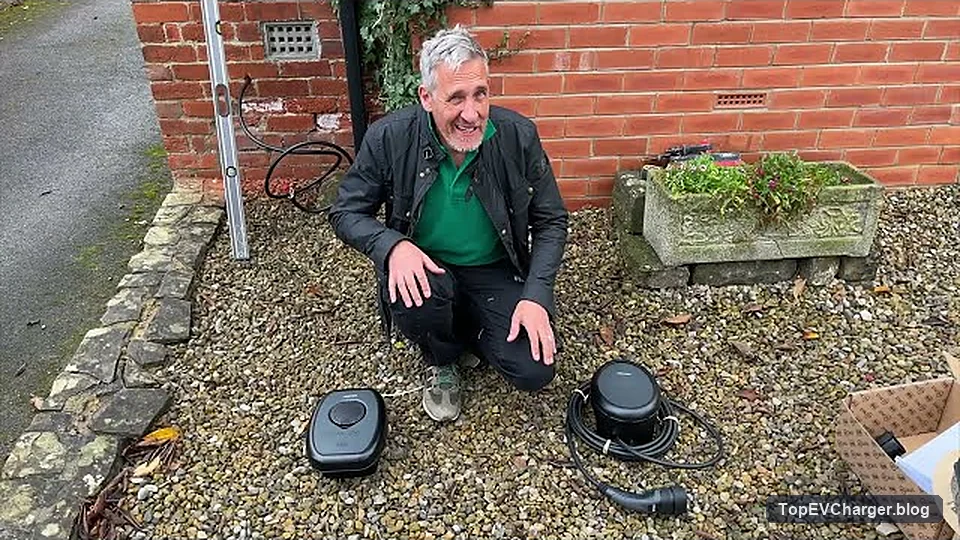
A tethered unit permanently integrates a heavy-duty flexible cable and vehicle connector directly into the wallbox housing. This removes user friction by eliminating daily trunk retrieval routines.
Tethered units permanently integrate a SAE J1772 or NACS cable directly into the NEMA-rated enclosure, eliminating mechanical connection points and potential high-resistance junction failures during heavy continuous current delivery phases.
Conversely, socketed charging stations featured in our best 240v ev charger summary expose a dedicated Type 2 receptacle, requiring drivers to supply an external umbilical cable for every grid-tied session.
- Tethered systems feature factory-sealed permanent cable assemblies.
- Untethered variants utilize a standardized Type 2 receptacle socket.
- Both designs handle standard North American 240V residential feeds.
Deconstructing The Tethered Advantage
Permanently attached cables streamline departure routines by keeping the connector ready in a holster. You simply grab the plug and insert it into the vehicle port instantly.
Eliminating plug insertion cycles at the wallbox reduces cumulative wear on internal contact pins. This architectural choice enhances long-term electrical safety across thousands of duty cycles.
- Zero daily cable handling required inside vehicle trunks.
- Lower contact resistance at the internal junction box.
Daily Ergonomics And The Reality Of Cable Management
Managing twenty-five feet of heavy copper conductor demands thoughtful garage layout planning. Ambient winter temperatures stiffen polymer jackets, making manual coiling frustratingly difficult.
Untethered models force drivers to stow loose umbilicals after every session. Leaving cables exposed across garage floors creates tripping hazards and invites environmental contamination onto connector pins.
Managing a twenty-five foot thick copper cable in freezing weather tests everyday ergonomic endurance, especially when frozen polymers stiffen significantly and resist clean coiling around integrated wall-mounted holster brackets.
Untethered systems let users store their primary umbilical safely inside the trunk, keeping the garage exterior completely clean but adding frustrating setup and breakdown steps to daily commuter routines.
- Cold weather stiffens standard thermoplastic elastomer cable jackets significantly.
- Integrated holsters keep terminal pins protected from dust and moisture.
- Loose umbilicals require dedicated wall hooks or trunk storage bins.
Evaluating Physical Footprint And Wall Space
Tethered enclosures require clear vertical wall clearance for proper cable looping. Poor placement results in messy copper coils hanging dangerously close to wet concrete floors.
Socketed alternatives present a much smaller visual profile on finished drywall surfaces. The sleek enclosure occupies minimal space until an external cord is actively plugged in.
- Tethered units demand robust wall hooks for weight distribution.
- Socket-only housings maintain a clean, minimalist garage aesthetic.
Future Proofing Against Connector Evolution And Port Swaps
North American charging standards are currently undergoing massive historical transitions. Selecting the right hardware architecture shields your infrastructure investment against sudden automotive industry changes.
If vehicle port standards shift across upcoming generations, selecting a top-tier unit from our best ev level 2 charger guide keeps your setup flexible. You simply swap the adapter cord rather than replacing the entire wallbox.
The rapid automotive transition toward North American Charging Standard ports renders hardwired legacy cables obsolete if your next electric vehicle adopts a fundamentally different physical plug interface configuration.
Untethered architectures solve plug obsolescence seamlessly by letting owners simply swap out their external tether cable whenever OEM standards migrate from legacy J1772 connections to next-generation hardware.
- Automotive ports are transitioning toward standardized North American plugs.
- Socketed wallboxes allow seamless cord replacement for future standards.
- Tethered units lock you into a single physical connector type.
Handling Fleet Changes In Multi-Vehicle Homes
Households parking multiple electric vehicles with different charge ports face complex management hurdles. Fixed cables restrict flexibility unless heavy-duty adapters remain permanently attached.
Socketed units let you swap between different umbilicals tailored to specific vehicle requirements. This flexibility supports diverse family fleets without requiring secondary infrastructure investments.
- Mixed fleets demand versatile connector solutions at the wall.
- Adapters introduce minor electrical resistance if not rated properly.
Thermal Performance Under Heavy Continuous Ampere Loads
Delivering forty-eight continuous amperes generates significant thermal stress across internal wiring terminals. Minimizing connection points directly reduces resistive heating inside the residential enclosure.
Tethered architectures, common in any best level 2 charger for tesla hardware lineup, eliminate intermediate plug-in connections to optimize heat dissipation. This direct internal wire routing ensures superior thermal stability during extended charging cycles.
Continuous 48-ampere charging generates substantial joule heating across internal contact resistances, making the permanent crimp connections in tethered units generally superior for long-term thermal dissipation management.
Socket-based untethered hardware introduces an extra mating interface prone to microscopic oxidation, which can accelerate localized thermal runaway if dust accumulates inside the exposed receptacle during outdoor deployments.
- Continuous forty-eight amp loads test terminal temperature thresholds rigorously.
- Fewer mechanical connection points mean lower risk of thermal runaway.
- Factory crimps provide superior longevity compared to user-inserted plugs.
Assessing Environmental Durability And Weatherproofing
Outdoor installations expose charging equipment to severe rain, snow, and UV radiation. Weatherproof ratings depend heavily on how securely the enclosure seals against moisture.
Socketed receptacles must incorporate robust spring-loaded covers to protect internal contacts. Tethered units present fewer vulnerable entry points for wind-driven rain and airborne debris.
- Outdoor units require strict NEMA 4 enclosure certifications.
- Exposed sockets demand rigorous dust cover maintenance routines.
Installation Complexity And Upstream Wiring Demands
Professional electricians approach both equipment categories with identical upstream electrical wiring techniques. Whether installing a standard wallbox or a jeep 4xe charger pick, heavy copper feeds terminate securely inside the main breaker panel.
Hardwiring permanent units bypasses GFCI breaker requirements in many local jurisdictions. This simplifies overall installation costs while delivering maximum operational reliability to your garage.
Hardwired tethered stations bypass heavy mechanical load-bearing requirements on internal terminal blocks, allowing electricians to route thick gauge copper straight to the internal contactor assembly without clearance constraints.
Both designs still demand robust NEC compliance, requiring dedicated circuit breakers and proper torque specifications on all landing terminals to prevent catastrophic arc faults during maximum output delivery.
- Both systems require dedicated 240V circuits sized correctly for loads.
- Hardwired connections eliminate heavy receptacle wear over time.
- Local electrical codes dictate specific conduit and breaker sizing rules.
Understanding Cable Length And Voltage Drop
Extending umbilical cords beyond twenty-five feet introduces measurable resistance and voltage drop. Engineers recommend keeping total circuit runs as short as safely possible.
Customizing cable lengths during installation ensures efficient power transfer without unnecessary thermal losses along the copper conductors during high-output sessions.
- Excessive cable length increases internal electrical resistance.
- Voltage drop impacts overall charging speed efficiency marginally.
Choosing The Right Configuration For Your Fleet
Selecting the ideal charging hardware requires analyzing your specific parking habits and daily driving mileage. Single-car garages benefit tremendously from the immediate plug-and-play convenience offered by tethered models.
Conversely, shared community parking pads or multi-standard households should prioritize socketed flexibility. Evaluating your long-term vehicle ownership plans guarantees optimal satisfaction with your permanent home infrastructure.
Commercial multi-vehicle installations benefit enormously from untethered sockets because fleet managers avoid proprietary cord lockouts and can support mixed vehicle inventories utilizing diverse plug geometries effortlessly.
Residential garages with dedicated single-vehicle commitments favor tethered hardware for ultimate daily convenience, eliminating the tedious ritual of uncoiling trunk cables during inclement weather conditions.
- Single-car setups favor the seamless daily workflow of tethered units.
- Multi-standard driveways require the adaptable nature of socketed chargers.
- Assess your local climate before mounting outdoor charging equipment.
Frequently Asked Questions
Can I convert a tethered charger into an untethered model later?
No, conversion is generally not feasible because internal wiring terminals and enclosures are factory-configured for permanent cable attachment. Replacing the entire unit is required if your infrastructure needs shift drastically.
Do untethered chargers experience higher electrical resistance?
Yes, adding a removable plug connection introduces a secondary mechanical contact point. Proper maintenance of internal pins prevents excessive heat buildup during high-amperage charging sessions.
What cable length is considered optimal for home garages?
A twenty-five-foot cable provides sufficient reach for most parking orientations without excessive voltage drop. Keeping excess coiled loosely prevents dangerous heat accumulation during maximum output.
Are tethered chargers safer for outdoor residential installations?
Tethered models offer fewer entry points for moisture because they lack exposed wall sockets. Weatherproof gaskets protect internal components reliably against harsh wind-driven rain and snowstorms.
What happens if a tethered charging cable gets damaged?
A damaged permanent cable requires professional servicing or total unit replacement by a licensed electrician. Inspecting cable jackets monthly helps catch physical wear before failures occur.