Tesla Wall Connector vs. Emporia EV Charger: Which Fits Your Setup Better?
Tesla Wall Connector and Emporia EV Charger represent two distinct engineering philosophies. One prioritizes native brand synergy while the other delivers open-source energy flexibility.

For universal garage setups requiring open data, the Emporia EV Charger wins. For pure aesthetic design and seamless NACS pairing, the Tesla Wall Connector stands unmatched.
Compare all top models in our Best Ev Level 2 Charger.
Side-by-Side Breakdown
| Criteria | Tesla Wall Connector | Emporia EV Charger | Edge |
|---|---|---|---|
| Peak Performance & Output | Up to 48A (11.5 kW) | Up to 48A (11.5 kW) | Tie |
| Duty Cycle & Consistency | High thermal stability | Robust active monitoring | Tesla Wall Connector |
| Operating Noise & Vibration | Whisper quiet solid state | Silent passive cooling | Tie |
| Portability & Footprint | Slim wall-hugging chassis | Slightly bulkier housing | Tesla Wall Connector |
| Maintenance & Service Life | Sealed commercial chassis | Modular internal architecture | Emporia EV Charger |
| Power Requirements | Dedicated 60A breaker | Dedicated 60A breaker | Tie |
| Best Ideal Use-Case | Dedicated Tesla households | Multi-brand energy tracking | Emporia EV Charger |
Architectural Design and Physical Footprint
Hardware aesthetics matter when mounting permanent electrical gear on residential drywall. Both units utilize weather-resistant thermoplastic enclosures designed to withstand harsh garage environments and erratic seasonal temperatures.
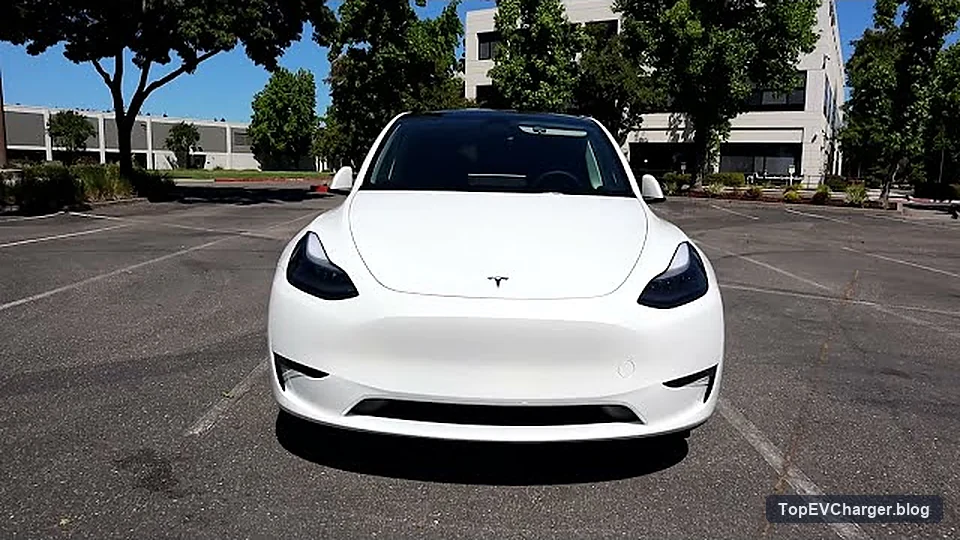
As detailed in our Tesla Wall Connector review, this hardware features a sleek tempered glass faceplate. Its minimalist profile minimizes wall protrusion while offering a refined industrial design language.
Conversely, the Emporia unit focuses on utility and structural robustness. Its slightly larger chassis accommodates spacious internal wiring compartments designed for easier contractor terminations.
The Tesla Wall Connector features a sleek tempered glass front plate measuring 13.5 inches high by 8 inches wide, requiring secure wall anchoring into structural studs for safe outdoor garage mounting.
Emporia utilizes a robust polycarbonate enclosure measuring approximately 12 inches by 8 inches, incorporating integrated cable management hooks designed to withstand heavy daily mechanical strain without cracking or failing.
Both units utilize NEMA-rated weatherproofing seals, but professional installers must verify proper gasket seating to prevent moisture ingress during extreme weather cycles and prolonged sub-zero winter temperatures.
- Tesla utilizes a slim profile with integrated cable management hooks.
- Emporia employs a slightly deeper housing to simplify heavy-gauge wire bends.
Chassis Materials and Environmental Sealing
Weatherproofing ratings protect internal logic boards against wind-driven rain and dust intrusion. Both manufacturers achieve robust outdoor ratings suitable for uncovered exterior wall installations.
The Tesla enclosure uses high-impact polymers engineered to resist UV yellowing over years of direct sunlight exposure. Meanwhile, Emporia incorporates heavy-duty rubber gaskets to secure the terminal housing.
- Outdoor NEMA ratings ensure year-round weather durability.
- Sealed internal compartments prevent moisture condensation shorts.
Electrical Engineering and Output Capacities
Delivering consistent amperage safely requires sophisticated internal thermal management. Both chargers draw up to 48 amperes of continuous current when paired with a dedicated sixty-ampere circuit breaker.
Voltage delivery scales dynamically based on your home electrical grid supply. Users can configure internal switches or software limits to match lower amperage circuits during older home retrofits.
Internal solid-state relays manage power flow without mechanical wear. This engineering choice significantly extends the overall operational lifecycle of the charging station under daily loads.
Delivering up to 48 amperes on a continuous 60-amp breaker, the Tesla unit maximizes Level 2 charging speeds for high-capacity battery packs while maintaining exceptional thermal efficiency across internal circuit components.
The Emporia charger matches this 11.5 kW maximum output when hardwired, though it requires precise dip-switch configuration or app-based provisioning to correctly calibrate output for lower-amperage home electrical panels.
Internal thermal throttling sensors continuously monitor terminal block temperatures, automatically reducing current draw if resistance spikes due to loose wire terminations or degraded copper feeder lines.
- Maximum output reaches 11.5 kilowatts on standard 240V residential service.
- Configurable amperage settings accommodate 30A, 40A, and 50A breakers safely.
Thermal Performance Under Heavy Loads
Extended charging sessions generate significant heat at terminal connection points. The Tesla unit employs internal thermistors that throttle current if ambient temperatures spike dangerously high.
Emporia utilizes copper bus bars to dissipate thermal energy away from sensitive microcontrollers. This prevents premature thermal faults during peak summer charging cycles.
- Active temperature monitoring prevents internal component degradation.
- Thermal throttling protects building wiring from excessive heat stress.
Cable Flexibility and Environmental Resilience
Cable ergonomics dictate how easily you wrap the cord during freezing winter mornings. Stiff cables frustrate daily routines, while flexible compounds remain pliable in sub-zero outdoor temperatures.
The Tesla cable jacket strikes a great balance between rigidity and flexibility. It resists crushing forces from vehicle tires rolling over it accidentally in busy home driveways.
Emporia supplies a slightly thicker cord that maintains excellent cold-weather suppleness. Neither cable suffers from memory curling issues that plague cheaper imported charging alternatives.
Tesla supplies an 18-foot or 24-foot thermoplastic cable engineered to remain highly pliable down to -22 degrees Fahrenheit, preventing the stiffness that plagues cheaper PVC alternatives in northern climates.
Emporia counters with a standard 24-foot flexible cable utilizing a robust thermoplastic elastomer jacket designed to resist abrasion, oil contamination, and crushing forces from vehicle tires in busy driveways.
Strain relief boots at both the charger chassis and the connector handle absorb repetitive bending forces, significantly extending overall cable lifespan and preventing internal conductor fatigue over years of usage.
- Long twenty-four-foot cables easily reach awkward parking configurations.
- UV-resistant outer sheathing prevents cracking from solar radiation.
Strain Relief and Connector Durability
Connector handles endure frequent drops onto concrete floors over years of service. Robust strain relief boots prevent internal wire fatigue right where the cable enters the handle.
As highlighted in our Tesla J1772 Wall Connector review, Tesla integrates a convenient button on the handle to open charge ports automatically without manual latches.
- Reinforced strain relief boots prevent internal conductor shearing.
- High-impact handle housings survive accidental drops on concrete.
Smart Ecosystems and Energy Management Integration
Modern home chargers require companion applications to schedule off-peak charging sessions. Smart software helps homeowners minimize monthly electricity bills by leveraging utility time-of-use pricing structures.
The Emporia ecosystem shines through deep home energy monitoring integration. By pairing with optional Vue hardware, it tracks total household power consumption alongside vehicle charging metrics.
Tesla relies on the proprietary smartphone application for scheduling and access control. While less modular for third-party solar arrays, its software interface remains extraordinarily polished and reliable.
Tesla integrates natively with the smartphone app and Powerwall systems, allowing homeowners to schedule charging sessions during off-peak utility hours or prioritize solar generation using dynamic load shifting protocols.
Emporia excels in whole-home energy monitoring by pairing the charger with Vue energy monitors, utilizing real-time current transformers to prevent main service panel overloads during concurrent heavy appliance usage.
Local Wi-Fi connectivity on both platforms enables firmware updates, diagnostic logging, and remote troubleshooting without requiring proprietary service calls or specialized technician diagnostic hardware onsite.
- Wi-Fi connectivity enables remote firmware updates and charge logs.
- Schedule optimization syncs power draw with cheap overnight utility rates.
Local Control Versus Cloud Dependence
Internet outages should never disable your primary residential charging capability. Both chargers maintain basic standalone functionality even when your home wireless router loses connection.
Emporia supports local API access for advanced home automation enthusiasts. Tesla prioritizes cloud reliability for seamless fleet management across multiple household vehicles.
- Standalone operation ensures charging works without internet access.
- Local APIs allow integration with Home Assistant and smart hubs.
Installation Protocols and Hardwired Configurations
Hardwired installations provide superior safety compared to heavy 14-50 plug receptacles. Both units support bottom, top, and rear conduit entry points to accommodate professional electrician routing preferences.
The Tesla mounting bracket features a built-in spirit level for rapid alignment. Electricians simply screw the lightweight backplate to wall studs before snapping the heavy chassis into place.
Emporia provides a comparable mounting template and terminal block layout. Generous interior workspace makes landing thick six-gauge copper conductors significantly less fatiguing for installers.
Hardwiring both chargers eliminates the potential failure points associated with heavy-duty NEMA 14-50 receptacles, which frequently degrade due to thermal cycling and heavy mechanical insertion torque forces.
National Electrical Code requirements mandate a dedicated GFCI breaker if installing plug-in variants, whereas hardwired setups rely on the charger's internal residual current monitoring device for ground fault protection.
Installers must torque terminal screws to manufacturer specifications using a calibrated tool to prevent micro-arcing and dangerous overheating within the primary input wiring compartment during maximum output sessions.
- Hardwiring eliminates potential receptacle melting hazards over time.
- Clear terminal markings prevent dangerous miswiring during setup.
Dynamic Load Balancing and Multi-Charger Setups
As noted within our Tesla Wall Charger Gen 3 review, properties with multiple electric vehicles frequently face panel capacity limits. Tesla allows daisy-chaining units to share a single circuit.
Emporia achieves similar load management through cloud and current sensor coordination. This prevents main breaker trips without requiring expensive electrical service panel upgrades.
- Power sharing distributes available amperage across multiple vehicles.
- Prevents expensive electrical panel upgrades in older homes.
Vehicle Port Compatibility and Adapter Demands
Connector compatibility dictates daily convenience for multi-brand automotive households. Choosing the correct plug standard prevents frustrating adapter hassles every time you park your vehicle.
As evaluated in our Tesla Gen 3 Wall Connector review, this unit is widely available with a native NACS plug. This fits modern North American electric vehicles perfectly.
Emporia traditionally relies on the universal J1772 standard plug format. Tesla owners using the Emporia charger must keep a small adapter handy in their trunk space.
The Tesla Wall Connector features an integrated SAE J3400 or proprietary North American Charging Standard plug, requiring third-party CCS vehicles to use certified adapters for secure mechanical and electrical interfacing.
Emporia relies on a universal J1772 connector, making it natively compatible with nearly all non-Tesla electric vehicles while requiring a reliable adapter for charging older Tesla models without modification.
Users must inspect adapter locking pins regularly to prevent high-resistance connections that can cause thermal runaway events during prolonged high-amperage charging sessions in warm ambient weather conditions.
- Native NACS plugs match the shifting North American automotive standard.
- Universal J1772 connectors serve non-Tesla electric vehicles natively.
Future-Proofing Your Garage Infrastructure
Automotive manufacturers continue transitioning toward unified charging standards rapidly. Investing in the correct connector type ensures your hardware remains relevant for future vehicle purchases.
Selecting a native plug style minimizes mechanical connection resistance points. Fewer adapter joints mean lower failure risks over thousands of high-amperage charging cycles.
- Direct connections minimize electrical resistance and heat buildup.
- Standardized plugs simplify operation for visiting guest drivers.
Long-Term Maintenance and Component Durability
Residential charging equipment operates in demanding thermal environments for years. Durable construction ensures your investment survives seasonal humidity swings, dust, and physical impacts safely.
The solid-state design of the Tesla Wall Connector requires virtually zero routine maintenance. Cleaning the exterior housing occasionally with a damp cloth keeps the finish pristine.
Emporia builds modular components designed for straightforward field serviceability. If a component fails outside warranty, replacement parts are generally accessible for qualified technicians.
Routine maintenance involves inspecting the output cable jacket for cuts, wiping dust from optical sensors, and verifying that mounting bracket hardware remains tightly secured against structural building walls.
Emporia and Tesla both offer robust multi-year manufacturer warranties, provided the original installation complied strictly with local electrical codes and manufacturer-specified torque parameters during initial setup procedures.
Replacing a damaged connector handle requires qualified technician intervention to ensure waterproof seals and internal pin alignments are restored correctly before returning the high-voltage hardware to daily service.
- Solid-state electronics eliminate moving parts that wear out.
- Regular terminal torque checks ensure long-term electrical safety.
Warranty Coverage and Manufacturer Support
Manufacturer warranty terms offer peace of mind for expensive hardware purchases. Both brands provide comprehensive multi-year coverage protecting against unexpected factory defects.
Customer support responsiveness varies during troubleshooting scenarios. Having access to knowledgeable technical representatives ensures rapid resolution if communication errors occur.
- Multi-year warranties protect against internal hardware failures.
- Responsive technical support assists with complex Wi-Fi pairing issues.
Frequently Asked Questions
Can the Tesla Wall Connector charge non-Tesla electric vehicles safely?
Yes, provided you purchase the universal version or use a reliable adapter. The hardware communicates seamlessly with all standard electric vehicles on the market today.
Does the Emporia EV charger require an internet connection to function?
No, the charger operates in standalone mode without Wi-Fi. Basic vehicle charging begins immediately when plugged in, regardless of your home network status.
What size circuit breaker is required for maximum 48A output?
Both units require a dedicated sixty-ampere circuit breaker to deliver full power safely. National Electrical Code mandates sizing breakers at 125 percent of continuous load.
Can I install either of these Level 2 chargers outdoors exposed to rain?
Yes, both chargers feature weather-resistant enclosures rated for outdoor installation. Robust NEMA housings protect internal electrical components against wind-driven rain and snow.
How does dynamic power sharing work with multiple chargers?
Power sharing coordinates output across units to prevent tripping your main panel. Smart load management distributes available amperage safely between two or more parked vehicles.