Tesla Universal Wall Connector vs. Chargepoint Home Flex: Which Fits Your Setup Better?
Choosing between these two heavy-duty EV chargers involves balancing built-in plug flexibility against advanced scheduling features. Your daily driving requirements will ultimately dictate the ideal electrical infrastructure.


Choose the Tesla Universal Wall Connector for seamless multi-vehicle household charging. Select the ChargePoint Home Flex when granular utility tariff scheduling matters most.
Compare all top models in our Best Ev Level 2 Charger.
Side-by-Side Breakdown
| Criteria | Tesla Universal Wall Connector | Chargepoint Home Flex | Edge |
|---|---|---|---|
| Peak Performance & Output | 11.5 kW (48A Hardwired) | 11.5 kW (48A Hardwired) | Tie |
| Duty Cycle & Consistency | Continuous commercial-grade output | Continuous heavy-duty output | Tie |
| Operating Noise & Vibration | Silent passive cooling | Silent passive cooling | Tie |
| Portability & Footprint | Permanent hardwired design | Plug-in or hardwired options | Chargepoint Home Flex |
| Maintenance & Service Life | Robust weatherized chassis | Impact-resistant polymer build | Tie |
| Power Requirements | Dedicated 60A circuit max | Dedicated 60A circuit max | Tie |
| Best Ideal Use-Case | Mixed-brand EV households | Detailed energy tracking needs | Split |
Engineering Architecture and Physical Footprint
Modern home charging equipment requires robust mechanical design to withstand harsh outdoor elements. Enclosure ratings dictate how well internal components survive extreme seasonal temperature swings and persistent moisture exposure.
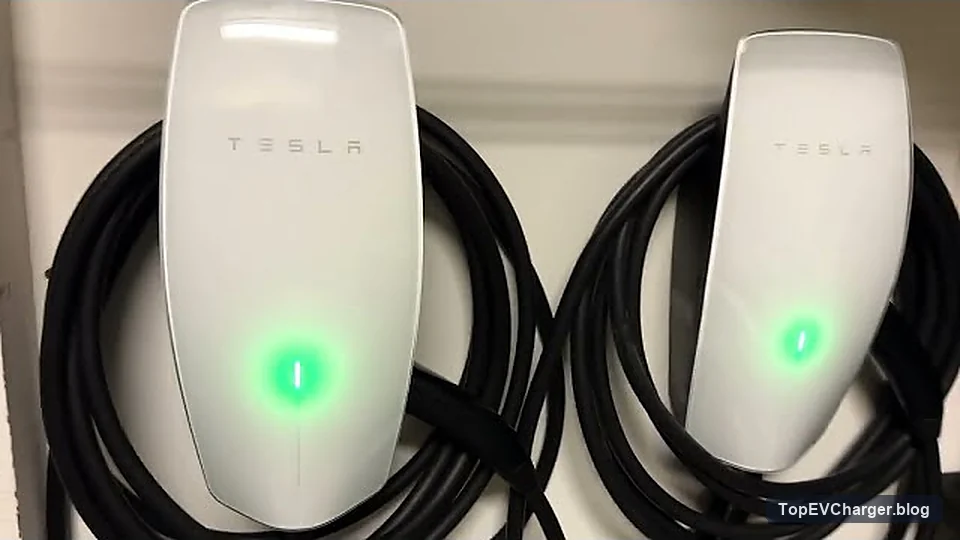
The Tesla unit utilizes a sleek, minimalist casing with integrated cable management. Its slim profile mounts flush against garage drywall while maintaining a NEMA 3R weather resistance certification for outdoor deployment.
ChargePoint adopts a more utilitarian stance with a textured polymer chassis. Engineers designed this housing to endure heavy physical impacts while shielding internal relays from airborne dust and heavy rainstorms.
The Tesla Universal Wall Connector features a die-cast aluminum front faceplate paired with a weather-resistant polycarbonate chassis engineered for outdoor residential deployments exposed to severe weather elements and UV radiation daily.
Our comprehensive Chargepoint Home Flex review highlights its robust flame-retardant enclosure featuring an IP55 rating, protecting internal circuit boards against dust ingress and low-pressure water jets during routine garden maintenance.
Dimensionally, both EVSE units require precise wall clearance for proper heat dissipation, demanding secure mounting onto structural studs using heavy-duty lag bolts that comply with NEC mounting height standards.
- Sleek architectural profiles designed for residential garage aesthetics.
- Weather-resistant housings built for indoor or outdoor installation.
- Integrated cable management to prevent ground safety hazards.
Mechanical Housing and Cable Management
Cable routing flexibility directly impacts daily user ergonomics in cramped residential garages. Stiff conductor jackets can become stubborn during freezing winter mornings, complicating the routine cable storage process.
Both manufacturers supply twenty-four-foot cables that reach across large garage bays effortlessly. Their holster designs secure the SAE J1772 or NACS plugs firmly to prevent accidental ground contact hazards.
- 24-foot flexible cables for extended reach.
- Secure plug holsters prevent weather corrosion.
Maximum Output Capacity and Electrical Requirements
Delivering rapid Level 2 charging speeds demands substantial electrical capacity from your home panel. Forty-eight amperes represents the sweet spot for residential setups, balancing rapid replenishment with moderate wire sizing.
Both units deliver up to eleven point five kilowatts of continuous power when properly hardwired. This output comfortably replenishes a typical battery electric vehicle overnight within six to eight hours.
Delivering up to 48 amps of continuous output, the ChargePoint Home Flex requires a dedicated 60-amp circuit breaker paired with appropriately sized copper conductors to prevent dangerous terminal overheating under maximum load.
As detailed in our Tesla Wall Connector review, this hardware matches high throughput by supporting a 11.5kW maximum power delivery, necessitating meticulous torque application on all internal lug connections during electrical inspection.
- Up to 48A of continuous current delivery.
- Compatible with standard residential 240V subpanels.
Circuit Breaker Sizing and Continuous Load Rules
National Electrical Code guidelines mandate a sixty-amp breaker for continuous forty-eight-amp outputs. Thermal derating factors ensure conductors do not overheat during extended multi-hour residential charging sessions.
Professional electricians must verify existing service capacity before mounting either high-draw charging station. Overloaded residential panels require costly upgrades to safely support these heavy electrical load demands.
- Requires 60A breaker for max output.
- Strict adherence to NEC continuous load rules.
Connector Versatility and Vehicle Compatibility
The connector interface remains the single most critical differentiator between these two rivals. Built-in adapters eliminate the need for clumsy third-party dongles when switching between distinct vehicle brands.
As outlined in our Tesla Gen 3 Wall Connector review, Tesla resolves the North American charging standard transition brilliantly via its magic dock, deploying either a standard J1772 plug or a NACS tip internally.
Integrating an internal mechanical adapter mechanism, the Tesla unit transitions seamlessly between standard J1772 and NACS plugs, eliminating the need for bulky aftermarket dongles that frequently degrade over extended charging cycles.
ChargePoint relies on a dedicated SAE J1772 tethered cable assembly for standard EVs, requiring owners of North American Charging Standard vehicles to utilize a separate UL-certified adapter for seamless port engagement.
- Universal plug solutions for diverse vehicle fleets.
- Elimination of clumsy third-party charging adapters.
Multi-Vehicle Households and Future-Proofing
Households parking both a Tesla and a non-Tesla EV benefit immensely from integrated adapters. Eliminating loose dongles prevents misplaced hardware and reduces daily friction for all drivers.
ChargePoint relies on the traditional J1772 plug, requiring a separate adapter for modern Teslas. Conversely, it natively supports older legacy electric vehicles without requiring any mechanical modifications.
- Magic Dock technology handles mixed vehicle brands.
- Traditional J1772 plugs suit legacy automobiles.
Software Ecosystems and Energy Tracking
Smart charging features transform a basic electrical outlet into an intelligent energy management hub. Cloud connectivity allows owners to monitor charging sessions remotely via dedicated smartphone applications.
ChargePoint offers an exceptionally feature-rich app with detailed utility cost tracking tools. Users can input local electricity rates to monitor exact dollar expenses for every kilowatt-hour consumed.
Wi-Fi connectivity enables real-time session monitoring, allowing operators to track daily kilowatt-hour consumption trends and schedule charging cycles during off-peak utility tariff windows to minimize monthly electricity expenditures.
Firmware updates deploy automatically via cloud synchronization, ensuring compliance with evolving cybersecurity protocols while granting users access to granular charging analytics through intuitive mobile application dashboards.
- Smartphone app integration for remote monitoring.
- Detailed energy consumption reports and cost analytics.
Wi-Fi Integration and Local Network Reliability
Reliable wireless connectivity ensures scheduled charging commands execute flawlessly during off-peak hours. Signal strength issues inside detached concrete garages can occasionally interrupt cloud synchronization routines.
Highlighted in our Tesla J1772 Wall Connector review, this unit provides a simpler software interface focused primarily on vehicle integration, letting owners manage charging schedules directly through the mobile application.
- Wi-Fi connectivity for scheduled charging routines.
- App-based access control and session logs.
Hardwired Permanence Versus Plug-In Flexibility
Installation methodology heavily influences overall setup costs and long-term hardware portability. Hardwired connections allow maximum amperage delivery while eliminating potential points of failure at plug terminals.
The ChargePoint unit offers a convenient NEMA plug option for garage installations. This allows renters or frequent movers to disconnect the charger and take it to a new home.
Hardwiring eliminates potential failure points associated with heavy-duty NEMA 14-50 receptacles, which are prone to thermal fatigue and degradation when subjected to continuous high-amperage residential EV charging loads over years.
Conversely, plug-in configurations offer remarkable portability, enabling homeowners to disconnect the charging unit and relocate it easily when transitioning to a new residence without hiring a licensed master electrician.
- Hardwired permanence for maximum safety.
- Plug-in versatility for renters and frequent movers.
Electrical Safety and Plug-In Limitations
Heavy-duty plug receptacles require specialized industrial-grade outlets to prevent dangerous thermal melting. GFCI breaker requirements inside modern electrical codes often introduce nuisance tripping with plug-in units.
Permanent hardwiring removes these vulnerable connection points entirely, ensuring maximum safety for high-amperage continuous loads. Licensed electricians almost universally recommend hardwired setups for optimal residential reliability.
- Industrial outlets required for high-draw plugs.
- Hardwiring eliminates terminal overheating risks.
Thermal Management and Durability Testing
Continuous high-current power delivery generates significant internal heat within electronic charging hardware. Advanced thermal sensors actively monitor component temperatures to prevent catastrophic overheating during summer heatwaves.
Solid-state switching components require efficient heat dissipation pathways to ensure long service lives. Both units employ passive cooling fins machined directly into their heavy aluminum backplates.
Advanced onboard thermistors continuously monitor internal ambient temperatures, automatically modulating charging current downward if thermal thresholds exceed safe parameters during extreme summer heat wave events.
Rigorous environmental stress screening ensures enclosure integrity against moisture intrusion, mechanical drop impacts, and destructive freeze-thaw cycles that commonly plague residential electronics installed in harsh northern climates.
- Thermal throttling protection for extreme climates.
- Passive cooling designs for completely silent operation.
Weatherproofing and Environmental Resiliency
Outdoor installations subject charging electronics to relentless rain, snow, and direct sunlight. UV-resistant plastics prevent structural yellowing and brittleness over years of harsh weather exposure.
Rubber gasket seals protect internal circuit boards from wind-driven moisture and corrosive road salt. Rigorous ingress protection testing guarantees dependable operation in freezing winter blizzards.
- Ingress protection against wind-driven rain.
- UV-stabilized exterior chassis materials.
Installation Complexities and Circuit Protection
Proper installation requires adherence to strict local building codes and manufacturer clearance specifications. Permitting procedures ensure that electrical wiring upgrades meet rigorous municipal safety inspection standards.
Professional electricians must calculate voltage drop over long wire runs to the garage. Undersized conductors create dangerous thermal bottlenecks that compromise overall charging system efficiency.
National Electrical Code mandates demand the inclusion of a dedicated Ground Fault Circuit Interrupter, either integrated within the EVSE or supplied via the main upstream electrical panel breaker.
Professional installation requires calculating total household electrical load capacities to prevent main service panel overloads, ensuring compliance with local building codes and strict permitting inspection standards.
- Professional electrical installation strongly recommended.
- Circuit load calculations prevent panel overloads.
Troubleshooting and Post-Install Maintenance
Diagnostic LED indicator lights communicate operational status codes directly to the end user. Error code troubleshooting helps owners quickly identify minor faults like temporary power grid fluctuations.
Routine maintenance remains minimal, requiring only occasional cable inspections for physical wear. Keeping the connector holster clean ensures reliable mechanical latching during daily residential use.
- Diagnostic LED indicators for rapid troubleshooting.
- Minimal upkeep requirements for long-term reliability.
Frequently Asked Questions
Can both chargers operate outdoors without a protective shelter?
Yes, both units feature robust weatherproof enclosures engineered specifically to withstand heavy rain, snow, and direct sunlight without requiring any auxiliary protective shelter whatsoever.
Homeowners can safely mount either charging station on exterior garage walls, provided the electrical contractor utilizes proper waterproof conduit fittings to maintain complete moisture protection across harsh seasonal climate changes.
Do I need a special electrical permit for installation?
Local municipal building codes almost always require a standard electrical permit before homeowners install any high-amperage residential electric vehicle charging station on their property.
Hiring a licensed professional electrician ensures all local inspection requirements, comprehensive load calculations, and strict municipal safety standards are fully satisfied before final operational sign-off occurs in your home.
Can I adjust the maximum amperage output if my panel is limited?
Yes, both chargers offer configurable output settings that allow licensed electricians to precisely match the maximum amperage to your available residential electrical panel capacity.
This crucial installation flexibility prevents costly main electrical service upgrades while still delivering safe, reliable overnight vehicle charging speeds tailored specifically to your household energy limits.
Which charger is better for households with multiple EV brands?
The Tesla Universal Wall Connector is superior for mixed vehicle fleets because its innovative integrated Magic Dock natively accommodates both modern NACS and legacy J1772 automobiles.
This clever hardware design completely eliminates the need for separate, easy-to-lose adapters when switching between different automotive brands parked simultaneously in your residential garage space.
How do smart scheduling features help lower monthly electricity bills?
Smart scheduling allows you to program your charging sessions to run strictly during off-peak utility hours when local electricity rates drop significantly across the grid.
Leveraging these automated software timers ensures your electric vehicle replenishes overnight at the absolute lowest possible cost per kilowatt-hour without ever requiring manual user intervention.