Tesla Mobile Connector vs. Tesla Wall Connector: Which Fits Your Setup Better?
Choosing between these Tesla charging solutions involves balancing portable convenience against permanent high-amperage daily performance. Understanding your home electrical infrastructure remains essential for safe, reliable overnight replenishment.


The Tesla Wall Connector wins for permanent residential installations due to its superior amperage and thermal resilience, while the Tesla Mobile Connector excels as a flexible, travel-ready emergency backup solution.
Compare all top models in our Best Ev Level 2 Charger.
Side-by-Side Breakdown
| Criteria | Tesla Mobile Connector | Tesla Wall Connector | Edge |
|---|---|---|---|
| Peak Performance & Output | 32 Amps (7.6 kW) max | 48 Amps (11.5 kW) max | Tesla Wall Connector |
| Duty Cycle & Consistency | Rated for intermittent utility | Continuous duty rated | Tesla Wall Connector |
| Operating Noise & Vibration | Completely silent passive cooling | Silent operation with robust relays | Tie |
| Portability & Footprint | Lightweight, trunk-ready design | Wall-mounted fixed architecture | Tesla Mobile Connector |
| Maintenance & Service Life | Requires careful plug handling | Permanent weather-sealed wiring | Tesla Wall Connector |
| Power Requirements | Standard NEMA 14-50 or 5-15 | Hardwired dedicated circuit | Tesla Wall Connector |
| Best Ideal Use-Case | Frequent travelers and renters | Dedicated home garage charging | Tesla Wall Connector |
Architectural Overview and Core Electrical Engineering
Modern electric vehicle charging requires precise control over alternating current conversion and thermal dissipation. Evaluating these two devices highlights fundamental differences in how engineers approach residential power delivery.
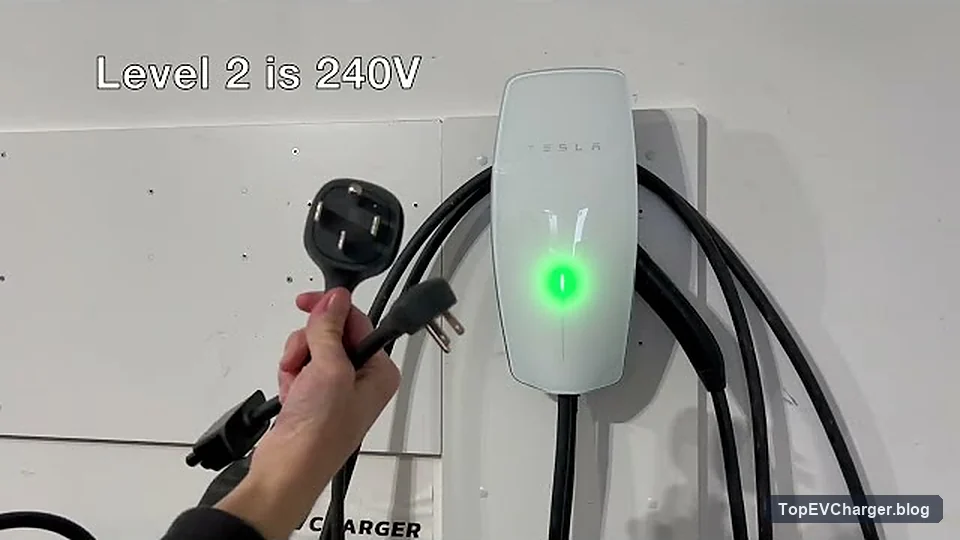
The portable unit prioritizes flexible adaptability across diverse job sites and older residential receptacles. Conversely, the stationary hardwired hardware emphasizes maximum sustained power throughput without thermal throttling risks.
Our tesla wall connector review highlights how this hardwired architecture supports up to 48 amperes of continuous output on a dedicated 60-amp breaker, maximizing residential AC power delivery safely.
Conversely, the Mobile Connector relies on plug-ended flexibility, usually capping delivery at 32 amperes when connected to a NEMA 14-50 outlet, introducing contact resistance vulnerabilities inherent to modular heavy-duty mechanical receptacles.
- Portable units utilize interchangeable pigtails for diverse legacy wall outlets.
- Hardwired architecture removes mechanical connection points prone to high-resistance heating.
- Internal microcontrollers monitor ground integrity continuously during active charging sessions.
Internal Circuitry and Power Conversion
Both systems act primarily as advanced safety switches communicating directly with the vehicle's onboard charger. The actual alternating-to-direct current conversion occurs inside the automobile rather than within the supply equipment.
Internal relays manage circuit switching while precision thermistors monitor plug temperature to prevent catastrophic melting. These safety mechanisms protect your home wiring from excessive heat accumulation.
- Advanced thermistors shut down power if wall receptacle temperatures spike dangerously.
- Solid-state switching components ensure reliable relay life over thousands of cycles.
Daily Energy Delivery and Real-World Charging Speeds
As detailed in our tesla mobile connector review, replenishing a depleted battery overnight demands adequate amperage to completely offset daily commuting energy consumption and streamline your daily charging timeline.
Running at peak capacity, the hardwired equipment delivers substantial range restoration hourly. The portable alternative operates at a reduced current threshold, extending total replenishment windows significantly.
Hardwired wall units efficiently restore roughly 44 miles of range per hour under optimal 11.5 kW conditions, significantly outpacing standard travel adapters constrained by lower thermal thresholds and thermal throttling safeguards.
Mobile chargers typically deliver about 30 miles of range per hour on a 240-volt circuit, which satisfies overnight replenishment needs for average commuters while trading away peak volumetric electrical throughput for portability.
- Higher amperage output reduces total vehicle charging time during off-peak utility hours.
- Lower amperage setups require careful scheduling to avoid expensive daytime electricity rates.
Amperage Limits and Range Recovery Rates
Operating on a standard 50-amp circuit, the mobile accessory caps delivery at 32 amps maximum. This translates to roughly thirty miles of driving range restored per hour of active connection.
The stationary wall unit harnesses a dedicated 60-amp circuit to push 48 amps of continuous current. This upgrade yields up to forty-four miles of range per hour under optimal residential conditions.
- Thirty-two amps suffices easily for standard daily commuter mileage requirements.
- Forty-eight amps accommodates high-mileage drivers and large battery pack capacities.
Thermal Management, Duty Cycles, and Hardware Durability
Sustaining high electrical loads for hours generates significant heat within conductors, plugs, and terminals. Engineers design residential hardware to dissipate this thermal energy without triggering safety shutdowns.
Environmental exposure demands robust ingress protection ratings against moisture, dust, and extreme weather fluctuations. Permanent garage fixtures generally handle harsh thermal cycles better than portable accessories.
Our gen 3 wall connector review highlights passive ambient cooling across an aluminum chassis designed to maintain continuous 100% duty cycles without thermal degradation during severe summer weather.
Portable units pack sensitive electronics into compact plastic enclosures, occasionally triggering automatic current derating when internal sensors detect excessive heat buildup near the wall plug interface during sustained high-amperage sessions.
- Continuous duty ratings ensure zero performance degradation during long overnight sessions.
- Weatherproof enclosures allow safe outdoor mounting without fear of moisture ingress.
Managing Heat Dissipation and Environmental Stress
Portable units experience high wear on their plug prongs and heavy receptacle contact points over time. Repeated insertion cycles can loosen wall sockets and increase electrical resistance dangerously.
Hardwired installations eliminate removable plug interfaces entirely, preventing a primary source of residential electrical fires. Sealed electronics housings protect internal components from garage humidity and dust.
- Eliminating plug connections removes a critical point of potential thermal failure.
- Robust casing materials resist impact damage from accidental vehicle contact.
Physical Form Factors, Cable Ergonomics, and Portability
Daily user interaction depends heavily on cable weight, flexibility in cold weather, and overall storage convenience. A cumbersome cable discourages routine plugging after long, exhausting work commutes.
Balancing weight against durability dictates how easily you can pack equipment for road trips. Permanent stations offer integrated cable management hooks to keep garage floors tidy.
Weighing significantly less than permanently mounted alternatives, the flexible mobile kit fits easily inside trunk sub-floors, offering ultimate convenience for drivers who frequently travel between secondary residences or rural properties.
Permanent hardware incorporates a heavier 24-foot cable designed for extreme weather flexibility, requiring careful manual coiling around the main housing unit to prevent kinks and premature mechanical jacket wear.
- Lightweight portable cables roll up easily into small trunk storage bags.
- Thicker hardwired cables demand deliberate wrapping around wall-mounted holster housings.
Handling and Cable Flexibility in Extreme Climates
Sub-zero winter temperatures cause standard rubber charging cables to stiffen into rigid, unmanageable coils. Premium insulation compounds maintain flexibility even when operating in freezing environments.
Ergonomic handle designs feature integrated release buttons that communicate directly with vehicle charge ports. This thoughtful touch prevents awkward straining during routine garage plugging routines.
- Flexible insulation compounds prevent frustrating cable management battles during winter months.
- Ergonomic latches ensure smooth disconnection without excessive manual force.
Circuit Protection, Safety Standards, and Electrical Code
Residential electrical installations must comply strictly with National Electrical Code safety mandates to prevent hazards. Ground fault protection remains an absolute requirement for all modern EV supply equipment.
Integrated monitoring systems continuously verify ground continuity before authorizing any high-voltage energy transfer. These safeguards protect users and property from unexpected electrical faults.
Hardwired installations strictly adhere to modern National Electrical Code mandates, requiring upstream ground-fault circuit interrupter protection unless local jurisdiction amendments explicitly permit alternative disconnect methods for dedicated EV equipment.
Portable chargers integrate internal residual current monitoring devices inside the control box, providing vital safety layers when plugging into standard household outlets lacking specialized upstream residential safety breakers.
- Ground fault circuit interrupters prevent dangerous current leakage through human touch.
- Proper breaker sizing ensures home wiring never exceeds safe thermal thresholds.
Understanding Hardwire Versus Receptacle Safety Requirements
Current electrical codes mandate expensive GFCI breakers for all garage-installed 240-volt receptacle outlets. These breakers frequently experience nuisance tripping when paired with portable charging equipment.
Hardwired units incorporate internal fault detection, bypassing the need for expensive receptacle GFCI breakers. This technical distinction simplifies code compliance and saves money on breaker panels.
- Hardwiring avoids nuisance breaker trips common with portable receptacle setups.
- Integrated safety diagnostics protect against arc faults and overcurrent conditions.
Total Financial Footprint, Installation Costs, and Incentives
Upfront hardware acquisition expenses represent only one component of your total home charging investment budget. Electrician labor rates, permit fees, and necessary panel upgrades shape your financial commitment.
Weighing long-term utility savings against initial installation costs helps determine the most economical choice. Federal tax credits and local utility rebates frequently offset a significant portion of these expenses.
Upgrading residential infrastructure for a hardwired setup involves hiring licensed electricians to run heavy-gauge copper wiring, though federal tax credits often offset substantial portions of total contractor and material expenses.
Utilizing an existing dryer outlet or garage receptacle avoids complex installation overhead entirely, presenting an economically efficient alternative for budget-conscious owners seeking reliable home charging without permanent structural modifications.
- Professional hardwire installation requires certified electrician labor and permits.
- Portable units simply plug into pre-existing dryer or workshop electrical outlets.
Balancing Equipment Expenses Against Electrical Upgrades
Purchasing a portable accessory avoids complex installation fees if a compatible outlet already exists. However, older homes often require new circuit runs regardless of the hardware chosen.
Investing in a permanent station provides superior performance and often qualifies for lucrative local utility incentives. Assessing your long-term vehicle ownership plans clarifies the true financial value.
- Existing NEMA outlets eliminate the immediate need for professional electrician visits.
- Utility rebates often incentivize networked home chargers with smart monitoring capabilities.
Tailoring Your Choice to Specific Driving and Living Scenarios
Your unique lifestyle, housing situation, and daily commuting distance dictate which charging solution makes sense. Renters and frequent road-trippers derive immense value from maintaining portable equipment in their trunks.
As evaluated in our tesla j1772 wall connector review, homeowners seeking a seamless, rapid daily routine benefit tremendously from dedicated garage wall mounting matched to specific driving patterns.
Daily commuters logging high mileage benefit immensely from the rapid replenishment speeds of a permanently mounted unit, eliminating range anxiety and ensuring full battery capacity every single morning.
Apartment dwellers or frequent travelers find superior value in versatile travel kits that adapt to diverse 120-volt and 240-volt receptacles encountered during cross-country road trips or temporary housing arrangements.
- Frequent travelers need portable solutions for charging at vacation rentals and relatives' homes.
- Daily commuters benefit from the effortless speed of permanent high-amperage installations.
Matching Hardware Specifications to Real-World Lifestyles
If your daily commute remains under thirty miles, a basic 120-volt household outlet might even suffice temporarily. Most drivers ultimately upgrade to a dedicated 240-volt solution for peace of mind.
Evaluate your garage layout, parking habits, and future electric vehicle adoption plans before purchasing. Selecting the correct infrastructure now prevents costly replacement upgrades down the road.
- Assess local utility time-of-use rate structures before establishing your daily routine.
- Future-proof your garage by installing wiring capable of supporting maximum amperage.
Frequently Asked Questions
Can the Tesla Mobile Connector be used outdoors permanently?
The portable unit features weatherproof weather sealing designed to withstand rain and snow exposure. However, permanent outdoor mounting of receptacles increases wear and vulnerability to theft.
Does the Tesla Wall Connector require a professional electrician?
Hardwired installations demand professional electrical expertise to ensure compliance with local building codes. Certified electricians verify proper wire gauge sizing and breaker coordination safely.
Can I charge non-Tesla electric vehicles with these chargers?
Both units utilize the North American Charging Standard plug natively matched to modern vehicles. J1772 adapters allow seamless charging for compatible non-Tesla electric vehicle models.
What size circuit breaker do I need for the Wall Connector?
Maximum output requires a dedicated sixty-amp breaker paired with thick copper wiring. Configurable amperage settings allow installation on smaller breakers down to fifteen amps.
Is the Mobile Connector fast enough for everyday commuting?
Thirty-amp delivery restores roughly thirty miles of driving range per hour of connection. Overnight recovery easily covers average daily commuting distances for most vehicle owners.