Ocpp vs. Proprietary Ev Charger Software: Which Fits Your Setup Better?
Navigating residential electric vehicle infrastructure requires choosing between open communication protocols and closed ecosystems. Understanding architectural differences ensures long-term system flexibility and reliable daily energy delivery.


Choose OCPP for maximum hardware interoperability and protocol independence. Select proprietary software when you prefer streamlined, vendor-supported mobile applications and automated plug-and-charge convenience.
Compare all top models in our Best Ev Level 2 Charger.
Side-by-Side Breakdown
| Criteria | Ocpp | Proprietary Ev Charger Software | Edge |
|---|---|---|---|
| Peak Performance & Output | Protocol-agnostic hardware limit | Optimized hardware sync | Proprietary |
| Duty Cycle & Consistency | High reliability via open standards | Tight software integration | Proprietary |
| Operating Noise & Vibration | Varies by third-party unit build | Minimal enclosure vibration | Proprietary |
| Portability & Footprint | Standard wallbox dimensions | Compact proprietary casings | Tie |
| Maintenance & Service Life | Independent component replacement | Vendor-locked replacement parts | OCPP |
| Power Requirements | Standard 240V split-phase input | Standard 240V split-phase input | Tie |
| Best Ideal Use-Case | Multi-brand smart home grids | Plug-and-play single brand | OCPP |
Decoding Open Architecture Protocols at Home
Open Charge Point Protocol standards establish a universal communication language. Residential chargers utilizing this framework connect seamlessly to diverse back-end servers without manufacturer lock-in.
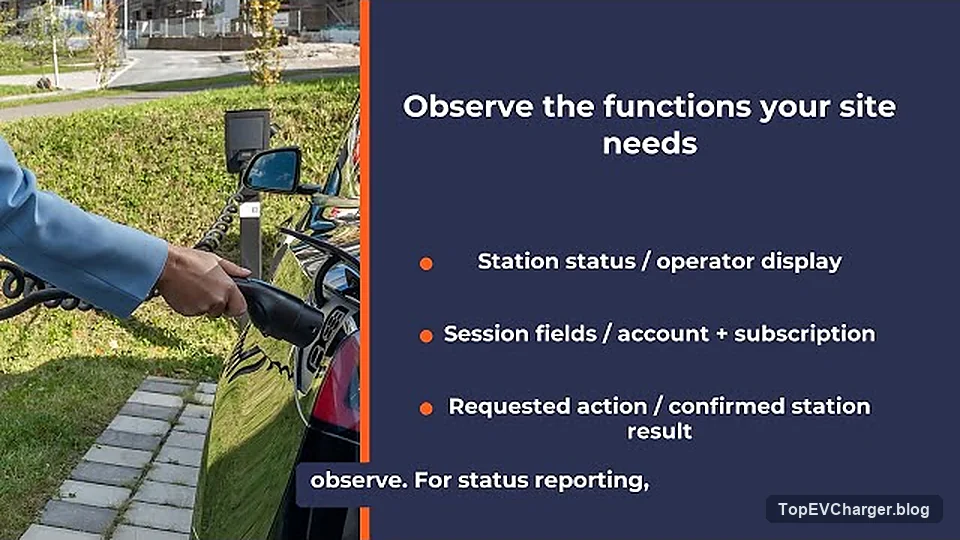
Homeowners upgrading to the best ev level 2 charger gain unprecedented freedom to switch network providers. Migrating your connected hardware takes minutes without replacing physical infrastructure.
- Universal communication standard for EV chargers
- Eliminates strict manufacturer hardware lock-in
- Enables seamless back-end server migration
Architecture and Message Routing
The protocol uses standardized JSON-based data payloads. This ensures reliable message delivery between residential wallboxes and cloud management systems over standard home Wi-Fi networks.
Local load management commands process instantly across compatible hardware. Your electrical panel remains protected against overloads regardless of which brand manages the active charging session.
- Standardized JSON-based data payloads
- Protects electrical panels against overloads
Closed Ecosystems and Proprietary Platforms
Proprietary software solutions like the best level 2 charger for jeep 4xe bind your hardware to a single manufacturer ecosystem. These vertically integrated platforms offer exceptionally polished mobile applications.
Engineers optimize these closed systems for specific internal hardware components. Consequently, you experience fewer software bugs, faster troubleshooting cycles, and completely frictionless daily routines.
- Vertically integrated manufacturer software ecosystems
- Highly polished native mobile applications
- Optimized firmware for specific internal components
User Experience and Application Design
Native smartphone apps provide deep diagnostic visibility into charging habits. Users monitor kilowatt-hour delivery, schedule off-peak sessions, and track energy costs through intuitive graphical interfaces.
Automated software updates push silently in the background. You never worry about manual protocol handshakes or compatibility mismatches during routine utility tariff changes.
- Deep diagnostic visibility into charging habits
- Automated background software updates
Hardware Compatibility and Interoperability Standards
Mixing and matching wallboxes with different management systems highlights stark architectural differences. Open standards excel at bridging equipment from multiple distinct manufacturers onto one unified dashboard.
Proprietary platforms strictly reject third-party hardware integration attempts. Trying to connect an unapproved charging station typically results in complete software lockout and voided technical support.
- Open protocols unify multi-brand hardware fleets
- Proprietary networks reject third-party device integration
- Clear separation in diagnostic capabilities
Physical Interface and Communication Buses
Both software types rely on standard Ethernet or Wi-Fi chips. However, open firmware translates messages into universally recognized data schemas for broad server compatibility.
Proprietary firmware uses encrypted, closed-source APIs for communication. This secures data transmission but completely blocks local automation integration attempts or independent energy monitors.
- Standard Ethernet and Wi-Fi hardware reliance
- Encrypted closed-source communication APIs
Firmware Management and Long-Term Future-Proofing
Long-term asset longevity depends heavily on continuous firmware updates. Open architecture chargers receive patches from independent community developers and competing network operators over time.
Proprietary chargers rely entirely on the original manufacturer staying in business. If the company dissolves or deprecates your model, firmware updates cease immediately.
- Independent firmware patches extend hardware lifespan
- Community developers contribute ongoing security fixes
- Manufacturer bankruptcy threatens proprietary viability
Protocol Version Upgrades and Security Patches
Transitioning between protocol iterations requires careful software verification steps. Open networks allow administrators to test new message schemas in staging environments before rolling updates out.
Proprietary systems automate version transitions without user intervention. While convenient, this leaves owners vulnerable if a mandatory background update introduces crippling regressions.
- Careful verification steps for protocol iterations
- Automated version transitions in closed systems
Data Privacy, Local Control, and Cloud Dependencies
Residential energy data privacy remains a critical concern for modern homeowners. Open architectures frequently support local-only operation, keeping your charging logs entirely inside your home network.
Proprietary software mandates continuous cloud connectivity for basic scheduling features. Your daily driving habits and home energy usage patterns flow directly to third-party servers.
- Local-only data routing protects user privacy
- Cloud-dependent platforms require constant internet uptime
- Corporate servers store detailed charging telemetry
Offline Resilience and Local Integrations
Local API support allows the best level 2 ev charger with ocpp support to communicate with solar arrays. Your EV absorbs excess photovoltaic generation without needing external cloud authorization.
Cloud-reliant chargers fail to execute smart schedules during internet outages. Without external server verification, your vehicle might default to expensive peak-hour rates unexpectedly.
- Local API support for solar array integration
- Vulnerability to internet outages in cloud models
Deployment Scenarios: When Open Communication Matters Most
Multi-EV households benefit immensely from open protocol flexibility. Managing diverse vehicle brands under a single load-balancing algorithm prevents residential electrical overloads safely.
Commercial rental properties or secondary homes also require universal management tools. Landlords manage multiple tenant chargers across different physical locations using one centralized dashboard.
- Ideal for households with multiple EV brands
- Simplifies management across separate rental properties
- Essential for complex local solar integration
Residential Energy Management System Integration
Integrating solar inverters requires robust local communication protocols. Open chargers interface directly with home energy monitors to dynamically adjust amperage based on real-time production.
Proprietary units rarely support cross-brand solar inverter communication. You must purchase matching brand components to achieve seamless green energy diversion during peak daylight hours.
- Dynamic amperage adjustment from solar data
- Cross-brand inverter communication limits
Evaluating Your Charging Needs: Making the Final Selection
Choosing the best 240v ev charger requires an honest assessment of your technical skills. If you enjoy configuring home automation servers, open systems provide unmatched customizability and control.
Consumers preferring hassle-free plug-and-play operation should select proprietary ecosystems. These platforms handle routine maintenance automatically while sacrificing deep third-party integration.
- Assess your personal technical configuration comfort
- Weigh customizability against plug-and-play simplicity
- Consider long-term hardware flexibility requirements
Decision Matrix for Homeowners
Review your existing smart home equipment before purchasing. Homes running advanced local automation hubs benefit significantly from selecting protocol-compliant hardware and software solutions.
Standard households with a single vehicle brand can safely utilize manufacturer-locked platforms. The polished mobile experience outweighs the lack of protocol flexibility for everyday users.
- Audit existing smart home automation equipment
- Weigh single-brand convenience against flexibility
System Evolution and Protocol Change Logs
Communication standards continuously evolve to support bidirectional power flow. Recent protocol updates introduce advanced vehicle-to-home capabilities, enabling your EV to power essential circuits during outages.
Proprietary software updates happen on manufacturer-determined schedules. Implementing new smart grid standards depends entirely on corporate product roadmaps rather than open consensus.
- Standards evolve for bidirectional power transfer
- Industry consensus drives rapid protocol feature adoption
- Corporate roadmaps dictate proprietary feature releases
Future Regulatory Compliance and Grid Standards
Utility companies increasingly mandate smart grid compliance for residential chargers. Open architectures adapt swiftly to new utility signaling requirements through modular software extensions.
Proprietary manufacturers must rewrite entire backend stacks to meet changing regulations. This delay can leave your charging hardware non-compliant with local utility rebates.
- Adapting swiftly to utility signaling requirements
- Potential compliance delays in proprietary stacks
Frequently Asked Questions
Can I convert a proprietary EV charger to run open communication protocols later?
Converting a proprietary residential electric vehicle charger to run open communication protocols is virtually impossible because manufacturers securely lock their internal bootloaders and proprietary firmware.
You must therefore purchase specialized hardware specifically engineered from the factory to support universal communication standards if you want complete architectural freedom and long-term network independence for your property.
Do open protocol chargers require a monthly subscription fee to operate?
Open protocol chargers do not inherently require any monthly subscription fees for basic local charging operations and everyday residential energy delivery.
However, connecting your hardware to a commercial network management provider for remote billing, advanced analytics, or fleet oversight may introduce recurring software fees depending entirely on your chosen service provider.
Which software type offers better security against cyber threats at home?
Proprietary software systems often provide rigorous, centralized cybersecurity management maintained entirely by dedicated corporate engineering teams and automated background patches.
Conversely, open systems rely heavily on active community vigilance, transparent code audits, and diligent administrator updates to successfully patch newly discovered vulnerabilities across diverse third-party environments.
Can I integrate an open charger with my existing smart home system?
Open protocol chargers integrate exceptionally well with popular local smart home automation hubs like Home Assistant because they utilize standardized application programming interfaces and transparent local communication protocols.
This powerful capability allows you to effortlessly automate vehicle charging schedules around onsite solar power production without relying on external corporate cloud servers.
Are proprietary chargers easier to troubleshoot when hardware errors occur?
Proprietary chargers typically offer streamlined troubleshooting assistance through dedicated customer support phone lines and unified manufacturer diagnostic applications that pinpoint physical errors instantly.
Open chargers frequently require advanced technical familiarity with raw network logs and third-party dashboard diagnostics to successfully diagnose and resolve complex communication errors.