Neocharge vs. Dryer Buddy: Which Fits Your Setup Better?
Comparing two leading shared-circuit solutions reveals critical differences in automation, hardware build quality, and NEC safety compliance for home EV charging.


For automated priority switching and sleek smart integration, NeoCharge wins. For rugged, customizable manual routing and heavy-duty industrial relays, Dryer Buddy leads.
Compare all top models in our Best Ev Level 2 Charger.
Side-by-Side Breakdown
| Criteria | Neocharge | Dryer Buddy | Edge |
|---|---|---|---|
| Peak Performance & Output | Up to 24A continuous (30A circuit) | Up to 40A continuous (50A circuit) | Dryer Buddy |
| Duty Cycle & Consistency | Solid-state relay with thermal protection | Heavy-duty electromechanical contactors | Dryer Buddy |
| Operating Noise & Vibration | Silent solid-state operation | Audible mechanical relay clicks | Neocharge |
| Portability & Footprint | Compact wall-mounted enclosure | Modular box with external cabling | Neocharge |
| Maintenance & Service Life | Sealed unit with app diagnostics | Field-serviceable modular components | Dryer Buddy |
| Power Requirements | NEMA 14-30, 10-30, 14-50 variants | Custom configurable plug types | Tie |
| Best Ideal Use-Case | Smart automated multi-device homes | Customized manual high-amp garages | Split |
Understanding Dryer Outlet Splitters and Shared Circuits
Adding a Level 2 electric vehicle charger often requires pulling new wire through walls. However, pairing your wiring setup with units from our best ev level 2 charger guide avoids costly electrical panel upgrades entirely.
Using a specialized power splitter allows your dryer and your EV charger to safely share a single dedicated receptacle without exceeding the maximum rated ampacity of the branch circuit.
National Electrical Code guidelines strictly govern these devices to prevent thermal overload. Understanding how these splitters manage concurrent electrical loads is essential for safe residential operation.
Shared circuit splitters allow electric vehicles to plug into an existing 240V laundry outlet. They dynamically manage power to prevent tripping your main electrical circuit breaker during simultaneous appliance operations.
Standard residential laundry circuits operate at 30 amperes capacity. Drawing continuous loads above twenty-alpha amps violates continuous duty codes without proper automatic switching mechanisms integrated into the splitter housing.
These hardware devices eliminate the need for expensive panel upgrades or running new heavy-gauge copper wiring from your main electrical service panel across finished walls and conduit runs.
- Eliminates the need for expensive main electrical panel upgrades.
- Utilizes existing 240-volt laundry wiring safely and efficiently.
- Adheres to strict National Electrical Code capacity limits.
Dryer Splitter vs Switch Box vs Load-Sensing
Dumb splitters simply dual-feed power, relying on user discipline. In contrast, automated smart splitters actively prioritize loads to protect your home's wiring infrastructure from continuous overloads.
Load-sensing chargers monitor overall panel draw dynamically. Splitters intercept the circuit directly at the receptacle, making them much simpler to install in older single-family homes.
- Dumb splitters lack active current monitoring.
- Smart splitters automate priority switching between devices.
Engineering Architecture: NeoCharge vs Dryer Buddy
The NeoCharge Smart Splitter utilizes a sleek housing built for residential garages, similar to the hardware analyzed in our chargepoint home flex review. It emphasizes plug-and-play simplicity alongside integrated app connectivity for monitoring status.
Inside the NeoCharge, a sophisticated microprocessor monitors current draw continuously. It automatically cuts power to the secondary device if the primary appliance initiates a drying cycle.
Conversely, the Dryer Buddy relies on robust industrial relays and configurable electronic timers. It is engineered like commercial switchgear, prioritizing raw durability and custom build options.
NeoCharge utilizes a micro-controller to automatically prioritize your dryer over the EV charger. This solid-state digital switching architecture provides reliable current sensing without manual intervention or mechanical relays.
Dryer Buddy relies on electromechanical contactors and manual switch configurations depending on the exact model. Some variants use priority switching while others allow split manual control for dual loads.
Internal thermal monitoring inside both systems protects against overheating conditions during high-amperage draws. Copper busbars and robust terminal blocks ensure low electrical resistance across continuous cycles.
- NeoCharge features integrated microprocessors for automated switching.
- Dryer Buddy uses industrial-grade electromechanical components.
- Both units protect the shared circuit from dangerous overloads.
How Automatic Switching Works Internally
Automatic switching logic prevents simultaneous high-draw operation by treating the laundry dryer as the primary load. When your dryer runs, the unit immediately pauses EV charging.
Once the dryer cycle completes and current drops to zero, the smart splitter restores power to your EV charger safely, maximizing overnight charging windows without manual intervention.
- Dryer takes absolute priority in all standard operating modes.
- EV charging resumes automatically after the laundry cycle ends.
Electrical Safety, NEC Compliance, and Breaker Sizing
Residential branch circuits must comply with the continuous load rule. As highlighted within our wallbox pulsar plus review, a 30-amp dryer circuit can safely deliver a maximum continuous EV charging load of 24 amps.
Exceeding these safety thresholds risks tripping breakers or degrading outlet terminals. Quality splitters feature internal thermal fuses and heavy copper bus bars to dissipate operating heat effectively.
The National Electrical Code requires strict adherence to Article 625 for electric vehicle supply equipment installations. Splitters must feature internal over-current protection or rely on the upstream thermal breaker.
Standard 30-amp laundry circuits mandate a maximum continuous draw of 24 amperes. Failing to configure your EV charging rate below this threshold creates serious fire hazards.
- Strict adherence to the NEC 125% continuous load rule.
- 30-amp circuits limit continuous EV draw to 24 amps.
- Internal thermal protection prevents dangerous receptacle melting.
Wire Gauge and Breaker Coordination
Verify that your existing laundry circuit uses proper wire gauges. Standard 30-amp circuits require 10 AWG copper wiring, while 50-amp circuits demand thicker 6 AWG conductors.
Never pair a high-amperage splitter with undersized building wire. Always inspect terminal screws for proper torque during initial setup to eliminate high-resistance electrical connections.
- Ensure matching wire gauges for your specific breaker size.
- Check terminal torque to prevent localized overheating risks.
Receptacle Configurations: NEMA 14-30, 10-30, and 14-50
Matching your splitter to your exact wall outlet is critical. Older homes frequently feature NEMA 10-30 three-prong receptacles, a configuration you must evaluate before installing units like those detailed in our tesla wall connector review.
Modern construction utilizes NEMA 14-30 four-prong outlets, separating neutral and ground for enhanced safety. Heavy-duty garage setups may also leverage larger NEMA 14-50 industrial receptacles.
Selecting the incorrect plug variant creates severe safety hazards. Always confirm your exact laundry room outlet configuration before ordering any shared-circuit splitting hardware.
NEMA 14-30 receptacles feature four pins including a dedicated neutral wire, making them safer for modern grounded systems. Older homes often utilize NEMA 10-30 three-wire outlets lacking earth grounds.
Connecting modern chargers to ungrounded outlets requires proper adapter usage and safety compliance. NEMA 14-50 variations offer higher amperage capacity but demand thicker copper wiring rated safely.
Terminal torque specifications must be verified using a calibrated wrench during installation. Loose connections generate localized heat spikes that degrade outlet faces and plastic housing materials.
- NEMA 10-30 configurations lack a dedicated ground wire.
- NEMA 14-30 and 14-50 provide separate neutral and ground paths.
- Always verify wall outlet geometry prior to hardware purchase.
Handling Older Three-Prong Outlets Safely
Three-prong 10-30 outlets combine neutral and ground duties, which modern electrical codes prohibit for new installations. Special care and certified adapters are required for safe operation.
If your home features older ungrounded wiring, consult a licensed electrician to evaluate safety risks before plugging in heavy-duty EV charging equipment.
- Ungrounded 10-30 outlets require careful technical mitigation.
- Consult electricians for legacy wiring safety evaluations.
Installation Realities, Permits, and DIY Considerations
Both NeoCharge and Dryer Buddy are marketed as DIY-friendly plug-and-play devices. You simply plug the unit into the wall, then plug your dryer and EV charger into it.
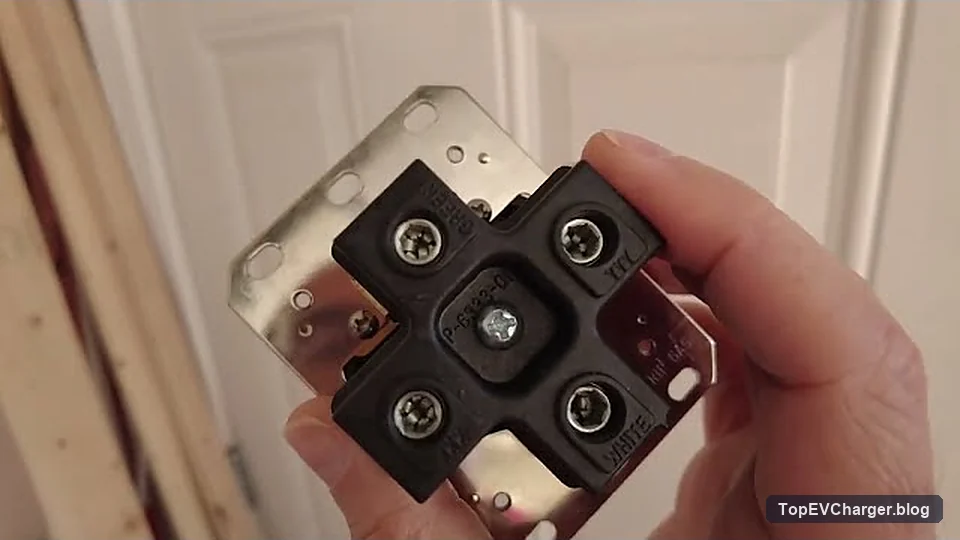
However, old receptacle contacts can wear out over time. Plugging heavy loads into fatigued wall outlets can cause arcing, high resistance, and potential thermal damage to the wall box.
Replacing an old, loose wall receptacle with a heavy-duty commercial-grade outlet before installation ensures a secure mechanical connection and prevents premature hardware failure.
Most smart splitters feature plug-and-play designs that require zero hardwiring into your electrical panel. However, local building authorities may still require electrical permits for permanent EV equipment installations.
Verifying your existing outlet's wire gauge is crucial before plugging in any power splitter. Undersized 10 AWG wiring can fail under heavy continuous loads sustained over several hours.
Professional electricians should inspect older laundry receptacles for corrosion, hairline cracks, and fatigue. Replacing worn outlets prevents arc faults and ensures secure mechanical engagement with heavy heavy-duty plugs.
- Plug-and-play design avoids complex hardwired installation steps.
- Inspect old wall outlets for looseness and wear before use.
- Commercial-grade receptacles prevent dangerous high-resistance arcing.
Do You Need an Electrician or Permit?
Because these splitters plug into existing permitted outlets, local jurisdictions rarely require a new electrical permit. However, local codes vary significantly across regions.
If you are uncertain about your home's breaker capacity or wire integrity, hiring a licensed electrician for a brief inspection provides essential peace of mind.
- Plug-in splitters generally bypass complex permit requirements.
- Professional inspections ensure absolute electrical code compliance.
Real-World Performance, Charging Speeds, and Schedules
Charging an electric vehicle on a shared 30-amp dryer circuit yields roughly 15 to 20 miles of range per hour. This comfortably replenishes daily commutes overnight during off-peak hours.
Integrating your charging schedule with utility time-of-use rate plans maximizes financial savings. Smart splitters allow you to schedule EV charging when electricity rates drop significantly.
Manual splitters or basic timer boxes require careful coordination so your laundry routines do not conflict with scheduled utility rate windows or deplete your vehicle's overnight charge.
Shared 30-amp circuits deliver roughly 7.2 kilowatts theoretically, but safe continuous output maxes at 5.76 kW. This yields approximately twenty miles of driving range per charging hour.
Smart scheduling features let you defer EV charging to off-peak utility hours. The splitter automatically resumes vehicle charging once your electric dryer finishes its heating cycle.
Frequent interruptions from appliance cycling do not harm modern lithium-ion vehicle battery management systems. Thermal management liquids handle minor power shifts without impacting long-term battery degradation rates.
- Delivers 15 to 20 miles of driving range per charging hour.
- Off-peak charging schedules maximize utility rate savings.
- Automated switching ensures reliable overnight EV replenishment.
Energy Management and Battery Health Best Practices
Level 2 AC charging is inherently gentle on modern lithium-ion battery packs. Maintaining moderate charge limits between 20 and 80 percent preserves long-term cell health.
Shared circuits handle daily thermal loads effectively when installed correctly. Regular visual inspections of plugs and cords prevent unexpected thermal degradation over years of use.
- AC charging preserves long-term lithium-ion battery health.
- Routine plug inspections prevent long-term thermal wear.
Maintenance, Durability, and Long-Term Reliability
Hardware longevity depends heavily on component quality and thermal management. Solid-state switching devices eliminate mechanical wear but are sensitive to severe voltage spikes and surges.
Electromechanical contactors used in heavy-duty alternatives offer robust physical durability. However, frequent switching under load can eventually pit relay contacts over years of service.
Keeping your garage environment clean and dry protects internal electronics from moisture corrosion, ensuring your splitting hardware operates reliably for a decade or more.
Routine maintenance involves inspecting power cords and plug pins for signs of discoloration. Excessive heat buildup indicates high contact resistance requiring immediate component replacement by professionals.
Indoor enclosures generally feature flame-retardant polycarbonate plastics rated for residential garage environments. Keeping units free from dust buildup preserves internal heat dissipation pathways effectively.
Mechanical relays and solid-state microchips have finite operating lifespans under heavy electrical loads. Choosing robust surge suppression safeguards sensitive internal logic boards against grid voltage spikes.
- Solid-state electronics eliminate mechanical contact wear.
- Electromechanical relays provide robust industrial durability.
- Environmental protection safeguards internal circuit boards.
Troubleshooting Common Shared-Circuit Faults
If your charger frequently trips its internal breaker, check for loose plug connections or concurrent appliance operation. Overheating plugs indicate high electrical resistance requiring immediate replacement.
Consult manufacturer diagnostic LEDs or mobile app logs to identify specific error codes quickly, ensuring minimal downtime for your daily vehicle charging routine.
- Monitor diagnostic LEDs for rapid fault identification.
- Replace warm or loose plugs immediately to prevent damage.
Frequently Asked Questions
Can I run my clothes dryer and EV charger at the exact same time?
No, shared circuit splitters automatically alternate power between your dryer and EV charger to prevent dangerous overloads. This ensures your home electrical panel never exceeds its rated branch capacity.
Will using a splitter void my electric vehicle's factory warranty?
Using a certified power splitter does not impact your vehicle warranty. The vehicle only regulates the current drawn from the EVSE supplied during charging sessions.
How much driving range will I recover overnight on a 30-amp circuit?
A shared 30-amp dryer circuit delivers approximately 15 to 20 miles of range per hour of charging. This easily restores typical daily commutes during standard overnight windows.
Do I need to hire an electrician to install a plug-in splitter?
Professional installation is not required since these devices use existing plugs. However, inspecting your wall outlet for wear is essential for long-term electrical safety.
What happens if my dryer starts while my EV is actively charging?
The smart splitter will immediately pause EV charging and prioritize the dryer cycle. Once the dryer finishes running, EV charging resumes automatically without manual intervention.