Mc Cable vs. Conduit For Ev Charger: Which Fits Your Setup Better?
Choosing between metal-clad wiring and protective raceways defines your home charging reliability. This technical breakdown evaluates installation speed, structural safety, and NEC compliance.


For rapid indoor runs, MC Cable wins on speed. For exposed outdoor locations or heavy impact zones, Conduit For Ev Charger installations are the undisputed champions.
Compare all top models in our Best Ev Level 2 Charger.
Side-by-Side Breakdown
| Criteria | Mc Cable | Conduit For Ev Charger | Edge |
|---|---|---|---|
| Peak Performance & Output | High amp capacity | High amp capacity | Tie |
| Duty Cycle & Consistency | Continuous load rated | Continuous load rated | Tie |
| Operating Noise & Vibration | Silent operation | Silent operation | Tie |
| Portability & Footprint | Compact bundled profile | Rigid outer raceway | Mc Cable |
| Maintenance & Service Life | Sealed factory unit | Rewireable raceway system | Conduit For Ev Charger |
| Power Requirements | Standard Level 2 feeds | Standard Level 2 feeds | Tie |
| Best Ideal Use-Case | Protected indoor spaces | Outdoor and exposed walls | Conduit For Ev Charger |
Navigating MC Cable Architecture and NEC Article 330
Metal-clad assemblies combine insulated conductors under a flexible metallic armor. Under NEC Article 330, these factory-assembled units streamline indoor residential routing without requiring individual loose wire pulls through raceways.
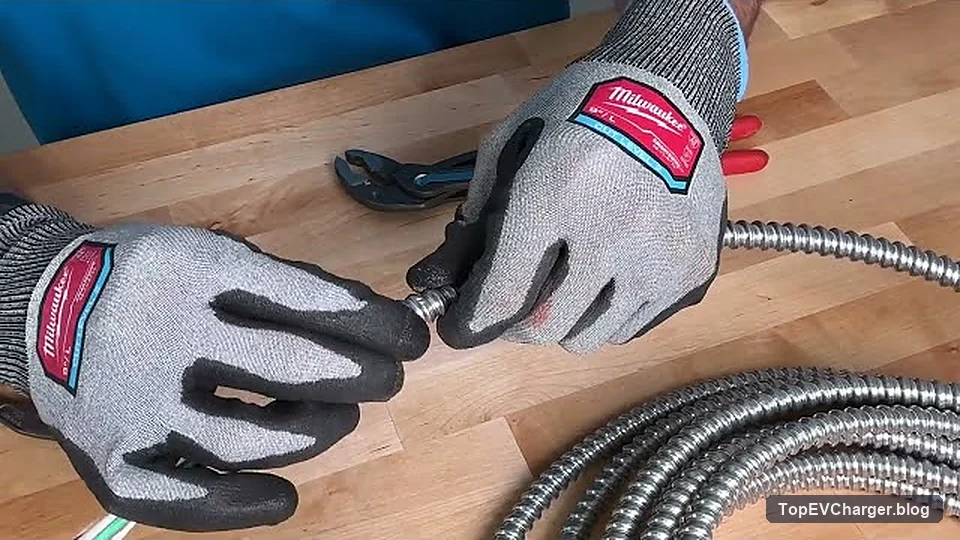
Specialized variations feature integrated green insulated ground wires. Reviewing guidelines for what size breaker for 48 amp ev charger helps technicians maintain code compliance during high-capacity residential installations.
Understanding manufacturing standards helps prevent costly project delays during initial rough-in inspections. Electricians appreciate the bundled design because it eliminates tedious wire pulling across complex basement joist layouts.
- Factory-installed copper conductors inside
- Interlocked aluminum armor outer sheath
- Built-in equipment grounding conductor included
Understanding Environmental Restrictions
Standard metal-clad wiring cannot handle continuous wet locations unless jacketed. Selecting the correct variant prevents premature corrosion and catastrophic insulation breakdown inside harsh residential environments.
Inspectors check for proper damp-location ratings before approving any garage or basement installation. Ignoring these specific environmental limitations risks immediate failure during your final electrical inspection.
- Dry indoor location requirements
- Specialized PVC jacket variants for dampness
Exploring Rigid Metallic Raceways: EMT, IMC, and RMC
Electrical metallic tubing offers a lightweight raceway option for indoor garage walls. When mechanics demand maximum physical defense, rigid metal conduit provides superior crush resistance and shielding.
Intermediate metal conduit bridges the gap with thicker walls than tubing. Reviewing trenching depth requirements for outdoor ev charger conduit helps installers maintain proper burial depth for safety across extended runs.
Selecting the correct wall thickness depends entirely on mechanical protection needs. Heavy industrial environments demand rigid galvanized steel to withstand accidental vehicle impacts safely.
- Electrical metallic tubing for garage walls
- Intermediate metal conduit for durability
- Rigid metal conduit for heavy impact
Threading and Compression Fittings
Raceways require precise bending tools to avoid flattening internal cross-sections. Using approved compression or set-screw connectors ensures your grounding path remains mechanically sound under heavy vibration.
Mastering conduit body placement simplifies pulling heavy gauge copper conductors over long runs. Proper fitting selection prevents sharp edges from slicing cable insulation during installation.
- Set-screw connectors for dry indoor spaces
- Compression fittings for secure moisture barriers
Real-World Financial Analysis: Materials Versus Labor Costs
Upfront material expenses often favor flexible armored wiring packages. However, total project costs depend heavily on labor hours required for pulling individual conductors through rigid pipe systems.
Contractors spend less time routing flexible factory assemblies through finished wall cavities. Conversely, rigid raceways demand skilled bending and precise measurement, which increases initial installation labor charges significantly.
Evaluating total project estimates requires balancing material savings against specialized labor expenses. Experienced project managers analyze site layouts carefully before selecting a preferred wiring method.
- Lower material costs for armored wiring
- Higher labor efficiency with pre-bundled runs
- Increased time investment for pipe bending
Long-Term Value and Upgrade Potential
Empty raceways allow effortless wire replacement when future charging demands increase. Armored cables require complete replacement if you ever need to upgrade conductor gauge sizes.
Calculating long-term value involves anticipating future electric vehicle charging technology advancements. Permanent raceway infrastructure usually provides superior adaptability for growing residential power demands.
- Easy conductor pulling in empty pipes
- Permanent cable replacement for armor runs
Speed and Efficiency Benchmarks on Residential Projects
Speed remains a primary advantage when electricians select flexible factory wiring. Crews can snake runs through tight basement joists rapidly without assembling multiple pipe sections and connectors.
Rigid pipe installations require meticulous measuring, cutting, reaming, and joining. This meticulous process extends project timelines considerably but delivers unmatched long-term mechanical protection for EV circuits.
Tight construction schedules often push residential contractors toward pre-assembled wiring solutions. Balancing speed against structural protection ensures satisfied homeowners and reliable daily charging operations.
- Rapid deployment with flexible armor
- Extended timelines for rigid raceway assembly
- Reduced cleanup with pre-assembled cable coils
Overcoming Obstacles in Finished Spaces
Retrofitting EV chargers in finished garages presents unique spatial challenges. Flexible factory assemblies snake behind drywall cleanly with minimal cutting compared to rigid piping.
Minimizing drywall repair preserves home aesthetics while delivering high-amperage power safely. Smart routing strategies keep installation footprints small and tidy.
- Minimal drywall cutting for flexible runs
- Concealed routing through tight cavities
Jurisdictional Boundaries: Allowed Uses and Strict Prohibitions
Armored wiring excels in dry, protected indoor spaces like residential garages. Building codes strictly prohibit using standard metal-clad assemblies in direct earth burial or damp subterranean parking structures.
Protective raceways dominate outdoor applications exposed to weather and physical damage. Pairing robust conduit with the best level 2 charger for jeep 4xe ensures reliable all-weather performance across exterior masonry or open driveways.
Local electrical inspectors strictly enforce these boundary lines during rough-in checks. Understanding regional code modifications prevents costly tear-outs and failed municipal inspections.
- Indoor garage applications for armored cable
- Exterior wall mounting for protective raceways
- Absolute ban on armor in wet trenches
Handling Underground Transitions Safely
Transitioning from indoor wiring to underground runs requires listed transition fittings. Using schedule eighty PVC or rigid steel protects conductors against shifting earth and moisture.
Waterproofing every subterranean junction box prevents galvanic corrosion and catastrophic ground faults. Proper sealing techniques ensure decades of trouble-free outdoor charging performance.
- Listed transition fittings for underground
- Schedule eighty PVC for earth burial
Ground Continuity, Fire Ratings, and Structural Support
Metal armor can serve as an equipment grounding path under specific conditions. Modern best practices recommend pulling a dedicated copper ground wire inside both armored cables and rigid pipes.
Fire-rated drywall assemblies demand specialized penetration seals to maintain barrier integrity. Both wiring methods require robust clamping intervals to prevent sagging and strain on terminal lugs over time.
Maintaining structural support prevents mechanical fatigue across heavy copper conductor runs. Code-compliant mounting hardware secures your installation against accidental bumps and daily vibration.
- Dedicated copper ground wire inclusion
- Firestop putty for wall penetrations
- Strict securing intervals per electrical code
Securing Intervals and Code Compliance
National electrical rules dictate exact fastening distances for all wiring methods. Securing armored runs within twelve inches of every box prevents loose connections.
Rigid raceways require support every ten feet to maintain mechanical stability. Adhering to these structural guidelines guarantees a safe installation that passes inspection.
- Twelve-inch box securing rule for armor
- Ten-foot maximum support spacing for pipes
Evaluating Bend Radius Limits and Hiring Expert Contractors
Exceeding minimum bend radius guidelines damages internal conductor insulation permanently. Installers must respect seven times the cable diameter for armor and strict tabular limits for rigid pipes.
When reviewing contractor bids, ask about specific raceway materials and grounding methods. Confirming these engineering details prevents unexpected code violations and ensures your charger operates safely daily.
Professional workmanship guarantees your charging setup handles maximum amperage without overheating. Selecting the best level 2 charger for tesla protects your valuable home electrical infrastructure and daily commuter.
- Seven times diameter bend limit for armor
- Detailed quote line-item verification
- Direct conductor pull confirmation
Questions to Ask Before Signing Installation Quotes
Ask your licensed electrician whether they include a separate green grounding conductor. Clarifying material grades ensures you receive a robust installation built for long-term reliability.
Reviewing specific routing paths prevents unsightly exterior surface drops. Clear communication with your installation crew guarantees complete satisfaction with your final setup.
- Verify dedicated ground wire inclusion
- Confirm exact routing path and penetration points
Frequently Asked Questions
Can I run armored cable outside to my charger?
Standard armored wiring variants completely lack the specialized waterproof outer jackets required for exterior damp locations and continuous direct weather exposure.
Always choose listed liquid-tight raceways or heavy-duty underground conduit systems to adequately protect your high-amperage residential charging equipment from severe moisture intrusion, accidental physical impacts, and dangerous ground faults outdoors.
Why is rigid conduit installation more expensive?
Installing rigid metal pipes requires considerably more specialized labor hours due to precise field measuring, manual cutting, and complex physical bending procedures across walls.
Nevertheless, this robust raceway approach delivers unmatched physical defense and allows effortless future conductor upgrades if you decide to upgrade or install a much faster residential charging station later.
Does metal armor count as a valid equipment ground?
Corrugated metal armor can theoretically function as a valid equipment grounding conductor under strictly controlled electrical installation conditions clearly outlined in national residential wiring codes.
Experienced master electricians always pull a dedicated copper ground wire inside both armored cable assemblies and metal pipes to guarantee absolute long-term safety and robust fault mitigation.
What happens if a bend radius is too tight?
Exceeding established minimum bend radius limits during installation can permanently damage internal conductor insulation and trigger unexpected residential charging system failures.
Qualified installers must respect strict manufacturer multiplication factors based on exact cable or pipe diameters to ensure reliable mechanical and electrical performance over time.
How do I seal wall penetrations for fire safety?
Fire-rated walls and floor assemblies require specialized intumescent sealants and firestop putty whenever you pierce structural barriers for EV wiring. Ignoring these critical safety mandates during your installation violates building codes and compromises the overall fire resistance of your home.