Level 1 vs. Level 2 Car Charger: Which Fits Your Setup Better?
Navigating residential EV charging requires balancing standard household circuits against dedicated high-voltage lines. Understanding these core power dynamics protects your vehicle battery.


While Level 1 offers plug-and-play simplicity for low-mileage drivers, the Level 2 car charger remains the definitive winner for daily commuters seeking reliable high-speed energy replenishment.
Compare all top models in our Best Ev Level 2 Charger.
Side-by-Side Breakdown
| Criteria | Level 1 | Level 2 Car Charger | Edge |
|---|---|---|---|
| Peak Performance & Output | 1.4 kW to 1.9 kW (120V) | 7.2 kW to 19.2 kW (240V) | Level 2 Car Charger |
| Duty Cycle & Consistency | Extended recovery times (16-24 hrs) | Rapid replenishment (4-8 hrs) | Level 2 Car Charger |
| Operating Noise & Vibration | Completely silent passive cooling | Quiet operation, potential fan noise | Level 1 |
| Portability & Footprint | Highly portable trunk accessory | Wall-mounted permanent hardware unit | Level 1 |
| Maintenance & Service Life | Minimal stress on onboard charger | Higher continuous thermal throughput | Level 1 |
| Power Requirements | Standard NEMA 5-15 household outlet | Dedicated 240V NEMA 14-50 circuit | Level 1 |
| Best Ideal Use-Case | Low-mileage commuters & PHEVs | All-electric daily drivers & fleets | Level 2 Car Charger |
Engineering Fundamentals of Residential Power Delivery
Residential electric vehicle supply equipment operates by converting alternating current from the electrical panel into direct current for the battery pack. Level 1 equipment utilizes standard household receptacles without modifications.
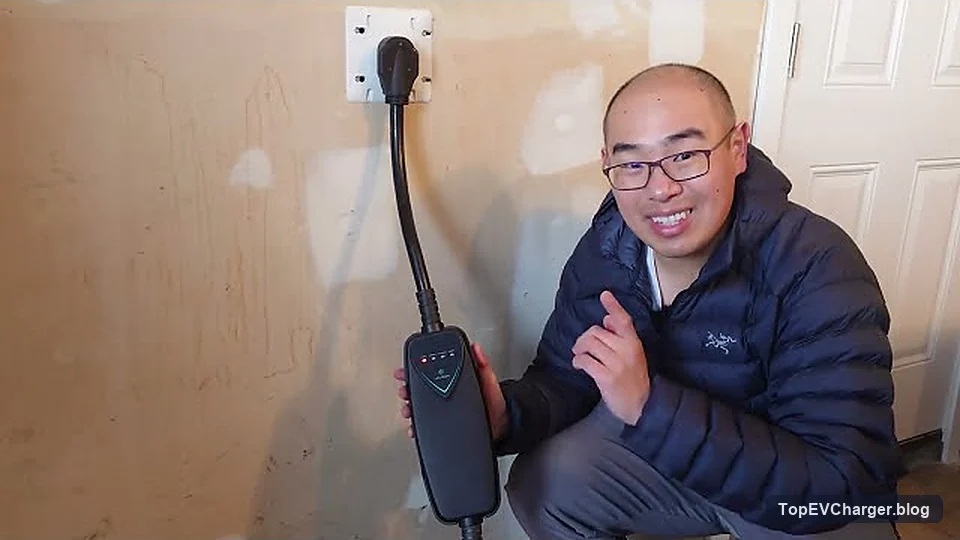
Internal power electronics manage thermal regulation and current flow. Reviewing options inside our best ev level 2 charger guide helps homeowners protect electrical wiring systems from dangerous overloads.
Electrical resistance dictates that higher voltage drops amperage requirements for identical wattage outputs. This fundamental physics principle explains why residential charging speeds vary dramatically across outlet types.
- Utilizes standard 120-volt household alternating current
- Draws between 12 and 16 amperes continuously
- Relies heavily on existing home branch circuits
The Physics of Alternating Current Transfer
Alternating current fluctuates sinusoidally sixty times per second within North American residential grids. Onboard chargers rectify this waveform into stable DC power suitable for lithium-ion storage cells.
Voltage drop across long cable runs reduces overall charging efficiency. Minimizing distance between the main electrical panel and your parking stall optimizes total energy transfer rates.
- Sinusoidal waveform rectification inside the vehicle
- Thermal dissipation along standard copper wiring runs
Daily Mileage Math and Range Replenishment Rates
Calculating your daily commuting distance reveals whether baseline electrical setups provide sufficient energy. For specialized plug-in hybrid requirements, check out our best level 2 charger for jeep 4xe hardware recommendations.
Battery capacity dictates total charging duration from zero to one hundred percent. Standard wall plugs require over a full day for modern long-range battery electric vehicles.
Drivers averaging under thirty miles daily often find baseline trickle charging entirely adequate. However, unexpected long trips require supplementary public infrastructure access if relying solely on basic outlets.
- Delivers roughly 1.4 kilowatts of usable power
- Adds 2 to 5 miles of range hourly
- Requires up to twenty hours for full replenishment
When Standard Outlets Fall Short
Longer commutes quickly exhaust the narrow replenishment window provided by standard household circuits. Battery depletion compounds over consecutive workdays without adequate overnight recovery time.
Energy losses associated with onboard computer upkeep further reduce net power delivered to cells. Parasitic loads during extended sessions lower overall charging efficiency metrics.
- Compounding deficits during busy weekly schedules
- Parasitic thermal management loads reducing net input
Electrical Infrastructure and Installation Realities
Upgrading your garage charging setup requires carefully evaluating existing electrical panel capacity. When selecting compatible hardware, review our best level 2 charger for tesla roundup for safe high-output options.
Older homes with 100-amp service panels may require costly electrical service upgrades before supporting high-draw equipment. Load calculation audits prevent dangerous breaker trips and thermal overloads.
Conduit routing, wire gauge thickness, and GFCI breaker requirements dictate overall project expenses. Proper grounding safeguards against electrical faults during extreme weather events.
- Requires professional load calculation assessments
- Mandates heavy-gauge copper wiring runs
- Involves dedicated dual-pole circuit breaker installation
Panel Capacity and Load Calculations
Modern homes operating multiple heavy appliances must calculate total amperage draw carefully. Electrical safety standards prevent main service panels from exceeding maximum rated thermal thresholds.
Smart energy management systems can mitigate panel limitations by throttling output dynamically. These devices share available amperage between home appliances and vehicle chargers safely.
- Total household amperage threshold monitoring
- Dynamic load balancing for constrained panels
Thermal Management, Duty Cycles, and Lifespan
Continuous high-amperage energy transfer generates significant heat within charging cables and connectors. Thermal monitoring sensors inside modern equipment prevent dangerous overheating conditions during long sessions.
Passive cooling relies on ambient air circulation around the enclosure and cordset. High-output hardware often incorporates internal fans to maintain safe operating component temperatures.
Minimizing thermal stress preserves the longevity of both vehicle inlet pins and wall plugs. Regular inspection of terminal contacts prevents high-resistance oxidation from forming over time.
- Built-in temperature sensors prevent thermal runaway
- Passive versus active cooling design trade-offs
- Periodic plug inspection prevents oxidation buildup
Connector Degradation and Safety Protocols
Frequent plugging and unplugging creates mechanical wear on contact pins. Robust locking mechanisms reduce arcing risks and maintain secure electrical connections during active power transfer cycles.
Weatherproof enclosures rated for outdoor use protect internal circuitry from moisture ingress. Proper cable management prevents accidental crushing damage from garage vehicles.
- Mechanical wear reduction through proper handling
- Weatherproof NEMA ratings for exterior deployments
Portability, Ergonomics, and Garage Footprint
Equipment physical dimensions and weight significantly impact daily user convenience and storage flexibility. Portable cordsets store easily inside vehicle trunks for emergency roadside replenishment.
Permanent wall units eliminate the daily hassle of coiling and uncoiling heavy cables. Dedicated holsters keep connectors clean, organized, and elevated off concrete garage floors.
Ergonomic handle designs ensure comfortable grip angles during freezing winter operating conditions. Flexible cable jackets prevent stiffening when exposed to sub-zero ambient temperatures.
- Trunk-storable cordsets for maximum travel versatility
- Wall-mounted units providing permanent ergonomic convenience
- Cold-weather flexible cable jacket engineering standards
Cable Flexibility in Sub-Zero Climates
Winter temperatures harden standard rubber compounds, making cord management difficult. Thermoplastic elastomers maintain flexibility and prevent cracking during severe cold weather snaps.
Proper holster placement minimizes strain relief points where cables enter charger enclosures. Choosing affordable hardware highlighted inside our best budget level 2 charger guide helps protect internal conductors from premature failure.
- Advanced elastomer jackets resisting winter stiffness
- Strain relief engineering preventing internal conductor fatigue
Evaluating Future-Proofing and Upgrades
Anticipating future household fleet expansions ensures your initial electrical investment remains relevant. Higher amperage capacity accommodates larger battery packs found in modern electric SUVs and trucks.
Smart connectivity features allow users to track energy consumption and schedule off-peak charging. Software updates keep hardware compatible with evolving utility time-of-use pricing structures.
Investing in robust infrastructure today prevents costly retrofits when replacing commuter vehicles tomorrow. Scalable electrical planning maximizes long-term utility and home resale appeal.
- Accommodates future large-battery electric vehicle acquisitions
- Integrates smart Wi-Fi scheduling and energy tracking
- Enhances home property resale value via infrastructure
Smart Grid Integration and Software
Modern networked chargers communicate directly with utility providers to optimize grid demand. Off-peak scheduling reduces operational expenses by prioritizing cheap overnight electricity rates.
Remote diagnostic capabilities allow manufacturers to troubleshoot software glitches without technician visits. Secure firmware updates protect residential networks against potential cyber vulnerabilities.
- Utility time-of-use schedule automation
- Remote firmware updates and diagnostics support
The Bottom Line: Matching Your Fleet to Voltage
Selecting the optimal residential charging tier depends entirely on your specific driving habits. Low-mileage motorists with plug-in hybrids find standard wall plugs perfectly adequate for daily needs.
Battery-electric vehicle owners with substantial daily commutes require dedicated high-voltage equipment installations. Assessing your routine mileage prevents range anxiety and ensures seamless everyday mobility.
Balancing upfront installation expenses against long-term convenience guides sensible purchasing decisions. Prioritizing safety, capacity, and ergonomic comfort guarantees a satisfying residential EV charging experience.
- Match equipment output directly to daily mileage
- Weigh installation expenses against charging speed benefits
- Prioritize safety certifications and professional electrical work
Making Your Final Equipment Selection
Review your local utility rebate programs before finalizing any hardware purchase decisions. Financial incentives frequently offset a large portion of professional electrician installation expenses.
Consult certified professionals to verify your home electrical system capacity safely. Making an informed choice secures reliable vehicle mobility for years to come.
- Leveraging local utility installation rebates
- Consulting certified electricians for final sign-offs
Frequently Asked Questions
Can I plug a Level 1 charger into any standard household outlet?
Yes, standard units fit any 120-volt NEMA 5-15 receptacle. Always verify circuit capacity to prevent breaker trips.
Do I need a permit to install a 240-volt home charging station?
Most local municipalities require electrical permits for dedicated 240V circuits. Proper permitting ensures compliance with local building safety codes.
Will fast home charging degrade my electric vehicle battery faster?
Residential units deliver AC power processed by the onboard charger. This gentle conversion protects battery longevity compared to public DC fast chargers.
Can I take my home charging equipment with me when I move?
Portable cordsets travel easily in your trunk. Hardwired wall units require professional disconnection before transferring to a new home.
How much does professional installation typically cost for higher voltage units?
Expenses vary based on panel distance and required wiring upgrades. Getting multiple electrician quotes helps secure fair installation pricing.