L1 vs. L2 Charging: Which Fits Your Setup Better?
Level 1 equipment relies on standard household outlets for slow power replenishment. Conversely, Level 2 hardware demands specialized circuitry to deliver rapid energy transfers.


Standard Level 1 equipment suits low-mileage commuters with minimal daily range needs. However, Level 2 charging remains the clear winner for overall speed, efficiency, and home readiness.
Compare all top models in our Best Ev Level 2 Charger.
Side-by-Side Breakdown
| Criteria | L1 | L2 Charging | Edge |
|---|---|---|---|
| Peak Performance & Output | 1.4 kW | 19.2 kW | L2 Charging |
| Duty Cycle & Consistency | Low amp continuous | High amp robust | L2 Charging |
| Operating Noise & Vibration | Silent passive | Silent passive | Tie |
| Portability & Footprint | Highly portable | Semi-fixed unit | L1 |
| Maintenance & Service Life | Moderate plug wear | Rugged relay life | L2 Charging |
| Power Requirements | 120V NEMA 5-15 | 240V Split-phase | L1 |
| Best Ideal Use-Case | Plug-in hybrids | Daily EV commuters | L2 Charging |
Fundamentals of Standard Household Power Transfer
Level 1 chargers utilize a standard NEMA 5-15 receptacle found in every residential garage. This setup delivers roughly 1.4 kilowatts of alternating current directly into the onboard vehicle charger.
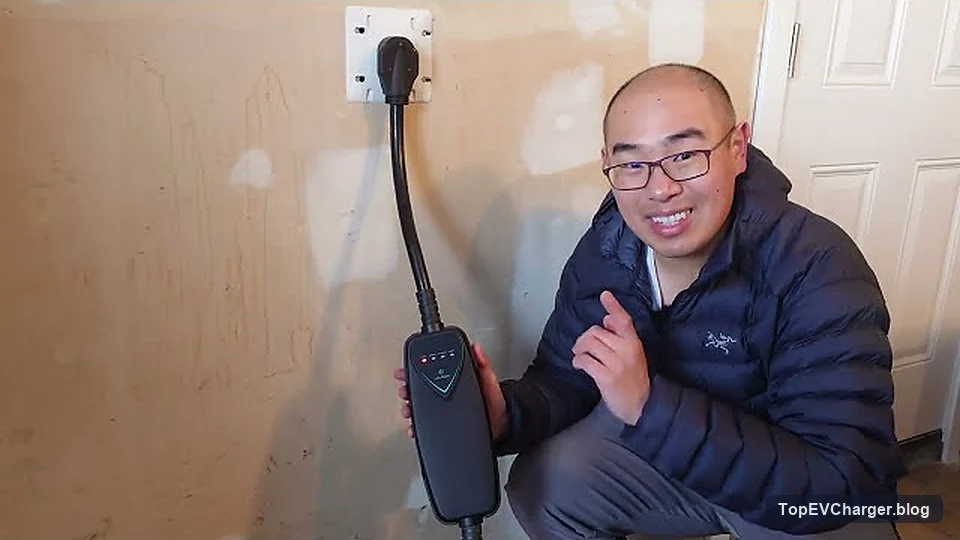
Because current draw remains limited to twelve amps continuously, thermal stress on standard wall wiring stays exceptionally low. However, replenishment speeds crawl at approximately two to five miles of range per hour.
Standard Level 1 equipment utilizes a standard NEMA 5-15 receptacle, delivering a modest 1.4 kilowatts of alternating current. This baseline power transfer rate relies on 120 volts and a restricted 15-amp breaker limit.
Internal vehicle onboard chargers must convert this incoming alternating current into direct current for the battery pack. Because amperage is capped low, resistive losses account for a notable percentage of total energy draw.
- Standard 120-volt NEMA 5-15 plug compatibility
- Continuous current capped safely at twelve amperes
- Ideal for plug-in hybrids and low-mileage commuters
Assessing Residential Outlet Limitations
Older homes feature degraded branch circuits that struggle with continuous loads. Applying the continuous load 80 percent rule ev charging calculations ensures your installation safely prevents wiring overheating during long sessions.
- Check wall receptacle spring tension regularly
- Avoid using extension cords for high-draw appliances
Engineering Dynamics of Dedicated 240-Volt Equipment
Level 2 hardware operates on a split-phase 240-volt circuit identical to heavy residential laundry appliances. This architecture scales output capacity from 3.8 kilowatts up to a robust 19.2 kilowatts maximum.
Higher voltage significantly reduces resistance losses during the power conversion phase. Consequently, onboard rectifiers process alternating current into direct current with superior thermal efficiency and speed.
Level 2 chargers operate on a split-phase 240-volt circuit, drastically reducing current draw while quadrupling potential power delivery. Most residential units scale dynamically from 16 amps up to 48 amps of continuous output.
Higher voltage operation minimizes thermal degradation across internal wiring harnesses and connector pins. Delivering up to 11.5 kilowatts ensures rapid overnight replenishment even for large battery packs utilized in modern electric SUVs.
- Requires specialized double-pole circuit breaker protection
- Delivers massive leaps in daily charging velocity
- Supports dynamic load management via smart protocols
Amperage Options and Circuit Sizing
Selecting a proper amperage rating depends on your electrical panel capacity. Most homeowners install a 40-amp or 50-amp circuit to achieve optimal overnight replenishment without overloading services.
- Match breaker rating to continuous load rules
- Use heavy-gauge copper wiring for long runs
Electrical Infrastructure and Panel Capacity Realities
Upgrading your garage power setup requires evaluating total main service panel capacity. Many legacy homes feature 100-amp service panels that lack spare physical breaker slots for high-draw equipment.
Introducing a heavy 240-volt load often mandates a professional load calculation by a licensed electrician. Some properties require an expensive service upgrade before approving permanent Level 2 hardware installations.
Integrating heavy electrical loads requires careful evaluation of your service panel capacity. Reviewing details on can a 100 amp panel support level 2 charging safely helps prevent dangerous thermal overloads in older homes.
National Electrical Code mandates that continuous equipment draws must not exceed eighty percent of the total branch circuit rating. Upgrading to a 200-amp panel often resolves these systemic infrastructure bottlenecks safely.
- Verify main service amperage before purchasing hardware
- Factor in existing heavy appliances like electric dryers
- Consult local municipal codes for permit requirements
Understanding Main Service Upgrades
Upgrading electrical panels involves replacing the entire distribution box and utility meter socket. Electricians must coordinate disconnect permits directly with local power utility providers.
- Temporary power disconnection is usually required
- Ensure surge protection is integrated during upgrades
Thermal Management and Conversion Efficiency Metrics
Charging losses occur naturally as onboard inverters convert alternating current into direct battery power. Understanding how does level 2 electric vehicle charging work reveals why prolonged Level 1 cycles waste grid energy.
Level 2 chargers complete energy transfers much faster, allowing vehicle thermal management systems to operate efficiently. Faster sessions minimize active cooling pump runtimes, boosting overall system efficiency by several percent.
Energy conversion efficiency improves notably at higher voltage thresholds because baseline electronic overhead represents a smaller fraction of total throughput. Level 2 systems routinely achieve 90 to 95 percent operational efficiency.
Slower Level 1 charging forces onboard cooling pumps and control computers to remain active longer. This extended operational window increases parasitic energy losses, reducing your overall grid-to-battery efficiency ratio significantly.
- Longer charging duration increases standby energy losses
- Quick power delivery reduces onboard inverter thermal stress
- Optimizes battery management system operational parameters
Managing Onboard Inverter Heat Dissipation
Efficient power conversion minimizes internal component temperatures inside both the vehicle and charger housing. Keeping electronics cool prevents thermal throttling during long replenishment sessions.
- Inspect enclosure cooling fins periodically
- Avoid direct solar exposure on outdoor units
Daily Commuting Ergonomics and Replenishment Speeds
Real-world driving habits dictate whether standard household cords provide sufficient daily energy. Drivers averaging under thirty miles daily find Level 1 units adequate for overnight top-off routines.
Modern battery electric vehicles with large pack sizes require rapid Level 2 replenishment. Choosing the best level 2 home charging station eliminates reliance on expensive commercial public fast-charging infrastructure.
Average American daily driving habits consume roughly forty miles of range, which requires nearly ten hours to recover using standard Level 1 equipment. A dedicated Level 2 setup recovers that distance in under ninety minutes.
Managing multi-vehicle households or unexpected daytime trips demands rapid turnaround capabilities. High-amperage hardware ensures your vehicle remains fully energized without requiring disruptive visits to public DC fast chargers.
- Match equipment speed to daily commute distance
- Eliminate range anxiety through reliable overnight recovery
- Preserve battery health with consistent home routines
Calculating Overnight Recovery Windows
Evaluating your daily schedule helps determine required amperage. Standard overnight parking windows typically span ten hours, allowing sufficient time for complete energy recovery.
- Factor in utility off-peak pricing schedules
- Calculate miles recovered per hour of plug time
Installation Labor and Hardwired Circuit Demands
Standard Level 1 cordsets require zero installation labor beyond plugging into a wall. Conversely, hardwired or plug-in Level 2 units demand professional electrical work and secure wall mounting brackets.
Hardwired configurations eliminate plug degradation risks associated with continuous high-amperage outdoor exposure. Professional installers anchor units securely, torque terminal screws precisely, and verify proper equipment grounding.
Installing robust residential charging equipment often involves running heavy thhn copper wire through protective conduit from the main panel to the garage. Professional electricians ensure proper torque specifications on all terminal lugs.
Hardwired installations are strongly recommended over heavy NEMA 14-50 outlets for high-amperage continuous loads. Eliminating plug connections removes a primary point of electrical resistance and potential thermal failure.
- Evaluate plug-in versus hardwired unit preferences
- Ensure proper torque specifications on terminal blocks
- Verify local electrical permitting compliance standards
Evaluating Enclosure Mounting Security
Wall-mounted hardware requires sturdy backing studs or masonry anchors to withstand cable tension. Proper mechanical fastening prevents vibration loosening over thousands of plug cycles.
- Use corrosion-resistant mounting hardware
- Maintain proper clearance around enclosure
Equipment Longevity and Component Wear Factors
Electrical equipment longevity depends heavily on thermal management and environmental exposure during operation. Level 2 stations feature robust internal relays designed to withstand thousands of high-current switching cycles.
Portable Level 1 cords often experience frequent thermal cycling at the wall plug interface. Protecting connections from moisture and physical strain ensures reliable operation across harsh seasonal weather transitions.
Mechanical wear on cable insulation and connector latches increases with daily plugging and unplugging cycles. Selecting equipment with robust strain relief features mitigates long-term material fatigue and weather cracking.
Internal electronic components benefit from advanced thermal potting compounds that protect sensitive microchips from moisture ingress and extreme temperature swings. Quality NEMA enclosure ratings ensure dependable outdoor operational lifespans.
- Inspect cable insulation and plug prongs regularly
- Mount enclosures securely away from direct vehicle impacts
- Select NEMA-rated enclosures for outdoor weather resistance
Preventing Environmental Connector Degradation
Weather elements can corrode exposed metal contacts on vehicle inlets and cable plugs. Applying dielectric grease and storing connectors in clean holsters prevents oxidation issues.
- Keep dust caps secured when not in use
- Store cables off the floor to prevent damage
Frequently Asked Questions
Can I use an ordinary household extension cord with a Level 1 charger?
Standard household extension cords cannot safely handle continuous high-amperage electrical loads over extended overnight charging sessions because their internal wire gauge is inherently too thin for continuous heavy tasks.
Using unrated auxiliary extension lines creates severe residential fire hazards and risks melting internal copper conductors due to excessive electrical resistance across the connected terminal block interfaces.
Do I need a building permit to install a home Level 2 charging station?
Most local municipal building departments require a formal electrical permit before you can legally install a permanent home Level 2 charging circuit on your residential property.
Hiring a licensed professional electrician ensures that all local municipal code requirements, detailed panel load calculations, and mandatory municipal inspection procedures are completed safely for your residential electrical system.
Will fast Level 2 charging degrade my electric vehicle battery faster?
Modern battery electric vehicles utilize sophisticated onboard thermal management systems that effectively regulate internal battery pack temperatures during high-power Level 2 energy replenishment sessions.
Consequently, standard home Level 2 charging operates safely within strict manufacturer design parameters and causes negligible long-term battery degradation compared to frequent reliance on public DC fast charging infrastructure.
Can I take my Level 2 charger with me when I move houses?
Portable plug-in Level 2 chargers equipped with interchangeable high-voltage NEMA appliance plugs can be safely unplugged and transported directly to your new residential property without requiring professional assistance.
Conversely, heavy hardwired permanent wall units require professional electrical disconnection and careful rewiring by a licensed contractor, making them far less convenient for frequent residential relocation scenarios.
How much does daily electricity cost vary between Level 1 and Level 2?
The total amount of electricity required to fully replenish an electric vehicle battery remains virtually identical regardless of whether you choose Level 1 or Level 2 equipment options.
However, Level 2 units achieve higher conversion efficiency, which slightly reduces standby energy waste and operational losses over extended charging windows across the entire year.