Grizzl E Avalanche vs. Grizzl E Classic: Which Fits Your Setup Better?
Choosing between these two heavy-duty Canadian chargers comes down to exterior finish preferences and harsh weather durability. We analyze their identical hardware cores to help you pick the right unit.


For stark white wall aesthetics and superior ultraviolet reflection, choose the Grizzl E Avalanche. For industrial matte black utility and timeless garage integration, the Grizzl E Classic remains unbeatable.
Compare all top models in our Best Ev Level 2 Charger.
Side-by-Side Breakdown
| Criteria | Grizzl E Avalanche | Grizzl E Classic | Edge |
|---|---|---|---|
| Peak Performance & Output | 40 Amp / 9.6 kW continuous output | 40 Amp / 9.6 kW continuous output | Tie |
| Duty Cycle & Consistency | NEMA 4 enclosure with heavy thermal dissipation | NEMA 4 enclosure with heavy thermal dissipation | Tie |
| Operating Noise & Vibration | Completely silent passive convection cooling | Completely silent passive convection cooling | Tie |
| Portability & Footprint | Rugged cast aluminum chassis and wall bracket | Rugged cast aluminum chassis and wall bracket | Tie |
| Maintenance & Service Life | UV-resistant white powder coat finish | Standard textured black powder coat finish | Grizzl E Avalanche |
| Power Requirements | NEMA 14-50 or hardwire installation options | NEMA 14-50 or hardwire installation options | Tie |
| Best Ideal Use-Case | Sunny outdoor mounting and bright garage walls | Traditional dark garages and heavy commercial looks | Split |
Unboxing Hardware Essentials and Box Contents
Opening the factory packaging reveals identical engineering philosophies built around rugged industrial components. Both units arrive with heavy-duty mounting brackets, wall anchors, and a secured charging cable.
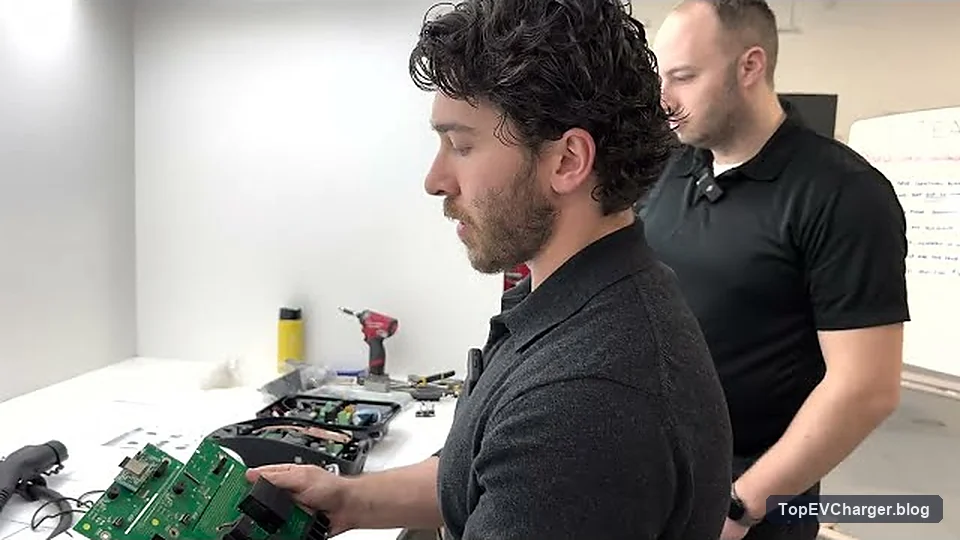
The primary distinction inside the shipping carton is the outer shell coating. While the Classic sports a dark finish, the Avalanche utilizes a striking white powder coat designed for exterior walls.
Every component is engineered to withstand extreme environmental stress without utilizing internal cooling fans. This passive thermal design eliminates moving parts that could fail over extended operational lifespans.
Opening the shipping carton reveals a robust die-cast aluminum enclosure, a mounting bracket, heavy-duty wall anchors, and a secure security pin. Every component feels structurally over-engineered to withstand demanding residential garage installations.
Inside the packaging, you also find a comprehensive installation manual outlining safety protocols. The hardware kit includes precision-machined screws and a Torx wrench required for securing the front cover safely against tampering.
Neither unit ships with a plug pre-installed if you select the hardwired variant, necessitating a separate strain relief connector. Reviewing the box contents ensures all mounting hardware matches your specific drywall or masonry wall type.
- Heavy cast aluminum enclosure weighing roughly twenty-four pounds
- Robust 24-foot premium cable rated for sub-zero flexibility
- Comprehensive installation kit with masonry anchors and mounting bracket
Package Inspection and Initial Handling
Lifting the chassis out of the box immediately reveals the substantial build quality shared by both models. Installers should note the sheer weight of the cast aluminum housing.
Proper wall anchoring into structural studs or concrete is mandatory before mounting either unit. Never attempt drywall-only installation due to the heavy dynamic load of the cable.
- Inspect the weather-tight gasket seal along the enclosure lid
- Verify cable jacket integrity for any transit abrasions
Core Technical Specifications and Electrical Output
Underneath their distinct exterior paint schemes, both chargers share identical internal circuit boards and power delivery systems. They deliver a robust 40 Amp maximum output directly to your vehicle.
This equates to approximately 9.6 kilowatts of continuous power, adding roughly thirty miles of driving range per hour. Your home electrical panel must supply a dedicated 50 Amp circuit breaker.
Internal components feature robust overcurrent and ground fault protection to safeguard your vehicle's onboard charger. Safety certifications meet strict North American electrical codes for permanent installations.
As evaluated in our Grizzl-E Smart Charger review, these units deliver a continuous output of 40 amps on a dedicated 50-amp breaker, providing reliable power for electric vehicles.
Internal circuitry features rigid busbars rather than flexible wiring to manage high thermal loads. This engineering choice minimizes internal resistance and prevents localized overheating during extended multi-hour charging sessions in warm garages.
The J1772 output cable is rated for extreme temperatures down to negative forty degrees Celsius. Voltage output scales automatically based on your grid supply, supporting standard two-hundred-eight or two-hundred-forty volt residential electrical services.
- Maximum continuous amperage rating of 40 Amps
- Input voltage compatibility spanning 208V to 240V grids
- Integrated dual-temperature monitoring sensors inside the plug
Circuit Protection and Internal Safety Features
Advanced microcontrollers continuously monitor internal operating temperatures to prevent thermal runaway. If ambient conditions exceed safe thresholds, the unit automatically throttles down output current.
Self-fixturing diagnostic lights communicate error states clearly through the front panel. Users can easily troubleshoot minor faults without calling an electrician.
- Automatic fault recovery after transient grid power spikes
- Hardwired and plug-in configurations utilize identical safety protocols
Canadian Engineering and Heavy-Duty Weather Resistance
Both variants are proudly designed and manufactured in Canada to survive brutal northern winters. The rugged NEMA 4 enclosure seals out driving rain, heavy snow, and blowing dust effectively.
Standard plastic EV chargers often crack or become brittle during sub-zero cold snaps. These units utilize cast aluminum housings that remain completely indestructible under heavy mechanical impacts.
Cable flexibility remains a critical factor during winter charging sessions. Both models use specialized insulation that stays pliable even when temperatures plunge below freezing.
Designed originally for harsh northern winters, the enclosure boasts a NEMA 4 rating. This heavy-duty sealing prevents moisture ingress, windblown dust, and ice accumulation during brutal outdoor winter storms without requiring a protective enclosure.
As highlighted in our Grizzl E Classic review, the powder-coated metal shell resists salt spray. Internal electronics feature industrial polyurethane resin to seal sensitive circuit boards against moisture damage.
Operating temperature limits extend from negative forty up to plus fifty degrees Celsius. Such extreme environmental tolerance ensures dependable outdoor performance whether installed in freezing mountain passes or scorching desert driveways.
- Tested extensively in harsh Canadian weather conditions
- Weatherproof sealing prevents moisture ingress during storms
- Cast aluminum body resists rust and physical vandalism
Thermal Performance in Extreme Environments
Extreme summer heat waves also test EV charger durability on sun-drenched exterior walls. The bright white Avalanche reflects solar radiation significantly better than the dark Classic model.
Lower surface temperatures help internal components operate efficiently without triggering thermal derating safeguards during peak afternoon charging cycles in southern regions.
- Solar reflectance advantage for the Avalanche unit
- Passive heat dissipation eliminates fan filter maintenance
Ergonomics, Cable Management, and Daily Usability
Daily charging requires intuitive cable handling and secure connector storage. Both chargers feature integrated holster designs that lock the SAE J1772 handle firmly in place.
The twenty-four-foot cable length provides ample reach for vehicles parked outside the garage or facing sideways in tight driveways. Coiling the thick cable requires moderate physical effort.
Users with limited hand strength might find the heavy-gauge cable slightly stiff during initial winter use. However, the durability trade-off easily justifies the robust copper shielding inside.
Daily operation relies heavily on the physical flexibility of the 24-foot cable. Even in freezing temperatures, the thick rubberized jacket remains pliable enough to coil neatly around the integrated housing wrap without cracking.
The J1772 handle features an ergonomic grip angle that feels natural in various hand sizes. A positive-click latch mechanism secures the coupler inside your vehicle inlet, preventing accidental disconnection during heavy wind gusts.
As detailed in our Grizzl-E Duo review, these units lack smart Wi-Fi radios for purely plug-and-play usability. You simply connect the cable to initiate power transfer without app setup issues.
- Secure J1772 holster prevents accidental dislodging
- Generous 24-foot reach accommodates diverse parking layouts
- Wall-mounted wrap bracket keeps walkways completely hazard-free
Connector Durability and Holster Placement
The charge handle is engineered to withstand being dropped onto concrete floors repeatedly. Silver-plated contacts inside the connector prevent corrosion and ensure low electrical resistance over time.
Mounting the holster at a comfortable height prevents strain on the tethered cord. Proper cable management directly extends the working service life of your equipment.
- Impact-resistant connector housing with secure latch
- Corrosion-resistant terminal pins for longevity
Home Electrical Installation and Wiring Requirements
As noted in our Grizzl-E Mini review, proper electrical preparation is essential before mounting your unit. Both variants require a dedicated 50 Amp electrical circuit wired with heavy copper.
Homeowners can choose between a plug-in installation using a NEMA 14-50 receptacle or a permanent hardwired setup. Hardwiring eliminates potential plug degradation in outdoor environments.
Always consult a licensed electrician to evaluate your home service capacity before installation. Older electrical panels may require a service upgrade to support continuous EV loads safely.
Proper installation demands a dedicated GFCI breaker matching the 50-amp circuit requirement. Local electrical codes dictate using copper conductors sized at gauge eight minimum to safely carry the continuous electrical load.
Terminal blocks inside the charger accept both hardwired connections and heavy-duty plug configurations like the NEMA 14-50. Torque specifications must be strictly followed using a calibrated tool to prevent high-resistance connection failures.
Always consult a licensed electrician to verify your home panel capacity before mounting either unit. Overloading an existing electrical service panel creates serious fire hazards that bypass standard thermal safety cutoffs.
- Requires dedicated 50 Amp circuit breaker and wiring
- Choice of NEMA 14-50 plug or direct hardwire connection
- Professional electrician installation recommended for safety
Plug-in vs Hardwired Deployment Strategies
Choosing the NEMA 14-50 receptacle offers convenient portability if you ever move houses. Ensure your electrician installs a heavy-duty industrial grade outlet rather than a cheap RV socket.
Hardwiring provides a cleaner aesthetic and eliminates the risk of outlet overheating over thousands of charge cycles. Both options deliver identical charging speeds to your car.
- Industrial grade outlets withstand heavy thermal cycles
- Hardwiring offers a permanent weather-sealed connection
Aesthetic Variations: Avalanche White vs Classic Black
The sole engineering difference between these two models lies in their powder-coat finish. The Avalanche features a bright white exterior tailored for modern home facades and sunny spots.
The Classic features a textured charcoal black finish that blends seamlessly into traditional garages. Both finishes utilize industrial-grade powder coating to prevent chipping and fading.
Selecting between them depends entirely on your personal visual preference and mounting location. Exterior sun exposure heavily favors the reflective white coating of the Avalanche.
The primary difference between these two models lies purely in the powder coating color. The Classic variant sports a utilitarian matte black finish, whereas the Avalanche version features a bright industrial white powder coat.
Selecting white helps reflect direct sunlight when mounted on sun-exposed exterior walls, slightly lowering internal thermal stress. Conversely, the black finish blends more discreetly against dark brick or modern charcoal siding materials.
Both finishes utilize identical heavy-duty steel fabrication underneath the paint layer. Aesthetic choice does not impact weatherproofing performance, impact resistance, or electrical component quality between the two visually distinct models.
- Avalanche offers superior solar heat reflection outdoors
- Classic provides a subtle, industrial garage aesthetic
- Identical corrosion-resistant base metal beneath both coatings
Long-Term Finish Maintenance and Cleaning
Maintaining the exterior finish requires minimal effort throughout the year. A simple wipe down with mild soap and water removes accumulated road grime and dust.
The textured powder coat resists scratching from stray charging cables brushing against the housing. Your charger will maintain its clean factory appearance for many years.
- Simple soap and water cleaning procedure
- Scratch-resistant powder coat formula
Long-Term Reliability, Maintenance, and Service Life
Investing in a heavy-duty EV charger means expecting a decade or more of reliable service. The absence of internal cooling fans removes the most common failure point in electronics.
Routine maintenance is virtually non-existent aside from periodic cable inspections. Checking the terminal connections annually ensures your electrical setup remains safe and secure.
Both chargers represent the pinnacle of rugged simplicity in the residential charging market. You get reliable power delivery without complicated software apps that can become obsolete.
Maintenance requirements remain remarkably low thanks to the absence of active cooling fans or screens. Routine owner upkeep simply involves inspecting the J1772 connector pins annually for any signs of electrical arcing or wear.
The lack of complex microchips and connected software dramatically reduces potential points of electronic failure. Units frequently operate reliably for over a decade in harsh industrial and residential outdoor environments without major servicing.
Should a component fail, modular internal replacement parts can be sourced directly from the manufacturer. This repairability stands in stark relief against disposable smart chargers that require complete replacement upon minor motherboard malfunctions.
- Fanless design ensures exceptional long-term reliability
- Minimal maintenance requirements for busy homeowners
- Built to last well beyond typical vehicle ownership cycles
Evaluating Total Ownership Value Over Time
Simple, unmanaged chargers outlast smart chargers because they have fewer electronic failure points. You avoid frustrating Wi-Fi connectivity dropouts and firmware update bugs entirely.
This straightforward engineering approach translates directly into lower lifetime ownership costs. Both models deliver dependable performance day after day without fuss.
- Zero software subscription fees or app glitches
- Robust internal components built for heavy daily cycling
Frequently Asked Questions
What is the actual difference between the Grizzl-E Avalanche and the Classic?
The primary difference is the exterior color and powder coat finish. The Avalanche features a white finish for solar reflection, while the Classic features matte black.
Do both chargers require the same electrical setup at home?
Yes, both units require a dedicated 50 Amp circuit and deliver identical 40-amp continuous output power to your electric vehicle.
Can both models be installed safely outdoors in rainy weather?
Both chargers feature rugged NEMA 4 weatherproof enclosures designed to withstand heavy rain, snow, and extreme sub-zero temperatures.
Do these chargers require a Wi-Fi connection to operate?
Neither unit requires Wi-Fi or smartphone apps, functioning as reliable plug-and-charge hardware without software complications.
Which model handles direct summer sunlight better?
The Avalanche white finish reflects solar radiation much better, keeping internal temperatures lower during hot sunny outdoor installations.