Gfci Breaker vs. Standard Breaker For Ev Charger: Which Setup Fits Best?
Understanding electrical protection for home EV charging requires evaluating safety mandates and hardware specifications. Choosing the right device prevents nuisance trips while ensuring total code compliance.

For hardwired EV wall connectors featuring internal safety monitors, a standard circuit breaker provides reliable power delivery. Exterior plug-in setups require a GFCI breaker to prevent ground fault hazards.
Compare all top models in our Best Ev Level 2 Charger.
Side-by-Side Breakdown
| Criteria | Gfci Breaker | Standard Breaker For Ev Charger | Edge |
|---|---|---|---|
| Peak Performance & Output | Maintains steady high amperage flow | Delivers uninterrupted continuous power safely | Standard Breaker For Ev Charger |
| Duty Cycle & Consistency | Prone to redundant tripping loops | Provides reliable long-duration power sessions | Standard Breaker For Ev Charger |
| Operating Noise & Vibration | Silent solid-state internal monitoring | Standard thermal-magnetic mechanical operation | Tie |
| Portability & Footprint | Bulky double-pole breaker design footprint | Standard standard-profile panel breaker fit | Standard Breaker For Ev Charger |
| Maintenance & Service Life | Higher sensitivity to environmental wear | Robust long-term mechanical durability | Standard Breaker For Ev Charger |
| Power Requirements | Requires exact neutral conductor matching | Flexible wiring configuration options | Standard Breaker For Ev Charger |
| Best Ideal Use-Case | Outdoor NEMA 14-50 receptacle setups | Dedicated hardwired indoor wall connectors | Standard Breaker For Ev Charger |
Engineering Fundamentals of Circuit Protection
Electrical panels rely on circuit breakers to interrupt excessive current flow during overloads or short circuits. Modern thermal-magnetic mechanisms protect home wiring insulation from dangerous thermal degradation.
Ground fault circuit interrupters measure current balance between hot and neutral conductors. Any imbalance exceeding four to six milliamperes triggers an immediate break to prevent severe shocks.
Standard thermal-magnetic breakers protect residential conductors primarily from overcurrent events and catastrophic short circuits. They rely on bi-metallic strips and electromagnetic coils to interrupt excessive amperage draws safely.
Ground fault circuit interrupters measure current imbalance between hot and neutral conductors continuously. Detecting even a four to six milliamp leakage triggers rapid mechanical disconnection to prevent fatal electric shock hazards.
- Thermal overload detection thresholds
- Current imbalance monitoring systems
- Conductor insulation preservation limits
Core operational differences
Standard breakers focus entirely on protecting copper conductors from thermal overload conditions. In contrast, GFCI devices prioritize human life safety by detecting microscopic current leakage paths instantly.
- Life safety vs wire protection
- Leakage current sensitivity metrics
National Electrical Code Mandates for EV Supply Equipment
The National Electrical Code governs residential electric vehicle supply equipment installations strictly. Requirements differ significantly between hardwired wall units and standard 240-volt receptacle setups.
Receptacle installations universally demand ground fault protection at the service panel level. This mandate addresses potential moisture exposure and weatherproof enclosure degradation in outdoor residential environments.
The National Electrical Code strictly regulates electric vehicle supply equipment installations to ensure user safety. Article 625 mandates specific protection layers depending on whether the charging unit is hardwired or plug-in.
Outdoor receptacles and certain indoor garage locations require built-in ground fault protection. Compliance inspectors enforce these strict rules to eliminate potential electrocution risks during wet weather or damaged insulation scenarios.
- Article 625 compliance standards
- Outdoor receptacle mandates
- Panel-level safety enforcement
Code interpretation nuances
Inspectors verify compliance using specific article guidelines for electric vehicle charging infrastructure. Understanding local amendments prevents costly installation inspection failures during final project sign-offs.
- Local electrical amendments
- Final inspection criteria
Understanding Hardwired EVSE Internal Monitoring Systems
Premium hardwired chargers incorporate advanced microprocessor-based residual current monitoring devices directly inside. These internal sensors provide continuous ground fault detection matching or exceeding panel capabilities.
Engineers design hardwired systems to manage leakage currents autonomously without external breaker assistance. Read our gfci breaker tripping issues guide to minimize unwanted nuisance tripping during long sessions.
Modern hardwired EVSE units often incorporate internal residual current monitoring devices directly onto the circuit board. These sophisticated processors detect direct current leakage that standard residential breakers cannot reliably sense.
When an internal sensor detects anomalies, it signals the internal contactor to cut power instantly. This localized hardware integration prevents unnecessary main panel trips while maintaining continuous ground monitoring safety standards.
- Microprocessor-based internal sensors
- Residual current monitoring technology
- Autonomous leakage management
Redundancy management
Balancing internal and external sensors prevents system conflicts during high-power vehicle charging cycles. Proper design ensures seamless energy transfer without compromising total home safety.
- Sensor coordination protocols
- Energy transfer efficiency
Nuisance Tripping Mechanics and Dual Protection Conflicts
Installing a ground fault breaker upstream from an EVSE with internal protection creates redundancy. Review our what size breaker for 40 amp ev charger rules to prevent nuisance circuit trips.
Complex charging algorithms involve high-frequency switching that can mimic leakage currents. Avoiding unnecessary breaker interaction ensures reliable overnight charging without unexpected power interruptions.
Installing an external GFCI breaker upstream from a hardwired EVSE creates redundant monitoring loops. These overlapping systems frequently cause nuisance tripping due to minor high-frequency capacitive coupling during vehicle handshakes.
Electricians must analyze manufacturer specifications carefully to prevent incompatible cascading protection devices. Eliminating redundant ground fault modules resolves random shutdown issues without compromising total electrical compliance or residential safety.
- Upstream redundancy issues
- High-frequency switching interference
- Capacitance filtering currents
Mitigating false trips
Identifying equipment specifications helps electricians avoid conflicting safety mechanisms in residential panels. Clear planning eliminates annoying morning surprises caused by unnecessary breaker activations.
- Equipment specification review
- Panel configuration planning
Evaluating Standard Breakers for Dedicated Garage Circuits
Standard thermal-magnetic breakers remain the top choice for dedicated hardwired charging circuits. They deliver uninterrupted power while safeguarding copper wire ampacity limits against standard overloads.
Eliminating unnecessary fault detection layers simplifies the overall electrical distribution architecture significantly. Homeowners experience seamless daily operation without unexpected morning charging interruptions.
Standard thermal-magnetic breakers function adequately when paired with hardwired EVSE featuring internal DC fault protection. Dedicated home garage lines demand robust copper wiring rated for continuous 48-amp electrical loads.
Thermal capacity dictates that standard breakers must handle continuous charging cycles lasting several hours. Panel thermal ratings and proper torque specifications prevent terminal overheating under maximum sustained loads.
- Thermal-magnetic reliability
- Dedicated copper ampacity
- Simplified distribution architecture
Garage installation benefits
Indoor garage setups shielded from weather elements perform exceptionally well on standard breakers. This configuration provides maximum charging uptime for daily commuter vehicles.
- Weather-shielded environments
- Maximum charging uptime
Specialized Scenarios Requiring Ground Fault Circuit Interrupters
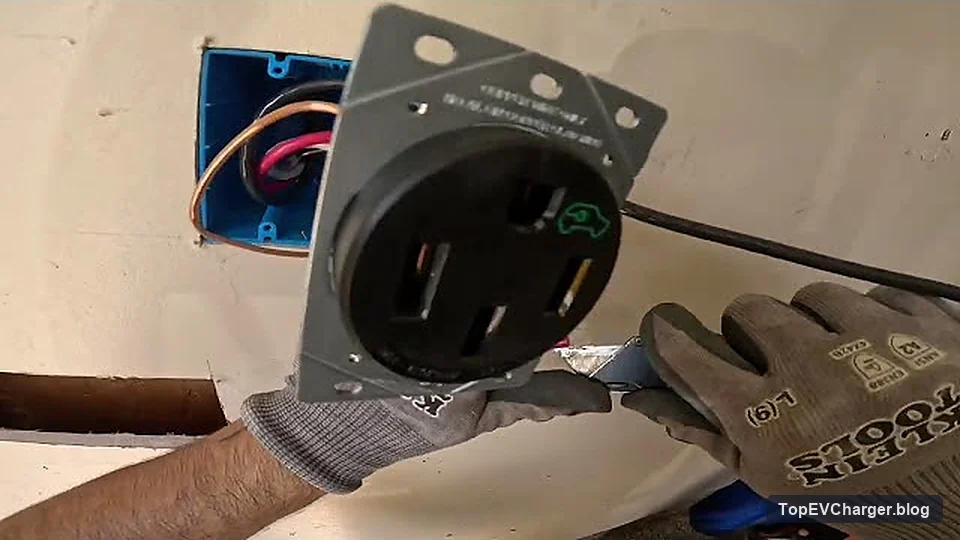
Outdoor receptacle installations, such as NEMA 14-50 outlets, require mandatory ground fault protection. These physical plug connections remain vulnerable to rain and condensation hazards.
Garage environments subject to damp conditions also benefit from enhanced safety device integration. Selecting appropriate circuit breaker models ensures compliance with rigorous residential safety codes.
NEMA 14-50 receptacle installations for portable chargers explicitly require external GFCI breakers per code. These installations expose users to manual plug handling in potentially wet environments, necessitating immediate breaker intervention.
Outdoor residential parking pads and unconditioned carports mandate GFCI protection at the main distribution panel. This safeguards homeowners connecting portable EVSE units against severe shock hazards from worn cables.
- Outdoor NEMA 14-50 outlets
- Moisture and condensation defense
- Residential safety compliance
Plug-in safety requirements
Mobile connectors plugged into garage outlets rely on panel-level interrupters for ultimate protection. This layer safeguards users handling portable charging cords in variable weather conditions.
- Mobile connector safety
- User handling protection
Professional Sizing and Installation Best Practices
Correct amperage sizing depends on continuous load calculations multiplying circuit capacity by 80 percent. Review our what size breaker for 48 amp ev charger guide to determine proper installation requirements.
Licensed electricians must torque terminal connections to manufacturer specifications to prevent dangerous thermal hotspots. Proper installation guarantees long-term electrical system reliability across all seasons.
Proper circuit sizing requires factoring the EVSE maximum continuous load by 125 percent. Follow our what size breaker for 32 amp ev charger guide when planning lower amperage residential installations.
Certified electricians must torque all electrical panel lugs to manufacturer-specified inch-pounds using calibrated tools. Proper mechanical connection prevents resistive heating and ensures long-term operational reliability for heavy-duty charging infrastructure.
- Continuous load calculations
- Eighty percent rule application
- Terminal torque specifications
Contractor execution standards
Employing certified professionals ensures compliance with local building codes and manufacturer warranties. Expert installation prevents costly electrical failures down the road.
- Building code adherence
- Manufacturer warranty preservation
Frequently Asked Questions
Can I use a GFCI breaker with a hardwired charger?
Using a GFCI breaker with a hardwired EV charger often causes frequent nuisance tripping due to overlapping internal monitors. Always check manufacturer installation guidelines before finalizing your panel setup.
Are standard breakers safer than GFCI devices?
Standard breakers protect wiring from overloads, while GFCI devices protect humans from shocks. You must choose based on installation type requirements and applicable electrical codes.
Do outdoor EV outlets need ground fault protection?
Outdoor 240-volt receptacles legally require panel-level ground fault protection to mitigate severe moisture-related shock hazards during inclement weather conditions.
How do I stop my EV breaker from tripping?
Inspect terminal torques and verify whether your charger features internal monitoring. Eliminating redundant safety layers usually resolves persistent nuisance issues immediately.
What size breaker do I need for Level 2?
Level 2 chargers require dedicated circuits sized at 125 percent of the continuous load. Always consult local electrical codes before purchasing hardware components.