Ford Connected Charge Station vs. Chargepoint Home Flex: Which Fits Your Setup Better?
Choosing the ideal Level 2 charging hardware requires evaluating continuous amperage output and thermal resilience. Our engineering comparison contrasts the Ford Connected Charge Station against the versatile Chargepoint Home Flex.

The Chargepoint Home Flex wins for universal garage versatility and plug options. Meanwhile, the Ford Connected Charge Station excels for dedicated Blue Oval vehicle ecosystems.
Compare all top models in our Best Ev Level 2 Charger.
Side-by-Side Breakdown
| Criteria | Ford Connected Charge Station | Chargepoint Home Flex | Edge |
|---|---|---|---|
| Peak Performance & Output | 80 Amps / 19.2 kW hardwired | 50 Amps / 12 kW hardwired | Ford Connected Charge Station |
| Duty Cycle & Consistency | High thermal dissipation casing | Advanced fluid dynamic cooling | Chargepoint Home Flex |
| Operating Noise & Vibration | Completely silent passive cooling | Silent solid-state internal switching | Tie |
| Portability & Footprint | Wall-mounted stationary footprint | Compact chassis with plug options | Chargepoint Home Flex |
| Maintenance & Service Life | Industrial-grade internal relays | Field-replaceable connector cable | Chargepoint Home Flex |
| Power Requirements | 100-amp dedicated breaker for max | 60-amp dedicated breaker for max | Chargepoint Home Flex |
| Best Ideal Use-Case | Dedicated Ford BEV households | Multi-EV households requiring flexibility | Chargepoint Home Flex |
Electrical Architecture and Power Delivery Capacities
Evaluating residential EV hardware demands a deep look at raw amperage delivery and circuit load limits. Both units leverage standard 240-volt single-phase residential electrical grids to replenish depleted battery packs overnight.
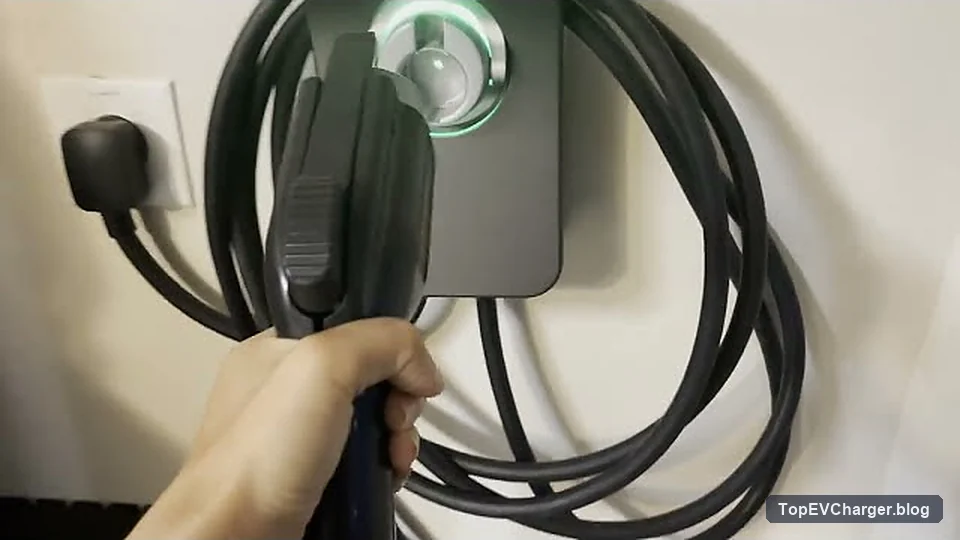
Our Ford Connected Charge Station review details how this unit delivers up to 80 amps of continuous current. This massive throughput requires a heavy-duty 100-amp circuit breaker and thick copper wiring.
Conversely, the Chargepoint Home Flex caps its maximum continuous output at 50 amps. This lower amperage threshold significantly reduces electrical infrastructure upgrade costs for most standard American suburban homes.
The Ford Connected Charge Station delivers up to 80 amperes of continuous current on a dedicated 100-amp breaker circuit. This architecture maximizes residential charging speeds for compatible battery-electric vehicles using robust internal relay configurations.
As explored in our Chargepoint Home Flex NEMA 14-50 review, this device offers adjustable output scaling up to 50 amperes. Installers configure this amperage via internal jumpers or software settings to match existing home electrical panel capacities safely.
Both units utilize standard NEMA 14-50 plugs for lower amperage setups or hardwired connections for maximum power delivery. Proper thermal management during continuous high-amperage sessions prevents nuisance tripping and protects household wiring infrastructure.
- Ford unit requires heavy 100-amp supply lines for maximum speed.
- Chargepoint unit operates comfortably on standard 60-amp residential circuits.
- Both systems support dynamic amperage adjustment via internal configuration settings.
Amperage Scaling and Circuit Breaker Sizing
National Electrical Code rules mandate continuous load sizing factors for fixed EV charging equipment. Installers must account for thermal expansion inside residential breaker panels during long charging cycles.
Adjustable amperage dials on the Chargepoint allow technicians to match legacy panel capacities safely. The Ford unit similarly scales down for smaller 40-amp or 50-amp home setups.
- NEC 80% rule applies strictly to all continuous EV loads.
- Custom jumper settings configure local circuit limitations accurately.
Hardware Engineering, Enclosures, and Thermal Design
Physical hardware durability dictates longevity when outdoor garage installation exposes electronics to environmental extremes. Robust NEMA-rated enclosures protect internal charging components from driving rain, snow, and invasive dust particles.
As noted in our Ford Charge Station Pro review, the hardware features a rugged, weatherproof chassis designed for permanent outdoor mounting. Its sleek faceplate houses clear LED status indicators for real-time diagnostics.
The Chargepoint competitor utilizes a similarly resilient NEMA 4-rated housing built for extreme climates. Passive thermal dissipation fins prevent internal overheating during prolonged 50-amp charging sessions.
Heavy-duty NEMA 4-rated enclosures protect internal printed circuit boards against severe weather, moisture ingress, and airborne dust. The Ford unit features a die-cast aluminum chassis designed to dissipate operational heat effectively without active cooling fans.
The ChargePoint hardware employs a robust polycarbonate outer shell engineered for impact resistance and ultraviolet stability. Internal temperature sensors continuously monitor terminal block heat levels, automatically throttling current if thermal thresholds exceed safe operating parameters.
Proper mounting requires secure fastening to masonry studs or wooden blocking using corrosion-resistant hardware. Maintaining adequate clearance around the enclosure ensures unimpeded ambient airflow, directly extending the operational lifespan of sensitive internal power electronics.
- NEMA 4 weather-resistance ratings protect against moisture and dust ingress.
- Heavy-duty internal relays prevent arcing during high-voltage switching events.
- Impact-resistant polymer casings withstand accidental garage bump impacts.
Thermal Management and Enclosure Integrity
Internal component temperatures dictate how well an EV charger handles back-to-back charging sessions. Advanced thermal sensors throttle current automatically if ambient garage temperatures exceed safe operating parameters.
Effective heat sink placement ensures stable operation without relying on noisy cooling fans. Both units maintain silent profiles while processing high electrical currents.
- Passive cooling eliminates moving parts prone to mechanical failure.
- Automatic thermal throttling protects vehicle inlet ports from damage.
Cable Ergonomics, Length, and Cold-Weather Flexibility
Daily usability hinges heavily on tethered cable length, weight, and cold-weather jacket flexibility. Stiff cables become unmanageable during freezing winter mornings across northern residential driveways and garages.
The Ford unit supplies a generous 20-foot cable engineered to remain pliable in sub-zero temperatures. Its specialized thermoplastic elastomer jacket resists cracking and oil contamination effectively.
Chargepoint counters with a slightly longer 23-foot tethered cable providing superior reach across oversized garage bays. The proprietary cable formulation coils smoothly even after exposure to intense summer heat.
Flexible thermoelectric elastomer cables remain pliable even when ambient temperatures plummet below freezing. The standard 23-foot cable length on both chargers accommodates diverse garage layouts and awkward parking configurations without straining the vehicle port.
Stiff winter cables often create coiling challenges, but high-grade jacketing materials prevent permanent kinking during repeated use. Proper J-hook management prevents sharp bends that could compromise internal copper strand integrity over years of daily service.
Users must inspect outer insulation regularly for abrasions caused by dragging across concrete garage floors. Ergonomic connector handles feature textured grips and positive-latching mechanisms to ensure secure engagement with the vehicle inlet every time.
- Longer 23-foot reach accommodates awkward multi-vehicle garage parking configurations.
- Cold-weather elastomer jackets prevent stiffening during harsh winter storms.
- Ergonomic connector handles feature positive-locking latches for secure seating.
Connector Durability and Holster Design
J1772 connector pins experience thousands of mating cycles over the operational lifetime of the equipment. Silver-plated contacts prevent galvanic corrosion and minimize electrical resistance during high-draw sessions.
Secure docking holsters prevent the connector nozzle from dragging on dirty garage floors. Proper holster retention stops moisture collection inside the charging pins.
- Silver-plated connector pins ensure low electrical resistance over time.
- Ergonomic holster designs shield SAE J1772 pins from dust.
Smart Software, Wi-Fi Connectivity, and Load Management
Modern home energy management relies on robust Wi-Fi connectivity and intuitive smartphone application interfaces. Users schedule overnight charging sessions to capitalize on lower off-peak utility electricity rates.
The Ford Connected station integrates seamlessly into the manufacturer's smartphone application ecosystem. Owners monitor cumulative kilowatt-hour consumption and schedule sessions alongside vehicle telematics.
The Chargepoint platform operates an independent, highly rated app supporting comprehensive multi-brand EV management. Its cloud infrastructure tracks detailed historical charging logs and estimated monetary costs effortlessly.
Seamless Wi-Fi connectivity enables remote session monitoring, firmware updates, and scheduled off-peak charging routines via mobile applications. The Ford ecosystem integrates tightly with vehicle telematics for unified energy tracking and comprehensive trip efficiency reporting.
ChargePoint offers an extensive cloud-based platform providing detailed historical charging logs, cost calculations, and utility rate integration. Users can join public charging networks and residential accounts under a single unified login profile seamlessly.
Dynamic load management features help prevent main service panel overloads by adjusting output based on real-time home energy consumption. This capability protects older residential electrical services from costly overhauls while safely delivering maximum available power.
- Wi-Fi connectivity enables remote firmware updates and scheduled charging.
- Detailed analytics track monthly energy usage and carbon offset metrics.
- Compatibility with smart home assistants allows voice-activated charging controls.
App Ecosystems and Utility Integration
Software interoperability determines how easily homeowners integrate chargers with solar panels and smart home hubs. Open charge point protocols facilitate smooth communication with utility demand-response programs.
Local scheduling prevents home breaker trips by staggering loads across household appliances. Cloud-based telemetry delivers instant fault notifications directly to user mobile devices.
- Utility synchronization helps minimize monthly household electricity expenses.
- Push notifications alert users immediately to power interruptions.
Residential Installation, Electrical Panel Demands, and Code Compliance
Professional electrical installation requires verifying existing home service panel capacity before mounting hardware. Licensed electricians calculate total residential load demands to prevent dangerous main breaker overloads.
Hardwired installations eliminate heavy plug receptacles, reducing potential points of electrical resistance and failure. The Ford unit demands a permanent hardwired connection to achieve its peak output.
As highlighted in our Chargepoint Home Flex review, this hardware offers both hardwired configurations and plug-in flexibility utilizing NEMA receptacles. This capability simplifies relocation if homeowners eventually move residences.
National Electrical Code mandates GFCI protection either through a dedicated circuit breaker or integrated equipment circuitry. Hardwiring an 80-amp Ford station demands heavy-gauge copper conductors and meticulous torque specifications to prevent terminal oxidation and dangerous arcing.
Electrical panel load calculations must account for continuous-duty loads under NEC Article 625 regulations. Licensed electricians evaluate existing service capacity, often recommending panel upgrades or sub-panel installations before mounting high-output charging equipment.
Local permitting processes require adherence to specific mounting height restrictions and conduit routing standards. Professional installation guarantees compliance with municipal safety codes, validating manufacturer warranties and ensuring long-term household electrical protection against catastrophic faults.
- Hardwired connections provide superior reliability for high-amperage continuous loads.
- Plug-in variants require GFCI breakers per current electrical code mandates.
- Professional electrician installation ensures full compliance with local building safety codes.
Panel Capacity and Load Calculation Best Practices
Older homes with 100-amp service panels frequently require costly electrical service upgrades. Installing a dedicated sub-panel safely manages heavy EV charging demands alongside household appliances.
NEC safety guidelines require torque-calibrated screw connections during terminal block wiring. Proper wire gauge selection eliminates dangerous thermal hotspots inside junction boxes.
- Load calculation audits prevent catastrophic residential electrical fires.
- Torque screwdriver usage guarantees secure terminal block connections.
Comparative Charging Speeds Across Common EV Battery Sizes
Replenishing large lithium-ion battery packs requires sustained high kilowatt delivery over several continuous hours. Actual charging speeds depend heavily on the vehicle's onboard charger limitations.
When paired with an 80-amp circuit, the Ford unit rapidly replenishes large-capacity battery packs overnight. Vehicles featuring capable onboard AC inverters absorb maximum throughput efficiently.
The Chargepoint unit delivers rapid overnight turnarounds for standard passenger electric vehicles. Most mid-sized battery packs reach full state-of-charge well before morning commute times.
An 80-amp charging output replenishes a large 131-kilowatt-hour truck battery significantly faster than standard home units. Drivers can achieve a full overnight recharge from empty, minimizing daytime downtime for commercial or heavy commuting applications.
Operating at 50 amperes, the ChargePoint unit comfortably restores standard passenger car battery packs within typical overnight windows. Mid-sized crossover vehicles easily regain full state-of-charge during off-peak utility hours, maximizing economic efficiency for everyday drivers.
Actual charging speeds depend heavily on the vehicle on-board charger capacity and thermal throttling profiles. Even high-output stations will modulate current downward if the car battery management system detects elevated cell temperatures.
- High kW output ensures complete overnight battery replenishment for large trucks.
- Onboard vehicle inverter limits dictate actual maximum charging speeds.
- Level 2 chargers operate significantly faster than standard wall outlets.
Kilowatt Delivery and Miles Per Hour Metrics
Translating kilowatt delivery into estimated driving range helps users visualize daily replenishment rates. Higher amperage circuits add substantial driving distance to vehicle batteries each hour.
Efficient aerodynamic vehicle designs maximize the usable range gained per kilowatt-hour consumed from the residential electrical grid.
- Consistent power output yields predictable hourly driving range additions.
- Low standby power consumption minimizes parasitic electrical drain.
Long-Term Maintenance, Warranties, and Equipment Durability
Investing in premium garage charging hardware demands robust manufacturer backing and component durability. Long warranty periods reflect manufacturer confidence in internal semiconductor and relay reliability.
The Ford unit includes a comprehensive warranty covering defects in materials and workmanship. Industrial-grade construction minimizes the likelihood of unexpected mechanical or electrical failures.
Chargepoint backs its hardware with a reliable multi-year warranty supported by responsive customer service channels. Field-replaceable components ensure the charging station remains operational for years.
Comprehensive manufacturer warranties typically cover hardware defects and component failures for a period of three years. Regular visual inspections of the plug, cable, and enclosure ensure early detection of wear or environmental damage.
Maintenance requirements remain minimal, focusing primarily on keeping the connector pins clean and free from debris accumulation. Periodic checks of internal terminal screw tightness prevent loose connections caused by thermal expansion and mechanical vibration cycles.
Investing in surge protection devices upstream safeguards sensitive internal microprocessors against damaging lightning strikes and grid transients. Proper preventative care preserves unit reliability, ensuring dependable daily operation throughout the entire operational lifecycle of the equipment.
- Manufacturer warranties protect consumer investments against premature hardware failure.
- Durable exterior coatings resist ultraviolet degradation from direct sunlight.
- Routine visual inspections keep cables and connectors functioning safely.
Preventative Care and Troubleshooting Protocols
Basic preventative maintenance involves periodically inspecting cable jackets for abrasions or cuts. Keeping connector pins clean ensures optimal electrical transfer efficiency during every session.
Fault reset procedures resolve minor temporary communication glitches without requiring professional service calls.
- Regular cable inspections prevent unexpected safety hazard developments.
- Simple firmware resets restore normal operation after network interruptions.
Frequently Asked Questions
Can the Ford Connected Charge station charge non-Ford electric vehicles safely?
Yes, the Ford unit utilizes the standard SAE J1772 connector compatible with virtually all major electric vehicle brands sold in North America. Universal connector standards ensure seamless cross-brand garage charging capability.
What electrical panel upgrade is necessary for maximum output?
Achieving maximum output requires dedicated high-amperage breakers and heavy-gauge copper wiring installed by professionals. Professional load calculations prevent dangerous overloads on older home electrical service panels.
Does the Chargepoint Home Flex require a permanent hardwired installation?
No, the Chargepoint unit operates using either a hardwired setup or a NEMA 14-50 plug configuration. Plug-in versatility allows easy equipment relocation if you move houses.
How do weather elements impact outdoor charging station longevity?
High-quality NEMA-rated enclosures protect internal components against heavy rain, snow, and extreme temperature fluctuations. Weatherproof engineering ensures reliable year-round operation in harsh outdoor climates.
How does smart Wi-Fi connectivity help lower monthly electricity bills?
Wi-Fi connectivity enables automated scheduling during off-peak hours when utility electricity rates drop significantly. Smart charging schedules optimize household energy expenses automatically every night.