Ford Charge Station Pro vs. Tesla Wall Connector: Which Fits Your Setup Better?
Evaluating bi-directional capabilities against high-efficiency residential charging hardware reveals critical engineering choices. Your garage electrical architecture demands precise matching to maximize daily utility and safety.


The Ford Charge Station Pro dominates for whole-home backup integration, while the Tesla Wall Connector excels in daily universal charging flexibility.
Compare all top models in our Best Ev Level 2 Charger.
Side-by-Side Breakdown
| Criteria | Ford Charge Station Pro | Tesla Wall Connector | Edge |
|---|---|---|---|
| Peak Performance & Output | 19.2 kW (80 Amps) | 11.5 kW (48 Amps) | Ford Charge Station Pro |
| Duty Cycle & Consistency | Continuous heavy industrial duty | Continuous standard residential duty | Ford Charge Station Pro |
| Operating Noise & Vibration | Silent passive cooling design | Silent passive cooling design | Tie |
| Portability & Footprint | Bulky wall-mounted enclosure | Sleek minimalist glass faceplate | Tesla Wall Connector |
| Maintenance & Service Life | Hardwired enterprise components | Modular connector architecture | Tesla Wall Connector |
| Power Requirements | 100-amp dedicated feed required | 60-amp dedicated feed required | Tesla Wall Connector |
| Best Ideal Use-Case | V2H home backup systems | Daily multi-vehicle garage charging | Tesla Wall Connector |
Architectural Power Output and Circuit Demands
Delivering up to 80 amps of continuous current requires heavy infrastructure upgrades. Homeowners must install massive supply lines to handle the thermal load safely.
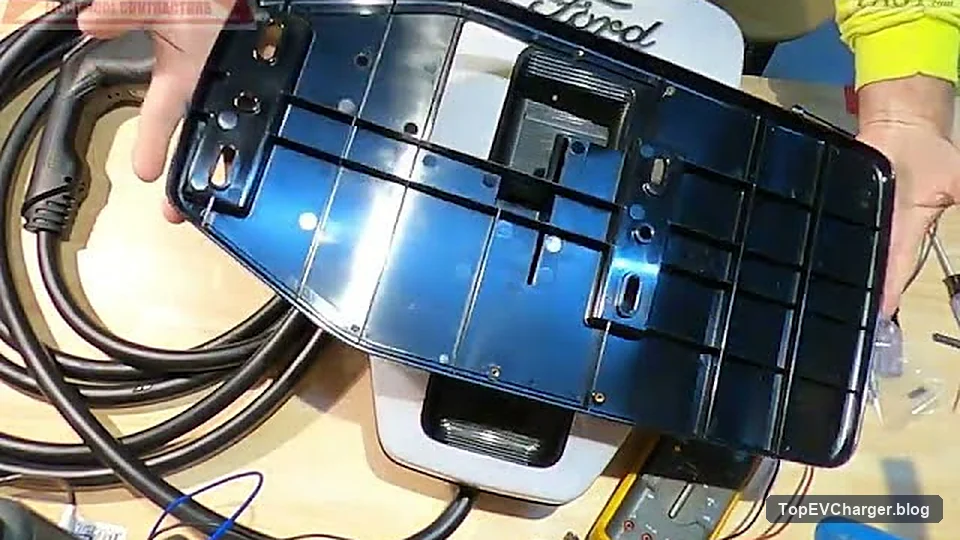
Conversely, the competitor operates efficiently on a standard 60-amp circuit breaker. This lower amperage threshold significantly reduces overall electrical panel upgrade expenses during installation.
Our Ford Charge Station Pro review details how the hardware demands a robust 80-amp circuit configuration, requiring heavy-gauge wiring. Meanwhile, the Tesla Wall Connector offers configurable output up to 48 amps for standard residential panels.
Upgrading your main service panel is frequently mandatory when installing Ford's bi-directional hardware. Tesla units reduce infrastructure overhead by fitting neatly into existing 60-amp breaker allocations without requiring massive subpanel overhauls in older homes.
- Ford demands heavy-gauge copper wiring and dual conduit runs.
- Tesla utilizes standard conduit sizing suitable for most residential panels.
- Amperage capacity directly dictates daily refueling speed and thermal output.
Electrical Panel Capacity Assessment
Evaluating your main service panel is mandatory before purchasing heavy equipment. Older homes often lack the spare amperage needed for high-draw charging hardware.
Consulting a licensed electrician ensures your home insurance remains valid and prevents catastrophic thermal overloads during simultaneous household appliance usage.
- Check main breaker rating against total home load calculations.
- Verify local utility interconnect regulations before pulling permits.
Forensic Hardware Engineering and Thermal Thresholds
Internal thermal management dictates long-term hardware reliability under stress. Heavy-duty enclosures utilize massive aluminum heat sinks to dissipate internal electrical resistance effectively.
Precision temperature sensors monitor internal junction points continuously. If excessive heat builds up, the unit throttles current to protect internal wiring components.
As highlighted in our Tesla Gen 3 Wall Connector review, internal thermal management dictates reliability under heavy loads. Tesla relies on passive aluminum heat sinks to dissipate internal thermal energy efficiently during peak charging.
Enclosure ratings for both systems utilize NEMA standards for weather resistance. The Ford unit features a robust NEMA 4 rating for extreme environments, matching Tesla's robust outdoor-certified casing designed to withstand direct moisture and wind-driven rain.
- Aluminum heat sinks prevent localized overheating during summer months.
- Sealed enclosures keep moisture and garage dust completely isolated.
- Thermal throttling protects vehicle inlet ports from heat damage.
Component Durability and Enclosure Ratings
Weather resistance ratings determine whether equipment survives outdoor mounting. Look for robust certifications that guarantee protection against driving rain and windblown debris.
Impact-resistant outer shells prevent cracking if bumped by heavy garage equipment or vehicle doors during tight parking maneuvers.
- NEMA ratings specify exact environmental protection levels.
- Polycarbonate housings resist ultraviolet yellowing over years of sun exposure.
Bidirectional Power Flow Versus Standard Grid Delivery
Advanced energy systems allow vehicles to power residential loads during outages. This capability transforms your electric vehicle into a massive mobile home battery backup.
Standard delivery units focus exclusively on pulling power from the grid. They lack the complex inverter integration required for safe bi-directional energy transfer operations.
Vehicle-to-home backup capabilities set the Ford hardware apart from standard EV supply equipment. Ford Intelligent Backup Power utilizes specialized inverter communication to discharge vehicle batteries safely, supplying up to 9.6 kW during sudden utility grid failures.
As noted in our Tesla Wall Connector review, the device functions strictly as a unidirectional energy delivery system without native vehicle-to-home integration, requiring separate Powerwall batteries for all emergency power distribution.
- Vehicle-to-home systems require specialized home integration hardware.
- Standard chargers provide fast, reliable grid-to-vehicle energy transfer.
- Backup features demand strict compliance with utility islanding protocols.
Understanding Vehicle-to-Home Integration Mechanics
Bridging your vehicle battery with home circuits requires specialized transfer switches. These devices isolate your electrical system to prevent feeding live current back onto public utility lines.
Professional installation of integration hardware involves complex wiring configurations inside your main service panel by certified technicians.
- Automatic transfer switches isolate grid power instantly.
- Communication protocols coordinate power flow between vehicle and home.
Real-World Installation Bottlenecks and Electrical Permits
Securing proper municipal permits prevents future insurance claim denials and ensures safety compliance. Local inspectors examine wire gauges, torque specifications, and conduit mounting securely.
Heavy copper wire pulls present significant physical challenges in finished basements and tight garage rafters during the rough-in installation phase.
Our Ford Connected Charge Station review explains how securing municipal electrical permits for an 80-amp installation triggers rigorous plan reviews. Inspectors frequently mandate load calculation audits to verify service entrance conductor capacity.
Tesla installations typically encounter fewer regulatory hurdles due to lower amperage demands and standard configuration options. Electricians can usually complete these setups rapidly, avoiding the complex interconnect agreements required for bidirectional home integration systems.
- Permit approvals require detailed load calculation paperwork submitted beforehand.
- Tight conduit bends can damage heavy-gauge conductors during the pulling process.
- Torque screwdrivers ensure terminal connections meet exact manufacturer specifications.
Navigating Local Utility Interconnection Rules
Utility providers enforce strict rules regarding grid-tied backup systems. Submitting interconnection applications early prevents frustrating delays before turning on your new system.
Some regions require smart meters capable of tracking bidirectional power flows before granting final permission to operate.
- Interconnection paperwork can take several weeks for utility approval.
- Smart meters record energy exported back to the grid accurately.
Cable Ergonomics, Length, and Cold-Weather Flexibility
Heavy charging cables become stiff and difficult to coil in freezing winter temperatures. Flexible jacketing materials maintain pliability even when ambient temperatures plummet below freezing.
Cable length dictates parking flexibility inside crowded garages. Extra reach ensures you can charge vehicles parked outside the garage door easily.
Handling thick copper cables in freezing winter conditions tests the jacket durability of any EV charger. The Ford cable stretches an impressive 25 feet, though its heavy gauge requires substantial manual effort when coiled in sub-zero temperatures.
Tesla utilizes a remarkably pliable thermoplastic elastomer compound that maintains excellent flexibility during harsh weather. Its matching 24-foot reach provides ample parking flexibility while remaining notably easier to manage and store daily.
- Twenty-foot cables reach vehicles parked in complex tandem setups.
- Cold-weather polymers prevent cracking when uncoiling in winter storms.
- Ergonomic handle designs reduce strain during repetitive daily connections.
Managing Cable Weight and Strain Relief
Thicker cables add significant physical weight that strains wall mounting brackets over time. Proper strain relief mechanisms prevent internal conductor breakage near the connector handle.
Using wall-mounted holster docks keeps connectors clean and protects terminal pins from accidental impact damage on the garage floor.
- Strain relief boots distribute bending forces evenly across wires.
- Holsters prevent moisture accumulation inside the vehicle connector plug.
Software Ecosystems, Connectivity, and Local Diagnostics
Smart charging platforms enable remote scheduling to utilize off-peak electricity rates. Companion smartphone applications provide instant alerts regarding charging status and power consumption data.
Local Wi-Fi connectivity allows firmware updates to download automatically overnight. Diagnostic error codes help troubleshoot minor connection issues without calling technicians.
Managing charging sessions relies heavily on robust Wi-Fi connectivity and intuitive smartphone applications. The Ford Pass ecosystem integrates tightly with your vehicle, whereas Tesla provides seamless over-the-air updates and detailed energy usage analytics directly through their app.
Local commissioning protocols differ significantly between these two industry-leading charging platforms. Technicians configure Tesla hardware via an on-board access point, while Ford setup requires specialized homeowner account linking for proper firmware management and activation.
- Off-peak scheduling reduces monthly electricity charging expenditures drastically.
- Over-the-air firmware updates introduce new features and stability improvements.
- Data logs track exact kilowatt-hours consumed per charging session.
Troubleshooting Connectivity and Network Drops
Weak garage Wi-Fi signals can disrupt remote scheduling and firmware updates. Installing a dedicated mesh network node nearby ensures stable data communication links.
Manual override buttons allow basic charging functionality even when wireless network connections drop temporarily during router reboots.
- Signal boosters eliminate interference from thick concrete garage walls.
- Local physical controls ensure charging works without internet access.
Warranty Protections and Grid Integration Limits
Comprehensive manufacturer warranties provide essential peace of mind for expensive hardware investments. Standard coverage terms typically protect against internal component defects for multiple years.
Improper DIY installation procedures often void manufacturer warranty agreements entirely. Professional installation by certified electricians remains mandatory for full coverage protection.
Manufacturer backing plays a vital role when investing in high-voltage residential electrical equipment. Ford supplies a dependable three-year warranty, matching Tesla's standard coverage period for residential installations against premature component failure or manufacturing defects.
Grid integration limits often dictate whether you can maximize your charger's true potential. Utility demand-response programs may restrict high-amperage operations during peak hours, overriding your local charger settings to protect local transformer capacity limits.
- Multi-year warranty coverage protects against premature electronic component failure.
- Certified installation receipts are required to validate manufacturer warranty claims.
- Grid integration limits define maximum allowable backup power durations.
Protecting Your Investment Through Proper Maintenance
Routine visual inspections catch minor wear issues before they cause catastrophic failures. Check terminal connections annually for signs of thermal discoloration or loosening.
Keeping ventilation louvers clear of dust and debris ensures optimal cooling airflow during maximum output charging cycles in summer.
- Annual torque checks prevent high-resistance electrical hot spots.
- Clearance around units prevents heat buildup in confined spaces.
Frequently Asked Questions
Can I install the Ford Charge Station Pro on a standard 50-amp circuit?
Installing this unit requires a dedicated 100-amp circuit to deliver its maximum output safely. Undersized wiring creates extreme fire hazards during continuous high-amperage charging sessions.
Does the Tesla Wall Connector support bidirectional home backup power?
This unit delivers reliable grid charging power but lacks integrated bidirectional inverter hardware. Future software updates cannot add backup capability without dedicated physical transfer hardware.
What wire gauge is mandatory for an 80-amp continuous electrical load?
Electricians typically pull heavy two-gauge copper or one-gauge aluminum conductors inside rigid conduit. Proper wire sizing prevents dangerous voltage drop over long garage runs.
Will using third-party adapters void my home EV charger warranty?
Certified adapters from reputable manufacturers generally maintain safety compliance standards. Unauthorized uncertified adapters can damage vehicle charge ports and void equipment warranties.
How do weather elements impact outdoor wall connector performance?
Weatherproof enclosures protect internal electronics from rain, snow, and extreme temperature fluctuations. Direct sunlight exposure can accelerate plastic degradation over many years outdoors.