Difference Between Type 1 And Type 2 Ev Charger vs. Standard EV charger: Which Fits Your Setup Better?
Understanding connector architectures determines optimal residential replenishment speeds. Choosing between legacy and modern plugs impacts daily operational efficiency.

The Type 2 standard delivers superior power delivery for modern daily drivers. Meanwhile, standard Type 1 units suit slower overnight residential top-offs.
Compare all top models in our Best Ev Level 2 Charger.
Side-by-Side Breakdown
| Criteria | Difference Between Type 1 And Type 2 Ev Charger | Standard EV charger | Edge |
|---|---|---|---|
| Peak Performance & Output | 1.4kW to 3.7kW single-phase | 7.4kW to 22kW single/three-phase | Type 2 standard |
| Duty Cycle & Consistency | Moderate thermal degradation over extended sessions | High thermal stability under continuous loads | Type 2 standard |
| Operating Noise & Vibration | Silent passive convection cooling | Silent operation with advanced thermal monitoring | Type 2 standard |
| Portability & Footprint | Lightweight tethered or untethered cables | Slightly heavier harness due to additional pins | Type 1 legacy |
| Maintenance & Service Life | Prone to pin wear on frequent cycles | Robust locking pin mechanism and durable contacts | Type 2 standard |
| Power Requirements | Standard 120V household outlets (NEMA 5-15) | Dedicated 240V circuits or industrial supplies | Type 2 standard |
| Best Ideal Use-Case | Legacy plug-in hybrids and light runabouts | Modern battery electric vehicles and daily commuters | Type 2 standard |
Architectural Anatomy of EV Charging Connectors
Electric vehicle supply equipment relies on standardized physical plugs. The Type 1 connector utilizes a bulky five-pin layout designed primarily for single-phase North American residential grids.
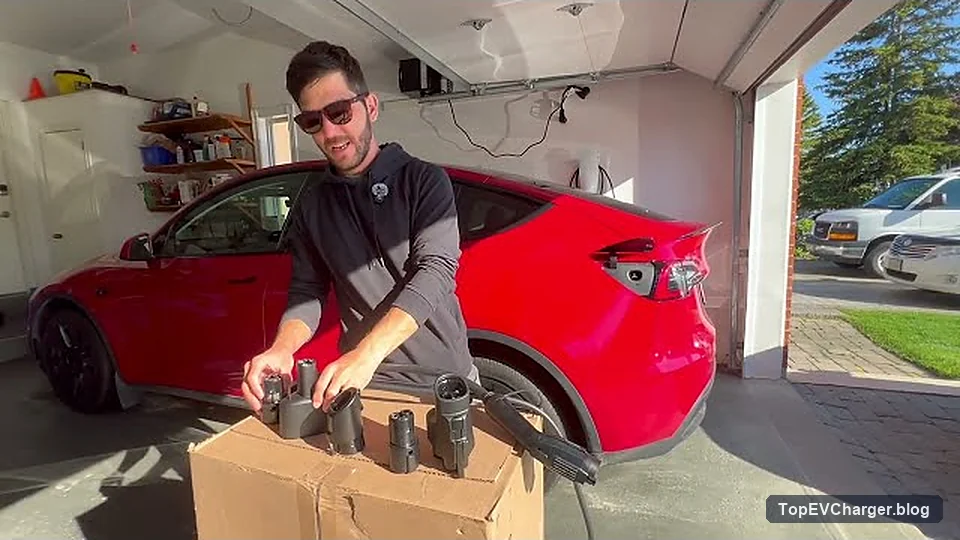
Conversely, the Type 2 interface employs a circular seven-pin configuration. You can compare our top options in the best Type 2 EV home charger roundup for robust three-phase AC delivery.
Type 1 connectors feature a five-pin circular design governed by the SAE J1772 standard, utilizing dual locking latches. Conversely, Type 2 plugs incorporate a seven-pin symmetrical layout specified by IEC 62196 for robust connections.
Internal pin configurations dictate maximum current-carrying capabilities across both variants. The physical housing utilizes engineering-grade thermoplastics designed to withstand heavy mechanical stress, environmental moisture ingress, and repetitive vehicle coupling cycles daily.
- Five-pin single-phase architecture
- Seven-phase multi-conductor layout
- Integrated proximity detection pins
Mechanical Locking Mechanisms
Physical retention prevents accidental disconnection during high-amp sessions. Type 2 plugs integrate an electromechanical locking actuator directly into the vehicle inlet for enhanced security.
- Solenoid retention pins
- Automatic latching triggers
Voltage Capacity and Power Delivery Mechanics
Electrical throughput dictates replenishment speeds for lithium-ion battery packs. Selecting a reliable unit via our best plug and play Level 2 EV charger guide ensures straightforward residential operation.
Modern Type 2 chargers effortlessly handle up to 22 kilowatts using balanced three-phase AC power. This drastically reduces overnight charging durations for large capacity battery modules.
Type 1 infrastructure operates strictly on single-phase AC architectures, delivering up to 7.4 kilowatts of continuous power. This limitation stems from the physical pin layout which restricts high-voltage multi-phase circuit expansions in residential units.
Type 2 systems support both single-phase and three-phase grid configurations, scaling power delivery up to 22 kilowatts or higher. This flexibility allows faster AC replenishment rates by distributing electrical load evenly across multiple live conductors.
- Single-phase 120V to 240V operations
- Three-phase high voltage balancing
- Continuous amperage delivery metrics
Amperage Limitations
Conductor gauge thickness dictates maximum safe current flow thresholds. Standard copper sizing prevents dangerous overheating during extended high-amperage residential charging operations.
- Thermal threshold limits
- Conductor gauge specifications
Regional Standards and Global Infrastructure
Geographical location heavily dictates which hardware standard dominates local roadways. North American markets historically favored Type 1 hardware alongside emerging J1772 compliance requirements.
European territories mandated the Type 2 standard for all public charging infrastructure deployments. This legislative push standardized grid integration across diverse member state automotive markets.
North American automotive markets heavily favor the Type 1 standard due to legacy electrical grid infrastructures featuring split-phase 120V to 240V residential drops. Public networks maintain this design for broad vehicle compatibility across older fleets.
European regulatory frameworks mandate the Type 2 interface for all public AC charging stations to streamline cross-border travel. This universal mandate ensures seamless interoperability regardless of vehicle manufacturer or localized grid voltage variations.
- North American J1772 dominance
- European IEC 62196 mandates
- Global grid harmonization efforts
Grid Compatibility Factors
Local utility distribution grids influence residential charging equipment capabilities. Single-phase residential feeds limit maximum output compared to robust three-phase European grid configurations.
- Transformer load limits
- Phase balancing protocols
Safety Protocols and Thermal Management Systems
Advanced safety architecture protects both the user and vehicle powertrain components. Control pilot pins continuously verify ground continuity and insulation integrity before power transmission begins.
Thermal sensors embedded within the plug housing prevent catastrophic overheating events. Active temperature monitoring automatically throttles charging current if terminal resistance spikes unexpectedly.
Pilot pins manage real-time communication while preventing strain. Protecting your connector cable with a reliable mount from our best Level 2 EV charger holster and dock selection prevents connector drop damage.
Integrated negative temperature coefficient sensors monitor terminal pin heating during high-current sessions. If resistance spikes cause excessive thermal buildup, the system automatically throttles current to prevent connector melt and severe electrical hazards.
- Control pilot signal validation
- Proximity detection circuit loops
- Thermal overload protection fuses
Ground Fault Protection
Electrical shock mitigation requires immediate circuit interruption during anomalies. Integrated residual current devices disconnect live power feeds within milliseconds of detecting ground current leakage.
- Millisecond trip speeds
- Leakage current sensors
Adapter Limitations and Interoperability Risks
Mixing connector formats requires certified passive or active conversion hardware. Using unverified aftermarket adapter cables introduces severe fire hazards and voids vehicle powertrain warranties.
Physical conversion does not alter underlying electrical phase limitations. Improper adapters can trigger faults similar to those explained in why does my EV charger click and not charge guides.
Utilizing aftermarket conversion adapters introduces significant electrical resistance across high-amperage connection points. Uncertified hardware often lacks proper UL certification, increasing the statistical risk of catastrophic thermal runaway during extended charging cycles.
Mechanical lock engagement failures represent another critical risk when mating mismatched regional plugs. Software handshakes may also fail if the vehicle control unit misinterprets the resistance values introduced by intermediary conversion hardware modules.
- Certified conversion hardware necessity
- Voltage translation limitations
- Thermal risk mitigation rules
Resistance and Heat Buildup
Every physical connection point introduces electrical resistance and potential failure vectors. High-quality metal contacts minimize voltage drop and prevent dangerous thermal degradation during use.
- Contact resistance metrics
- Voltage drop reduction
Fleet Integration and Commercial Deployment
Commercial depots require ruggedized charging hardware built for high daily duty cycles. Fleet operators prefer Type 2 architecture for its superior durability and faster turnaround speeds.
Depot management systems track energy consumption across multiple connected vehicles simultaneously. Smart load balancing prevents local utility demand charges from spiking during peak operational hours.
Commercial depot operators prioritize Type 2 architectures for multi-vehicle charging hubs due to superior three-phase load-balancing capabilities. Utilizing robust hardware enclosures minimizes weather-related downtime across large-scale municipal or corporate logistics facilities.
Fleet management software relies on standardized communication protocols to monitor energy consumption and schedule off-peak replenishment sessions. Integrating smart chargers helps fleet operators minimize peak demand charges while maintaining optimal battery health metrics.
- High duty cycle requirements
- Smart load management systems
- Depot turnaround optimization
Cable Management Engineering
Commercial stations endure harsh weather and rough handling by multiple drivers. Spring-loaded retractors and reinforced cable jackets prevent premature fraying in public fleet environments.
- Weatherproof outer jackets
- Retraction spring assemblies
Distributor Sourcing and Quality Assurance Checks
Wholesale distributors must verify rigorous international certifications before procuring inventory. UL and CE markings confirm compliance with strict electrical safety and construction standards.
Supply chain audits ensure consistent pin metallurgy and durable plastic housings. Rigorous batch testing minimizes warranty claims and protects end-user brand reputation in competitive markets.
Procurement managers must verify copper purity levels and silver plating thickness on all internal connector pins. Substandard metallurgy causes increased contact resistance, leading to accelerated pitting and premature connector failure in commercial environments.
Quality assurance protocols require rigorous IP rating verification to ensure complete dust and water ingress protection. Factory batch testing must validate pin insertion force limits and dielectric strength under high-voltage stress test conditions.
- International UL and CE compliance
- Pin metallurgy verification checks
- Batch testing quality protocols
Inventory Staging Metrics
Proper warehouse storage conditions prevent environmental degradation of sensitive electronic components. Climate-controlled facilities protect connector pins from oxidation and moisture ingress prior to final sale.
- Humidity control targets
- Oxidation prevention measures
Frequently Asked Questions
What is the main structural difference between Type 1 and Type 2 EV chargers?
The Type 1 connector features a bulky five-pin single-phase design common in North American residential grids. Conversely, the Type 2 plug utilizes a robust seven-pin layout supporting three-phase power.
Can a Type 1 electric vehicle use a Type 2 public charging station?
Yes, motorists can utilize a specialized adapter cable to connect legacy vehicles to newer infrastructure. However, charging speeds remain bound by the vehicle's onboard charger limitations.
Is Type 2 charging significantly faster than Type 1 hardware?
Type 2 units deliver up to 22 kilowatts using balanced three-phase electrical current. Meanwhile, standard Type 1 systems generally max out around 3.7 kilowatts on residential circuits.
Why do European markets exclusively mandate the Type 2 charging standard?
European electrical grids natively support balanced three-phase power distribution across residential zones. This infrastructure allows the Type 2 connector to deliver rapid overnight vehicle charging speeds.
What safety features are embedded within modern EV charging connectors?
Integrated control pilot pins continuously verify ground continuity before authorizing power flow. Furthermore, thermal sensors automatically throttle current if terminal resistance spikes during high-amp sessions.