32 Amp vs. 40 Amp Ev Charger: Which Fits Your Setup Better?
Selecting between a 32 amp and 40 amp EV charger dictates your home electrical infrastructure. Understanding precise amperage outputs ensures you optimize daily charging speeds without unnecessary electrical upgrade costs.

Choose the 32 amp charger if your panel is constrained and you park overnight. Select the 40 amp unit for faster replenishment and maximum National Electrical Code continuous load utilization.
Compare all top models in our Best Ev Level 2 Charger.
Side-by-Side Breakdown
| Criteria | 32 Amp | 40 Amp Ev Charger | Edge |
|---|---|---|---|
| Peak Performance & Output | 7.7 kW maximum delivery | 9.6 kW maximum delivery | 40 Amp Ev Charger |
| Duty Cycle & Consistency | Stable thermal management | Higher continuous thermal load | 32 Amp |
| Operating Noise & Vibration | Silent passive cooling | Silent passive cooling | Tie |
| Portability & Footprint | Lightweight, compact cable profile | Slightly heavier cable gauge | 32 Amp |
| Maintenance & Service Life | Lower terminal heat stress | Standard component longevity | 32 Amp |
| Power Requirements | 40-amp dedicated circuit breaker | 50-amp dedicated circuit breaker | 32 Amp |
| Best Ideal Use-Case | Standard plug-in hybrid or commuter | Large battery electric vehicle | 40 Amp Ev Charger |
Understanding Electrical Load Calculations and the National Electrical Code
Residential EV supply equipment operates as a continuous load under electrical safety codes. This designation requires your circuit infrastructure to handle maximum current draw for three hours or longer without thermal degradation.
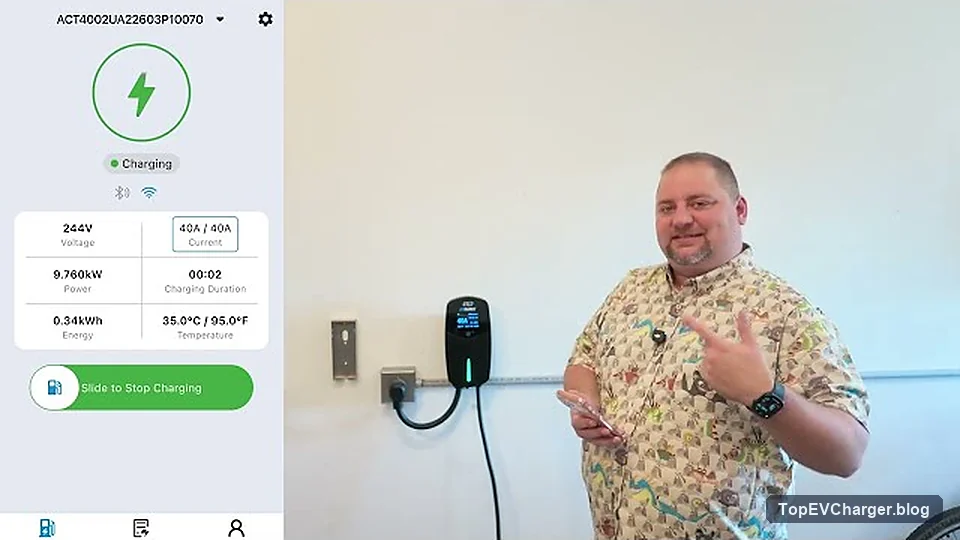
The regulatory 80 percent rule governs these installations completely. A 40-amp breaker safely permits a maximum continuous draw of 32 amps, which directly dictates your real-world charging speed and hardware requirements.
Upgrading to a 40-amp continuous output necessitates a 50-amp dedicated breaker paired with robust copper wiring. Ignoring these specific sizing requirements risks thermal overload, tripped breakers, and severe fire hazards in your garage.
Consulting guidelines on what size breaker for 48 amp ev charger installations ensures compliance. Continuous loads demand a 125 percent sizing factor, meaning a 32-amp device needs a 40-amp circuit.
For a 40-amp continuous draw, electricians must install a 50-amp dedicated circuit. Calculating total home electrical load prevents overloads under article 220, ensuring your main service panel safely handles simultaneous heavy appliance operations daily.
Wire gauge selection directly impacts thermal performance inside conduit runs. Technicians typically run 6 AWG copper conductors for a 50-amp breaker setup, while 8 AWG copper generally suffices for standard 40-amp breaker installations.
- Continuous loads demand strict adherence to National Electrical Code standards.
- A 32-amp charger requires a minimum 40-amp dedicated branch circuit.
- A 40-amp charger mandates a heavier 50-amp electrical supply line.
- Thermal management dictates long-term hardware reliability across both options.
The Realities of Circuit Breakers and Wire Gauges
Installing these charging systems forces a close inspection of your existing breaker panel capacity. Older homes often lack the spare amperage headroom required for high-draw heavy equipment installations.
Using THHN copper wire sized appropriately for the circuit amperage prevents excessive voltage drop. Professional electricians always verify terminal torque specifications to eliminate microscopic electrical resistance during active sessions.
- Panel capacity limits total home energy distribution headroom.
- Proper wire gauge selection prevents dangerous resistive heating.
Decoding Charging Speeds in Real Miles Rather Than Kilowatts
Translating electrical kilowatts into practical driving range helps clarify the daily utility of these devices. A standard 32-amp system delivers roughly 7.7 kilowatts of power directly to your vehicle onboard charger.
Stepping up to a 40-amp configuration pushes approximately 9.6 kilowatts through the charging cable. This modest power increase translates into roughly six to eight additional miles of range per hour of charging.
Over an eight-hour overnight window, that difference accumulates significantly for larger battery packs. However, standard daily commuters rarely exhaust enough battery capacity to notice this variance during routine weekly driving cycles.
Nominal kilowatt outputs translate differently into practical driving range. A 32-amp unit delivers roughly 7.7 kilowatts of power, adding about 25 to 30 miles of driving range to an efficient electric vehicle every single hour.
Stepping up to a 40-amp configuration yields approximately 9.6 kilowatts of charging capacity. This increase pushes your hourly replenishment rate closer to 35 miles of range, significantly reducing total overnight refueling duration for large battery packs.
Real-world charging speeds depend heavily on onboard limits. Exploring the best 32 amp ev charger options helps if your vehicle maxes out at 7.6 kilowatts, yielding zero extra speed from larger hardware.
- Seven point seven kilowatts handles typical overnight charging effortlessly.
- Nine point six kilowatts provides faster turnaround for large battery packs.
- Hourly range additions depend heavily on your vehicle efficiency ratings.
- Most commuters replenish their daily mileage deficit within a few hours.
Vehicle Onboard Charger Limitations
Your electric vehicle possesses an internal AC charging limit that restricts maximum power intake. Many plug-in hybrids and smaller EVs cap their acceptance rate well below thirty-two amps entirely.
Matching your EVSE output to your vehicle onboard capacity prevents wasted hardware investment. Buying a high-capacity charger provides zero speed benefits if your car cannot process the incoming current.
- Internal vehicle chargers dictate maximum allowable charging speed.
- PHEVs rarely utilize the full capacity of a 40-amp circuit.
Evaluating Panel Capacity and Potential Electrical Upgrade Costs
Before purchasing hardware, inspect your main electrical service panel for available physical space and amperage rating. Modern homes feature two-hundred-amp service, while legacy properties often operate on constrained one-hundred-amp panels.
Drawing continuous high current alongside household appliances can easily trigger your main breaker if unbalanced. Installing a load management system becomes necessary when total electrical demand approaches your service limit.
A 40-amp charger increases the likelihood of requiring costly service upgrades. Reviewing the best 16 amp level 2 charger selections offers lower-draw alternatives for constrained panels.
Assessing existing residential electrical service panels is vital before purchasing equipment. Many older homes operate on 100-amp main services, which frequently lack the spare capacity required for adding high-amperage continuous inductive electrical loads safely today.
Upgrading to a 200-amp electrical service often becomes necessary when integrating a 40-amp charger alongside electric HVAC systems. Licensed electricians perform load calculations to determine if dynamic smart load shedding devices can prevent expensive panel replacements.
Conduit runs, trenching distances, and local permitting fees heavily influence total installation expenses. Choosing a 32-amp hardwired unit can sometimes utilize smaller existing breakers, directly lowering total labor and material costs for budget-conscious homeowners.
- Main panel amperage ratings limit total simultaneous home energy consumption.
- Legacy electrical systems often require expensive service panel replacements.
- Load management devices prevent overloads without upgrading main service drops.
- Professional load calculations protect your home from catastrophic electrical failures.
Hardwired Versus Plug-In Installation Trade-Offs
Hardwiring your charger eliminates the weak point of a physical wall outlet and plug interface. High-amperage plug installations require expensive industrial-grade receptacles designed to withstand repeated thermal expansion cycles.
Opting for a hardwired connection ensures maximum safety and often unlocks higher continuous amp configurations. Permanent installations also deter theft in outdoor or shared residential parking environments.
- Hardwiring removes vulnerable plug and socket connection points.
- Industrial receptacles are mandatory for high-amperage plug-in setups.
Thermal Dynamics, Cable Ergonomics, and Daily Usability Factors
Electrical resistance generates heat across cables, connectors, and internal circuit components during prolonged charging sessions. Lower amperage outputs naturally produce less thermal stress, enhancing long-term hardware durability.
Thicker copper conductors required for 40-amp delivery result in noticeably heavier, stiffer charging cables. Handling a stiff, heavy cable in freezing winter temperatures quickly becomes an annoying daily chore.
Selecting a flexible cable design with high-grade jacketing preserves user ergonomics without sacrificing electrical performance. Proper thermal management guarantees your charger operates safely throughout scorching summer heatwaves.
Electrical resistance generates significant heat during high-amperage energy transfers. Quality charging cables utilize thick copper stranding to minimize internal resistance, keeping connector temperatures well within safe operating limits during extended summer charging cycles.
Cable stiffness increases noticeably when handling heavier gauge wires required for higher amperages. A 40-amp cable is typically heavier and less flexible in freezing winter temperatures compared to its lighter 32-amp alternative counterpart.
Ergonomic connector design and proper cable management hooks prevent strain on vehicle charge ports. Minimizing mechanical tension on the SAE J1772 plug ensures long-term durability for both the vehicle inlet pins and the station cord.
- Lower amperage decreases internal component operating temperatures significantly.
- Higher amperage requires thicker, heavier, and stiffer copper cables.
- Ergonomic cable jackets improve daily handling in adverse weather.
- Robust thermal design prevents premature hardware degradation over time.
Connector Durability and Weather Resistance
Charging handles endure routine drops, vehicle runs, and harsh environmental exposure throughout their operational lifespan. Investing in a unit with robust strain relief protects internal wiring from mechanical fatigue.
Weatherproofing ratings such as NEMA enclosure standards dictate whether your charger survives outdoor moisture. Always verify outdoor installation guidelines before mounting equipment in exposed garage or driveway locations.
- Strain relief prevents internal wire breakage from accidental drops.
- NEMA ratings ensure reliable operation in heavy rain and snow.
Long-Term Energy Efficiency and Total Cost of Ownership
Operating an EV charger incurs steady electricity consumption based on local utility tariff structures. While both amperages transfer energy efficiently, slightly higher currents can marginally increase resistive losses.
Utilizing smart scheduling features allows you to charge exclusively during off-peak hours when rates drop. Choosing the right amperage ensures you minimize standby power consumption over years of continuous ownership.
Purchasing an oversized charger wastes upfront capital if your daily driving habits are minimal. Matching equipment capacity to actual commuting needs yields the best financial return on your investment.
Electrical efficiency varies slightly based on internal component heat dissipation. Operating at lower amperages often results in minimal standby losses, though both 32-amp and 40-amp units maintain typical round-trip efficiencies exceeding ninety-five percent overall.
Standby power consumption for Wi-Fi connectivity and internal microcontrollers remains relatively constant across both charger types. Choosing an appropriately sized unit prevents unnecessary infrastructure strain while keeping your long-term utility overhead exceptionally minimal.
Component longevity relies heavily on thermal stress management over years of daily cycling. Lower thermal thresholds in 32-amp systems can theoretically offer extended hardware lifespans, reducing the likelihood of premature relay contact degradation over time.
- Resistive losses increase slightly with higher current transmission rates.
- Smart charging schedules leverage discounted overnight utility electricity rates.
- Standby power draws add up over years of continuous grid connection.
- Right-sizing your equipment prevents unnecessary upfront capital expenditure waste.
Smart Features and Energy Monitoring Integration
Modern chargers feature Wi-Fi connectivity, mobile apps, and detailed energy tracking dashboards for users. These tools allow you to monitor kilowatt-hour consumption and calculate precise commuting costs effortlessly.
Integrating our best 50 amp level 2 charger choices with home automation platforms helps optimize household energy usage profiles. Software controls also enable seamless authorization locking to prevent unauthorized usage.
- Mobile applications provide real-time charging metrics and cost tracking.
- Software locks secure your charger against unauthorized public access.
Making the Final Decision Based on Your Specific Driving Profile
Determining the ideal charger requires analyzing your daily mileage, vehicle capabilities, and electrical panel headroom. Daily commuters driving under fifty miles find a 32-amp system more than adequate for needs.
Owners of large electric trucks or multi-EV households benefit immensely from the faster turnaround of 40 amps. Evaluating your long-term vehicle roadmap prevents you from outgrowing your electrical setup prematurely.
Consulting a professional electrician before purchasing hardware guarantees compatibility and safe installation practices. Your home infrastructure ultimately dictates the most practical and secure charging path forward.
Daily commuting distance is the primary metric for selecting your amperage. Drivers logging under forty miles daily easily replenish their battery state of charge overnight using a standard 32-amp residential charging setup effortlessly.
Households with dual electric vehicles or heavy weekend travel schedules benefit from faster replenishment rates. Opting for a 40-amp charging station provides crucial buffer time between back-to-back evening and morning vehicle departures.
Always verify your vehicle manufacturer specifications before finalizing hardware purchases. Matching your home charger output directly to your car's maximum acceptance rate ensures optimal efficiency without paying for unused electrical capacity.
- Daily mileage under fifty miles suits 32-amp chargers perfectly.
- Large electric trucks and SUVs maximize the value of 40 amps.
- Future vehicle plans should influence your current electrical installation choices.
- Professional electrician consultations prevent costly installation mistakes and hazards.
Summary Checklist for Homeowners
Review your main electrical panel capacity and available physical breaker spaces carefully. Confirm your specific vehicle onboard charger limits to avoid paying for unused electrical performance.
Prioritize safety compliance standards and professional installation above raw maximum output capabilities. A balanced, correctly installed system provides reliable, worry-free charging for years.
- Verify panel capacity and available breaker slots beforehand.
- Prioritize safety compliance and professional installation over raw speed.
Frequently Asked Questions
Will a 40 amp EV charger require a complete home electrical panel upgrade?
Not necessarily, but it depends entirely on your home existing service capacity and current household load. A 50-amp dedicated circuit is required, so consulting a licensed electrician for a load calculation is strongly recommended.
Can I plug a 40 amp charger into a standard household wall outlet safely?
No, standard household outlets operate at 15 or 20 amps and cannot handle high continuous electrical draws. High-amperage chargers require hardwired connections or heavy-duty industrial receptacles installed by professionals.
Is the speed difference between 32 amps and 40 amps noticeable during daily commutes?
For most typical daily commutes, the speed difference is entirely negligible during standard overnight parking windows. The 40-amp unit only provides a distinct advantage when replenishing large battery packs quickly.
Does a 32 amp charger produce less heat and wear on home electrical wiring?
Yes, lower electrical current naturally reduces thermal stress across wires, breakers, and internal charger components. This reduced thermal load contributes to improved long-term reliability and reduced risk of premature hardware failure.
What should I check on my electric vehicle before buying a home charger?
You must check your vehicle onboard charger acceptance limit to avoid purchasing unnecessary electrical capacity. Matching your EVSE output to your car maximum AC intake ensures optimal efficiency and performance.